FASHION DESIGNER
/ PATTERN MAKER
BODY / PATTERN
My work explores the relationship between structure, material and form, balancing functionality and aesthetics with particular attention to technical execution, craftsmanship and overall project coherence.
GARMENT CONSTRUCTION
TECHNICAL DRAWING
ADOBE ILLUSTRATOR
ADOBE PHOTOSHOP
ADOBE INDESIGN
SKETCHUP
PROCREATE
Portfolio and selected work available at domenicodamato.com
Garment Construction: garment assembly and attention to finishing details
Accessories Design: development and creation of fashion accessories
Graphic Design: graphic design applied to fashion projects
Structured Thinking: ability to organise projects from research to final execution
Adaptability: ability to work across different briefs while maintaining consistency
Consistency: disciplined and dedicated approach to work
BODY / PATTERN
BODY / PATTERN is a thesis project that investigates the body as the primary tool of design. Starting from posture, movement, proportion and anatomical variation, the research examines how the body can generate decisions in pattern cutting, garment construction and form development.
The research begins from a basic contradiction in clothing construction: the human body is three-dimensional, variable and constantly in motion, while the pattern begins as a two-dimensional surface. Pattern cutting therefore becomes a process of translation — from body to measurements, from measurements to surfaces, and from surfaces back to volume.
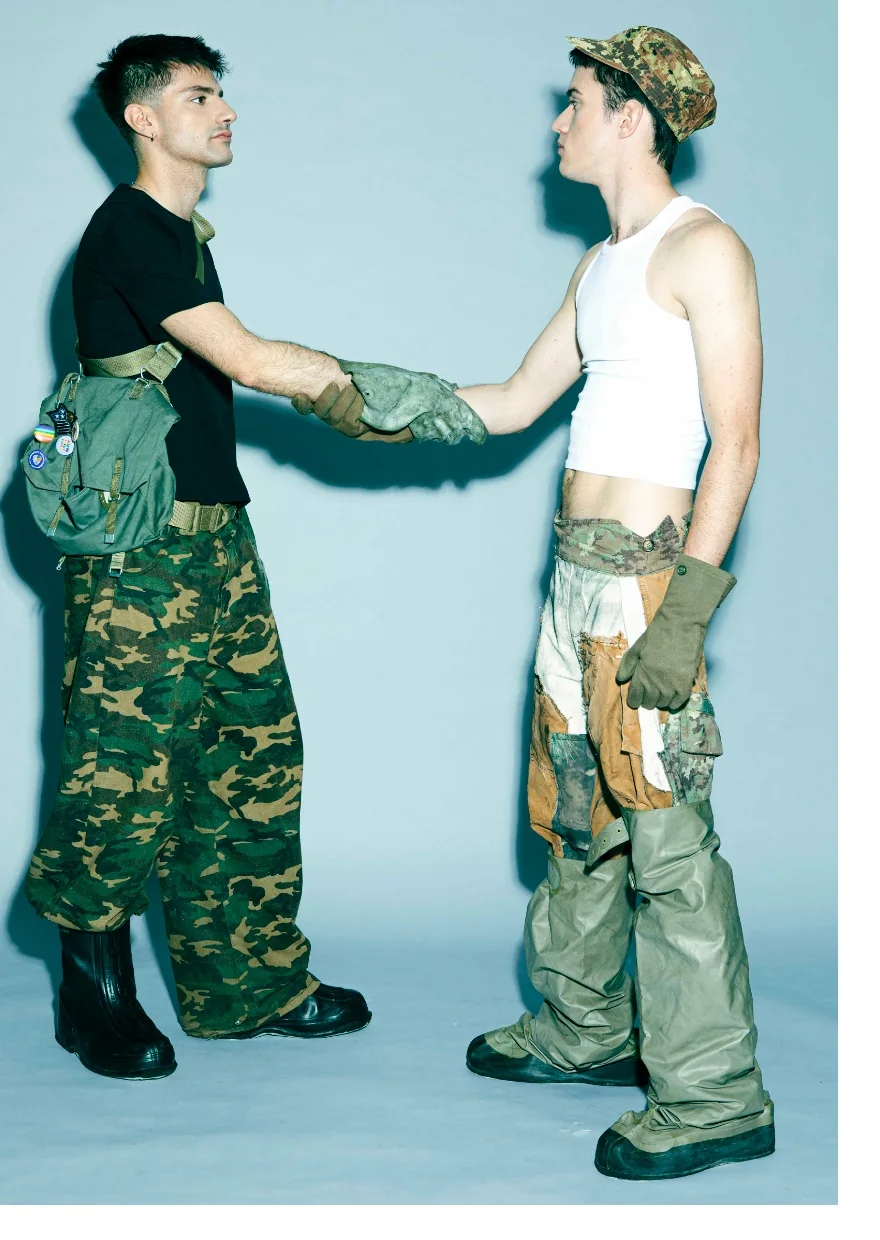
Rather than treating the body as a fixed anatomical reference, the project studies how construction changes when the body is considered through use and movement. Military wear, workwear and sportswear are analysed as examples in which specific actions, tools, environments and areas of stress directly modify garment construction. A pocket, seam, gusset or articulated panel is understood not as an isolated detail, but as the consequence of a condition that the body must respond to.
The research then shifts from garments designed around function to designers who use the body itself as a design system. The work of Aitor Throup and Tony Spackman becomes particularly relevant: posture, articulation and anatomical mapping are used to reorganise conventional construction and to determine where volume, flexibility or structure are required.
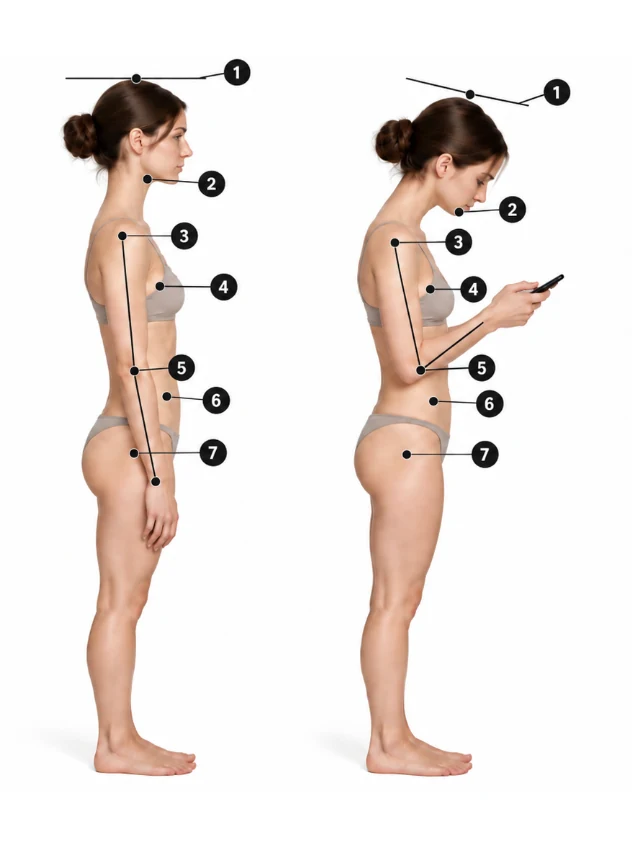
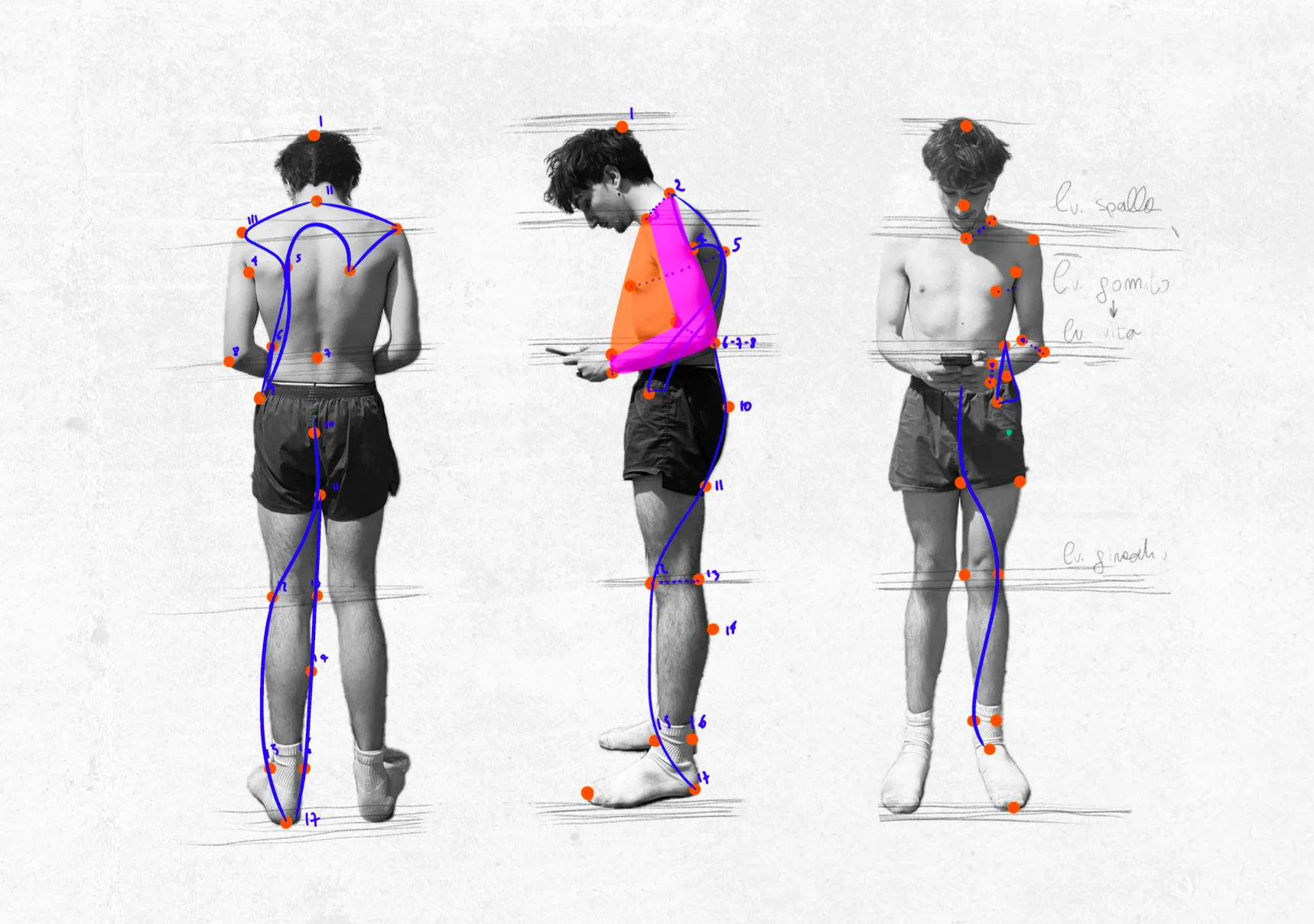
This approach becomes the basis for my own design method. Instead of beginning with a predefined garment or standard block, I begin by observing a specific body condition, identifying where its geometry changes and translating those variations into construction decisions. Posture is mapped through anatomical reference points; changes in the neck, shoulders, torso and limbs are then related to seam placement, volume distribution and pattern shape.
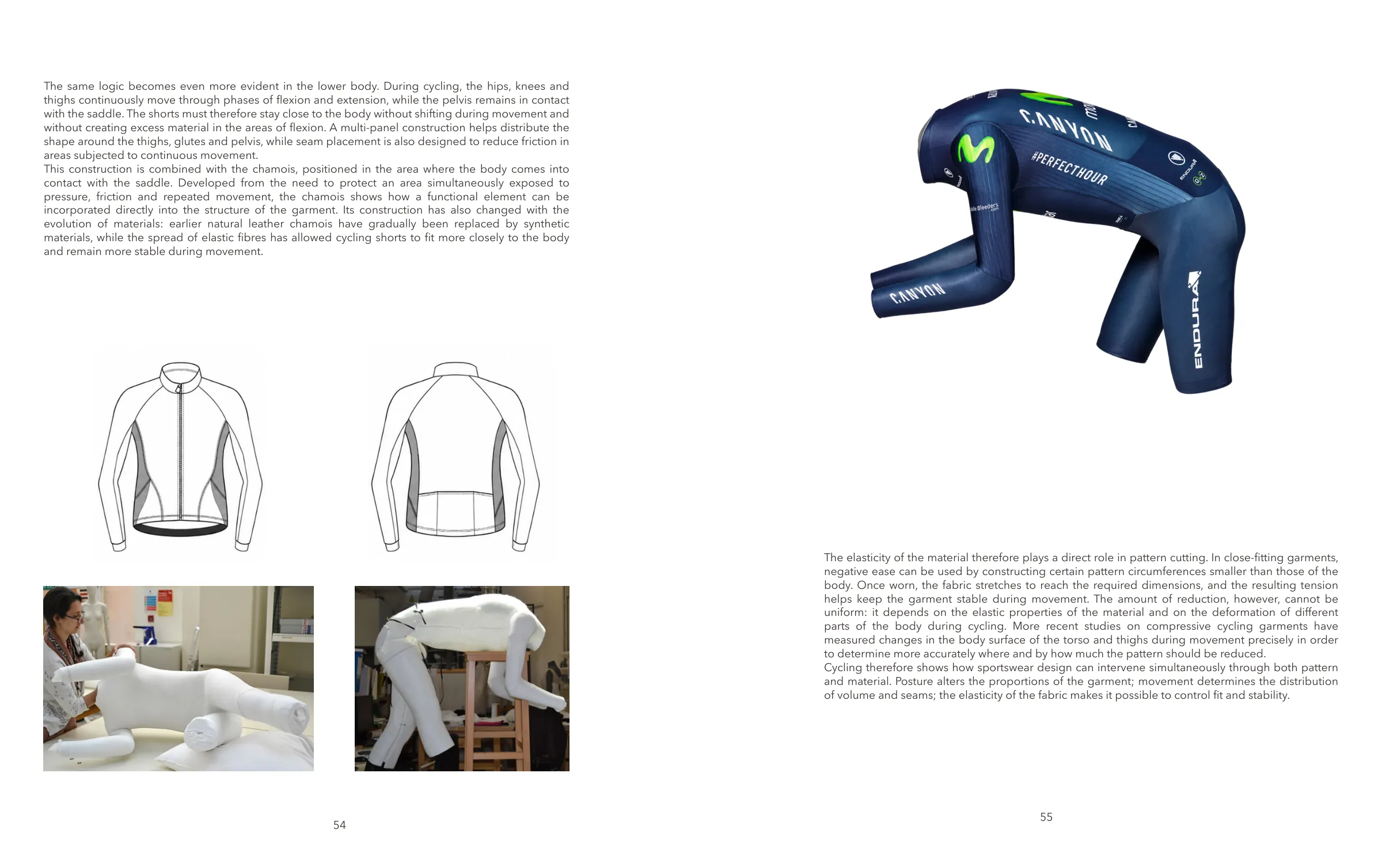
The pattern is not developed independently from material. A rigid fabric and an elastic surface cannot respond to the same anatomical variation in the same way. Part of the required deformation can be constructed directly into the pattern, while another part can be absorbed by the material itself. Pattern, material and body are therefore developed as parts of the same system.
The result is a design process in which form is not imposed onto the body afterwards. It emerges progressively from the relationship between posture, movement, material behaviour and construction.
This methodology is applied through TECH-NECK, the final design outcome of the research, where smartphone posture becomes the starting condition for the development of garments, materials and accessories.
01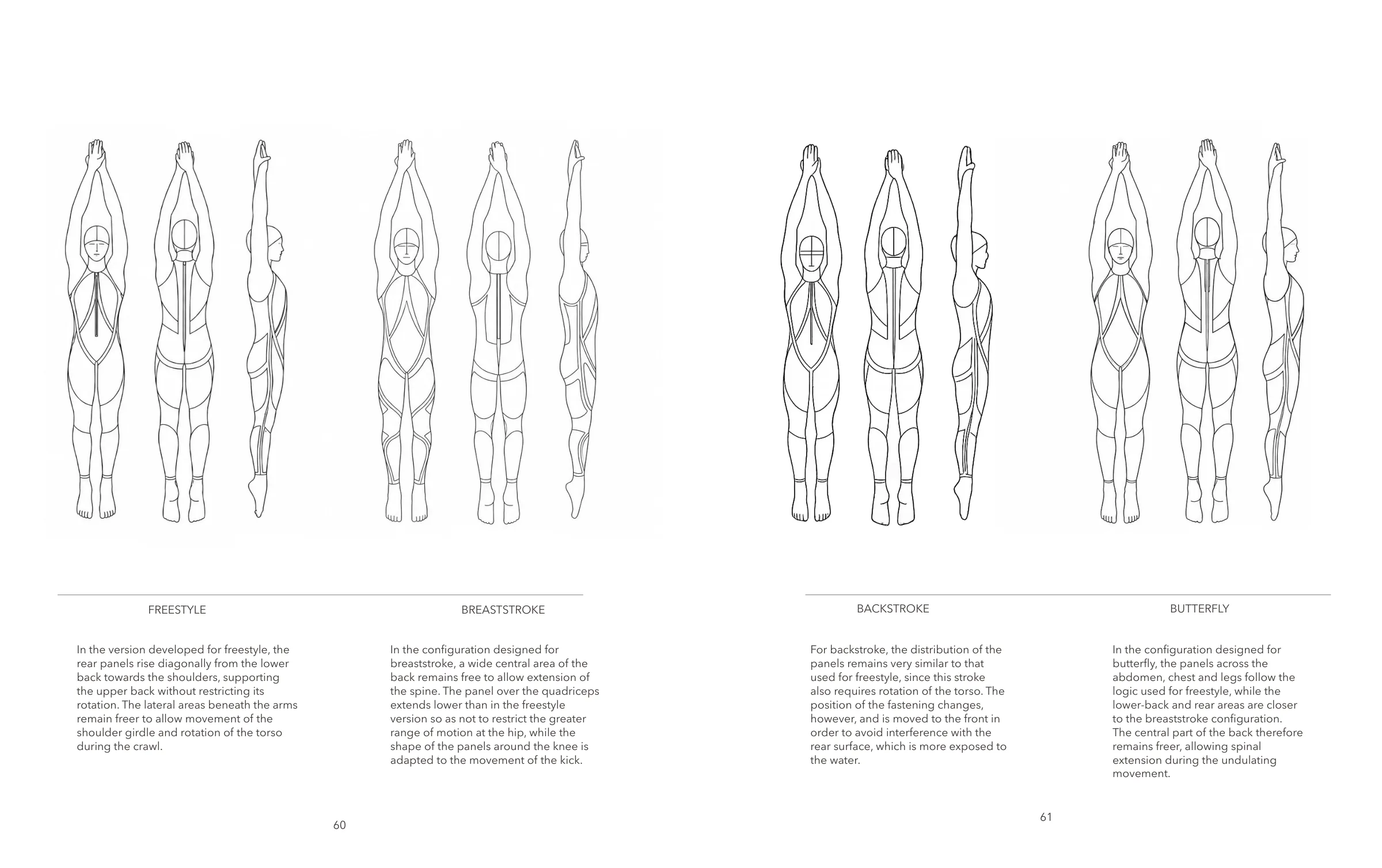 02
02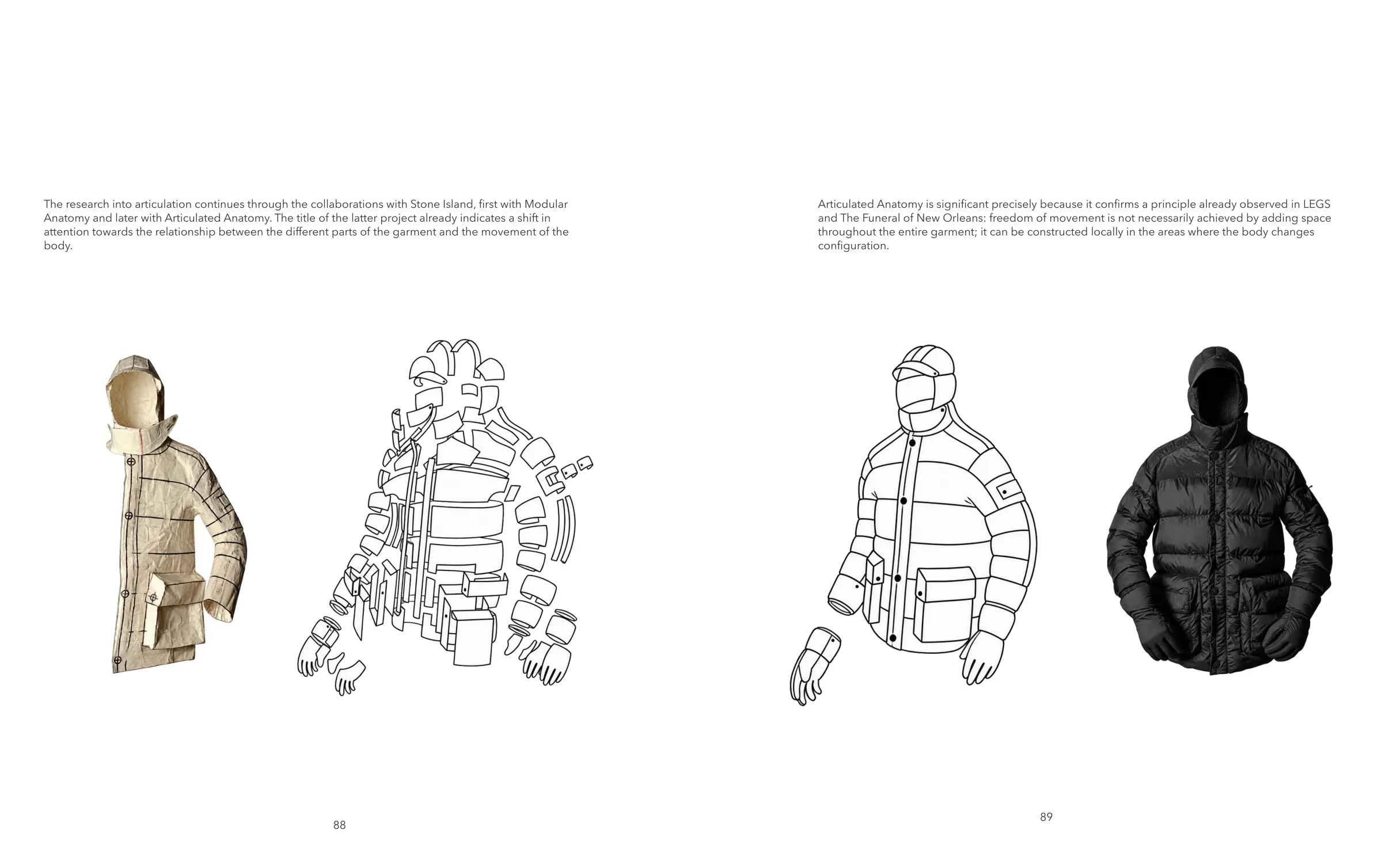 03
03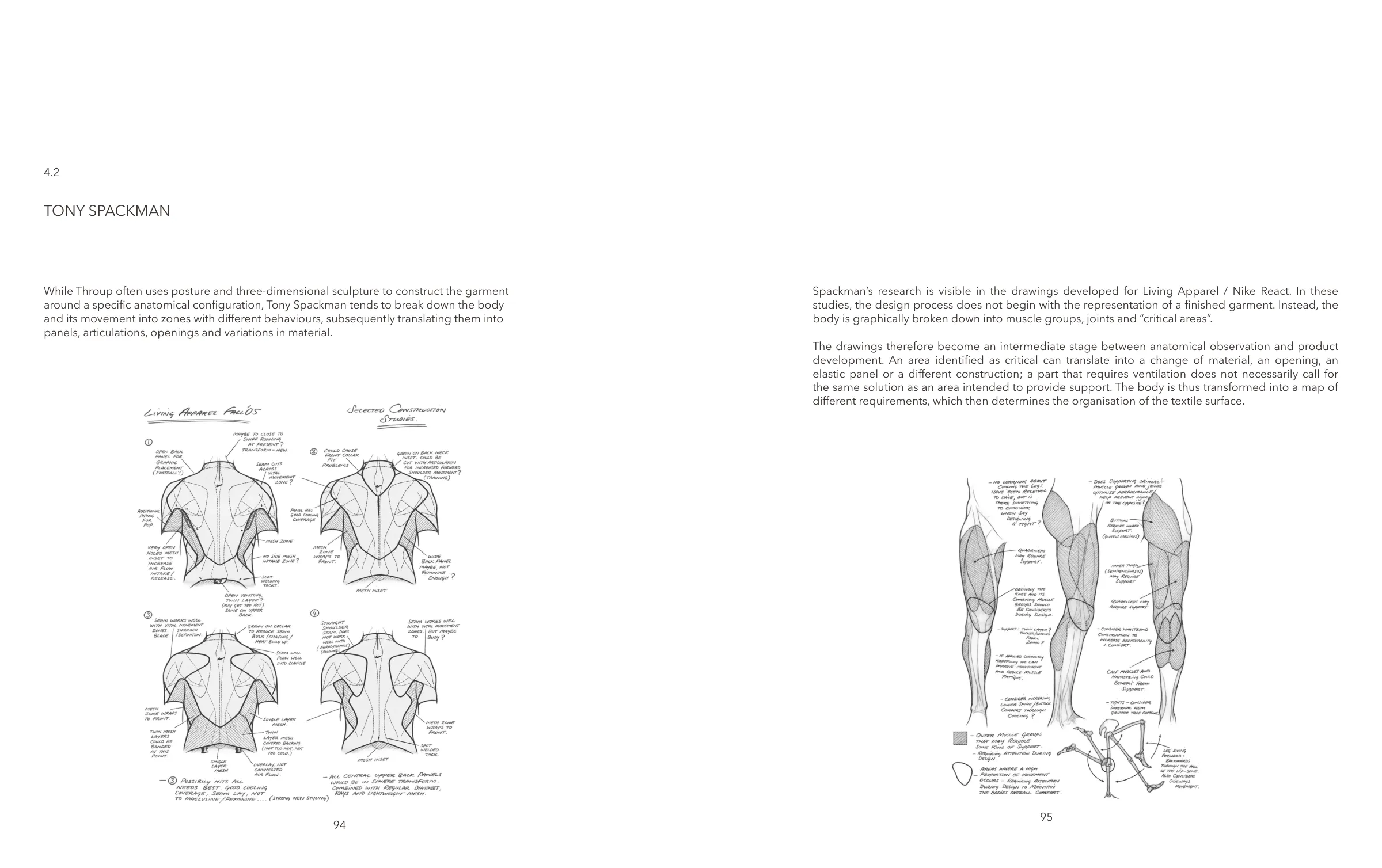 04
04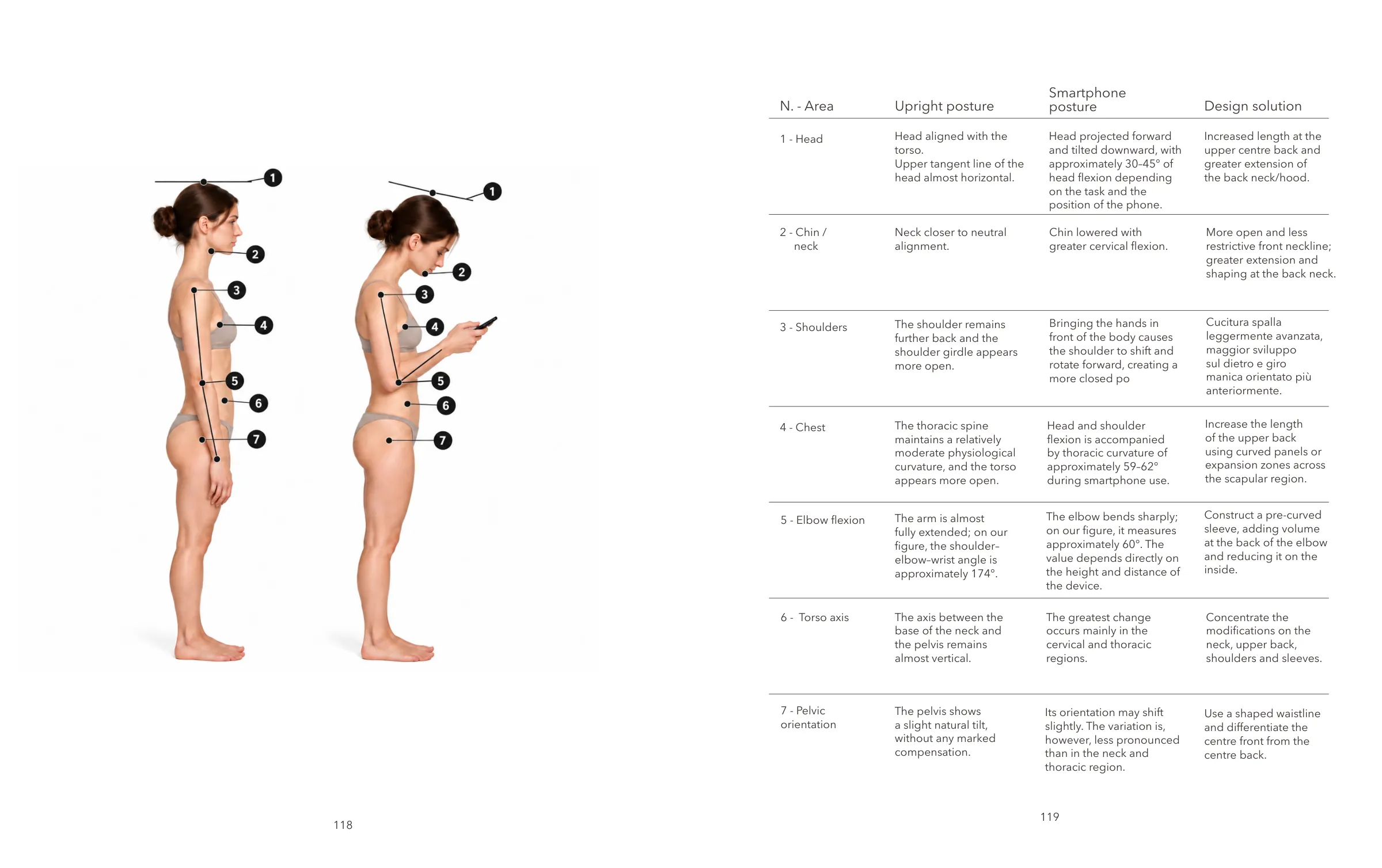 05
05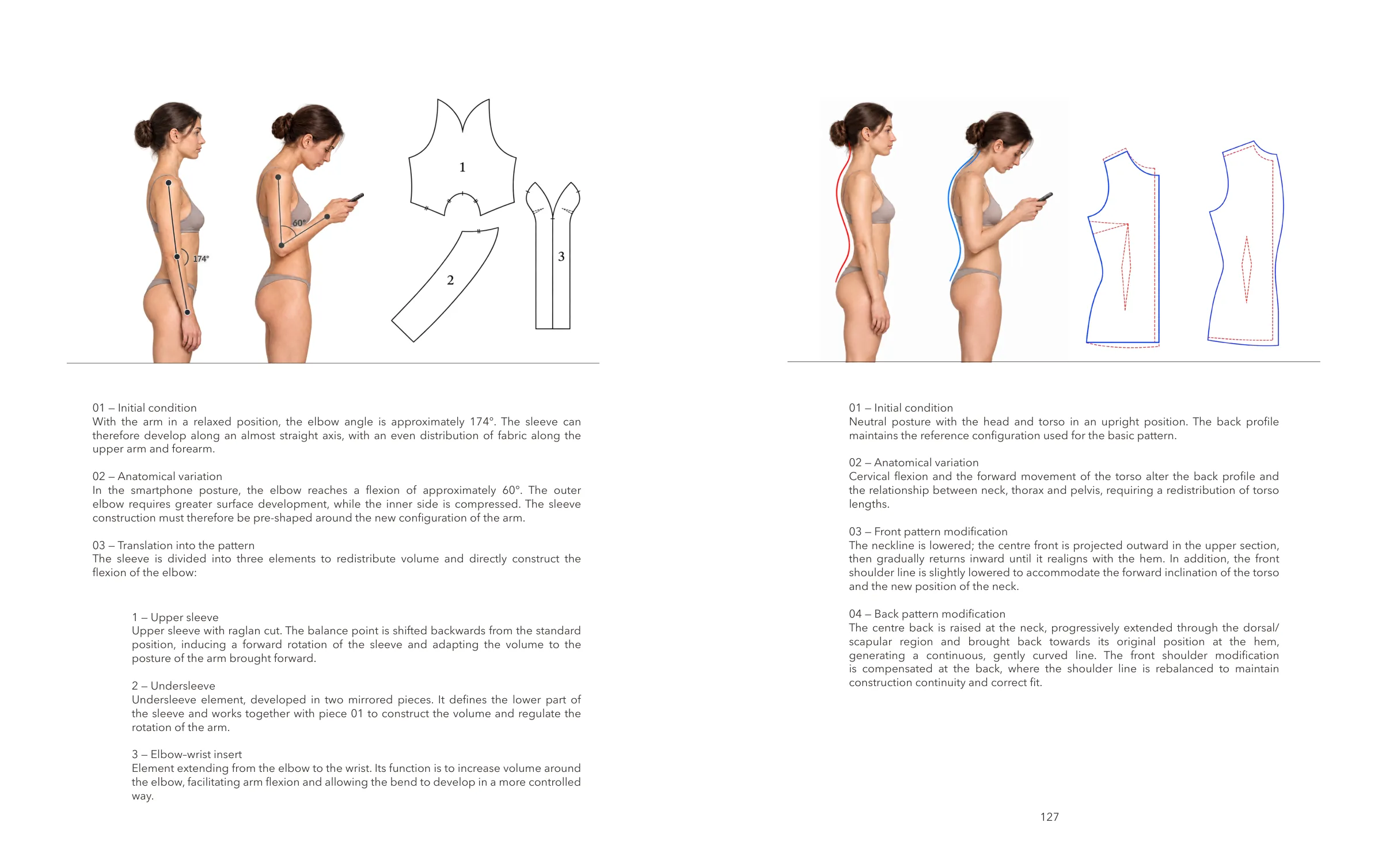 06
06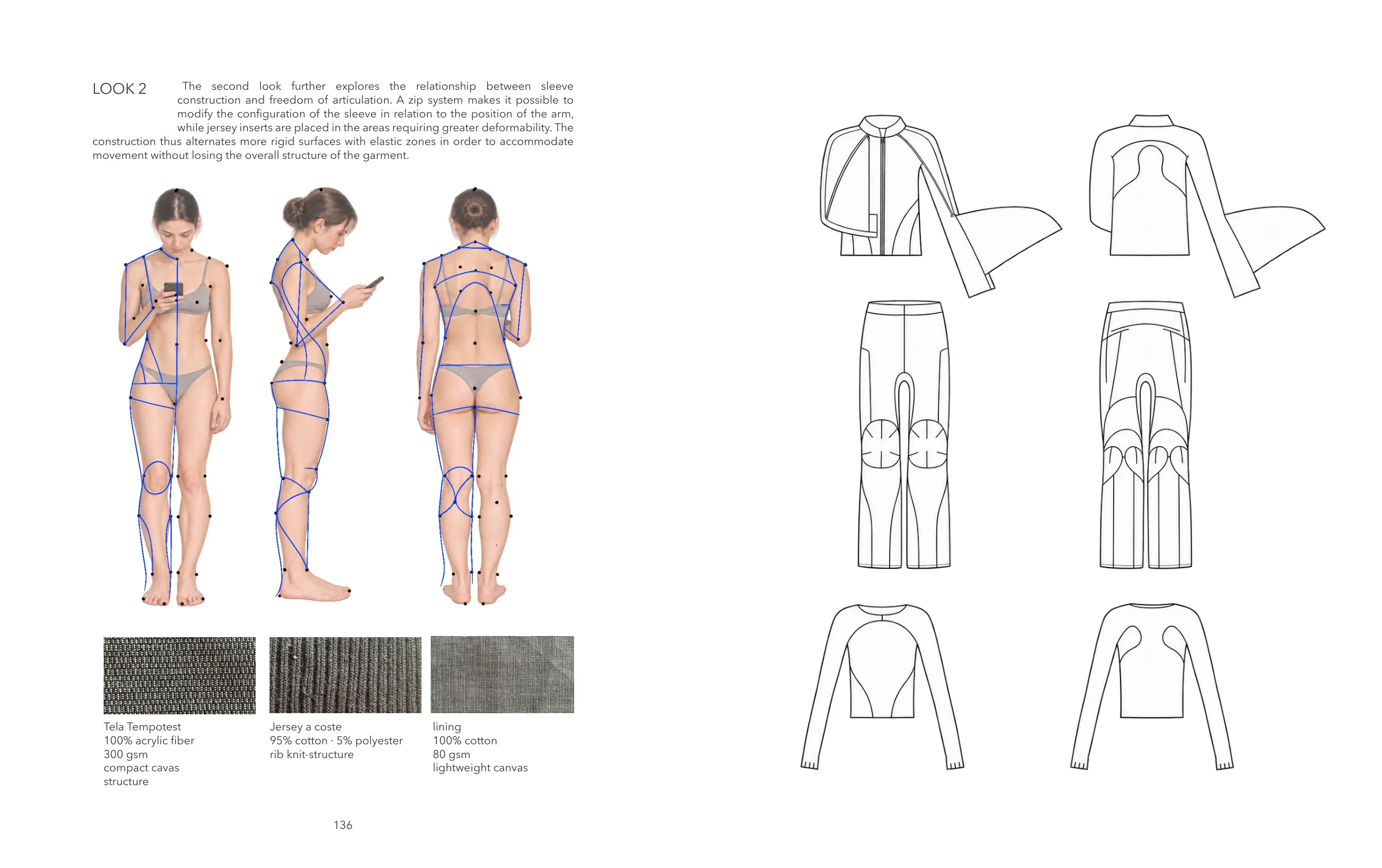 07
07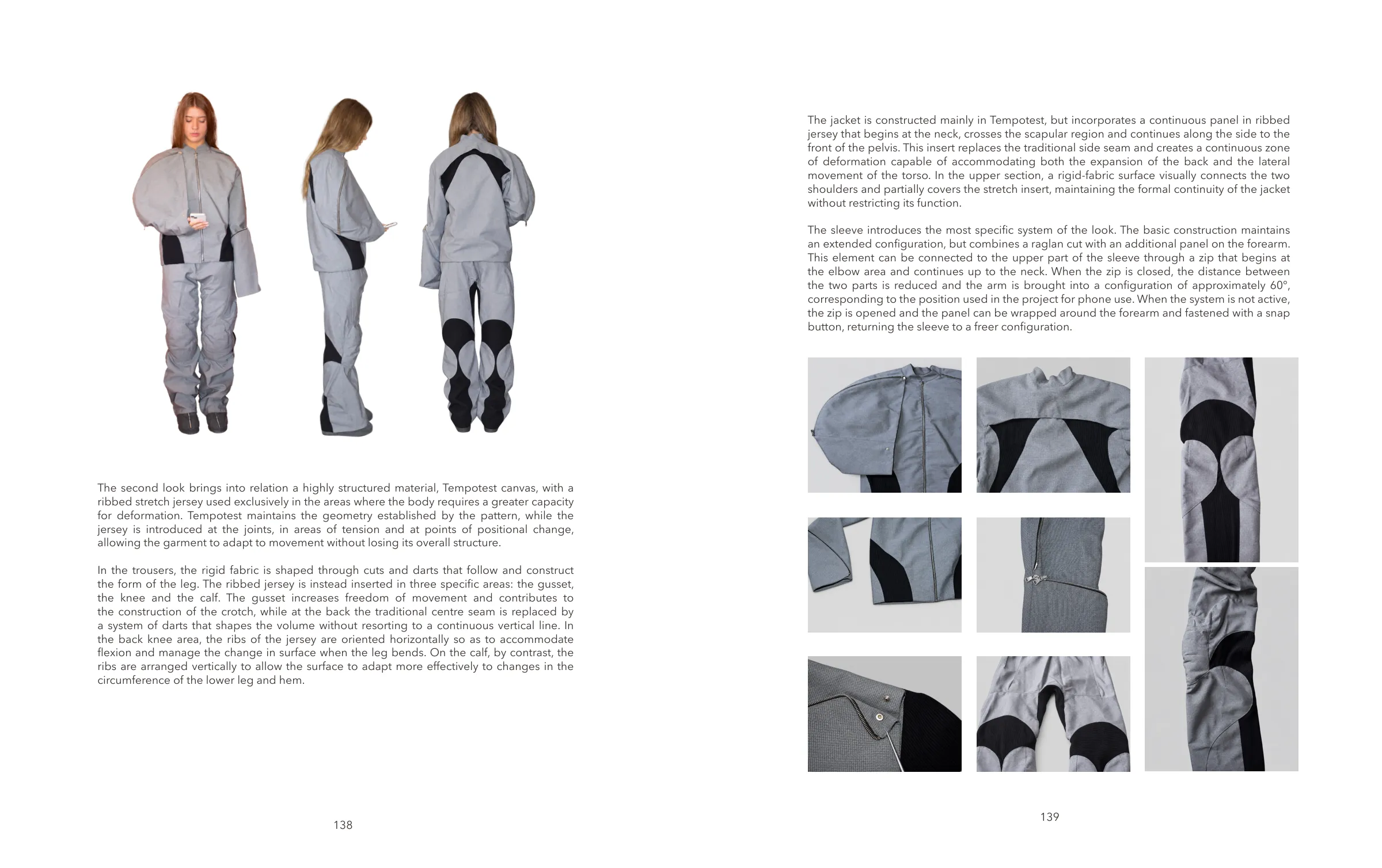 08
08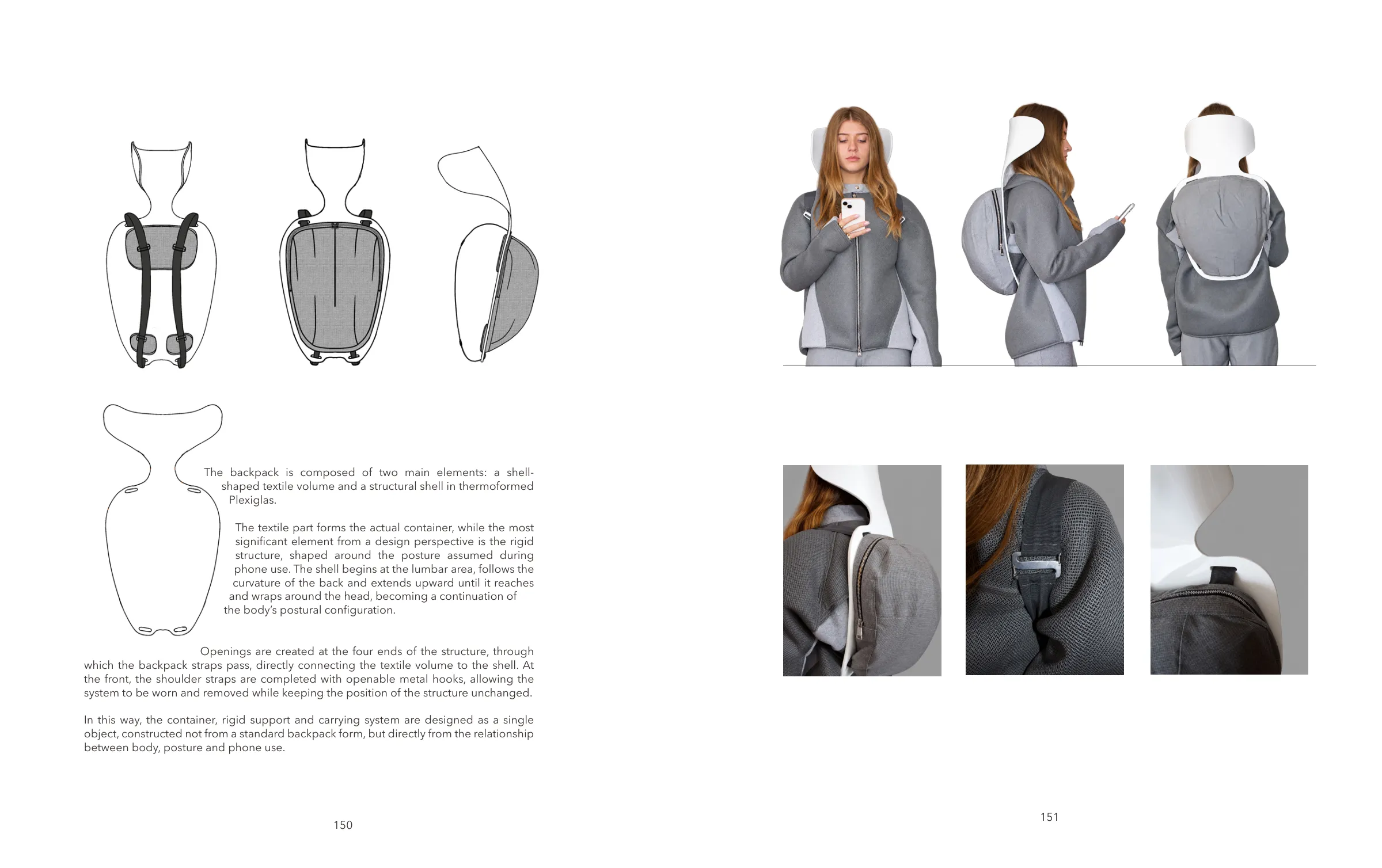 09
09
TECH-NECK
TECH-NECK explores how the constant use of digital devices is reshaping contemporary posture. Rather than correcting the forward-leaning body, the project uses it as the starting point for garment construction.
Forward head position, rounded shoulders, a curved torso and gathered arms are translated into volumes, proportions and construction lines.
The collection investigates how pattern cutting can adapt to a body increasingly shaped by technology, combining body-led construction with technical textiles and rigid materials.
Pattern development begins with the observation of the body while interacting with digital devices.
Changes in the position of the neck, shoulders, spine, arms and legs are mapped to identify new lines of balance and tension.
These observations become construction references, allowing the silhouette and panel placement to develop directly from the altered posture rather than from an idealized neutral body.
The construction process translates the mapped posture into curved panel lines, extended neck and back shapes, articulated sections and redistributed volumes.
Development moves between body observation, sketching, technical drawing and three-dimensional testing, allowing each garment to respond to the posture that generated it.
Throughout the development process, I experimented with unconventional textiles, including outdoor furnishing fabrics, upholstery materials and three-dimensional mesh.
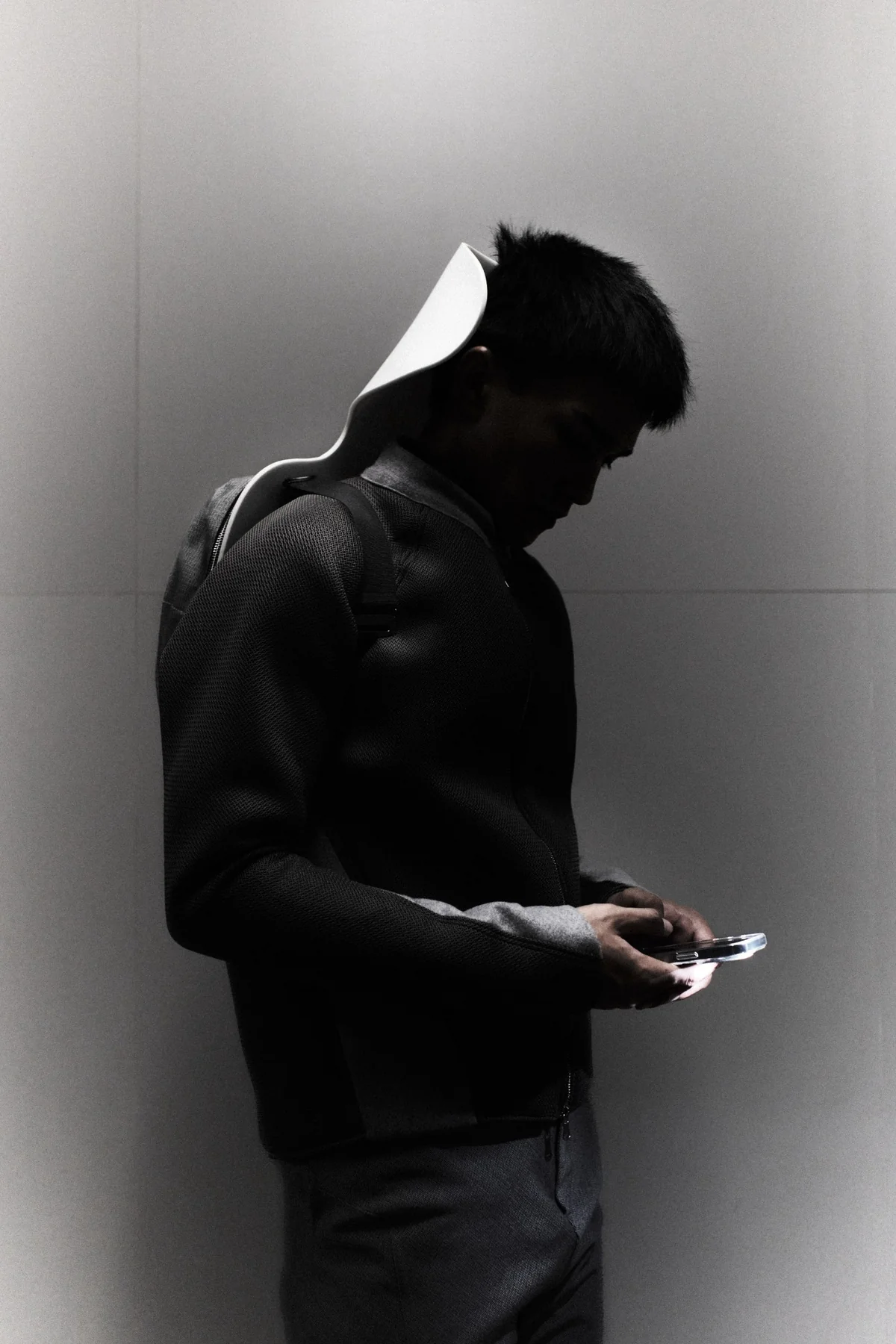
For the second look, an 8 mm plexiglass panel was cut using a circular milling process and shaped through thermoforming. The rigid element was then bolted directly to the wool jacket, with the fastening system concealed beneath the lining to maintain a clean exterior finish.
For the backpack, the plexiglass structure was laser-cut and subsequently thermoformed to follow the curvature of the back and extend towards the neck.
01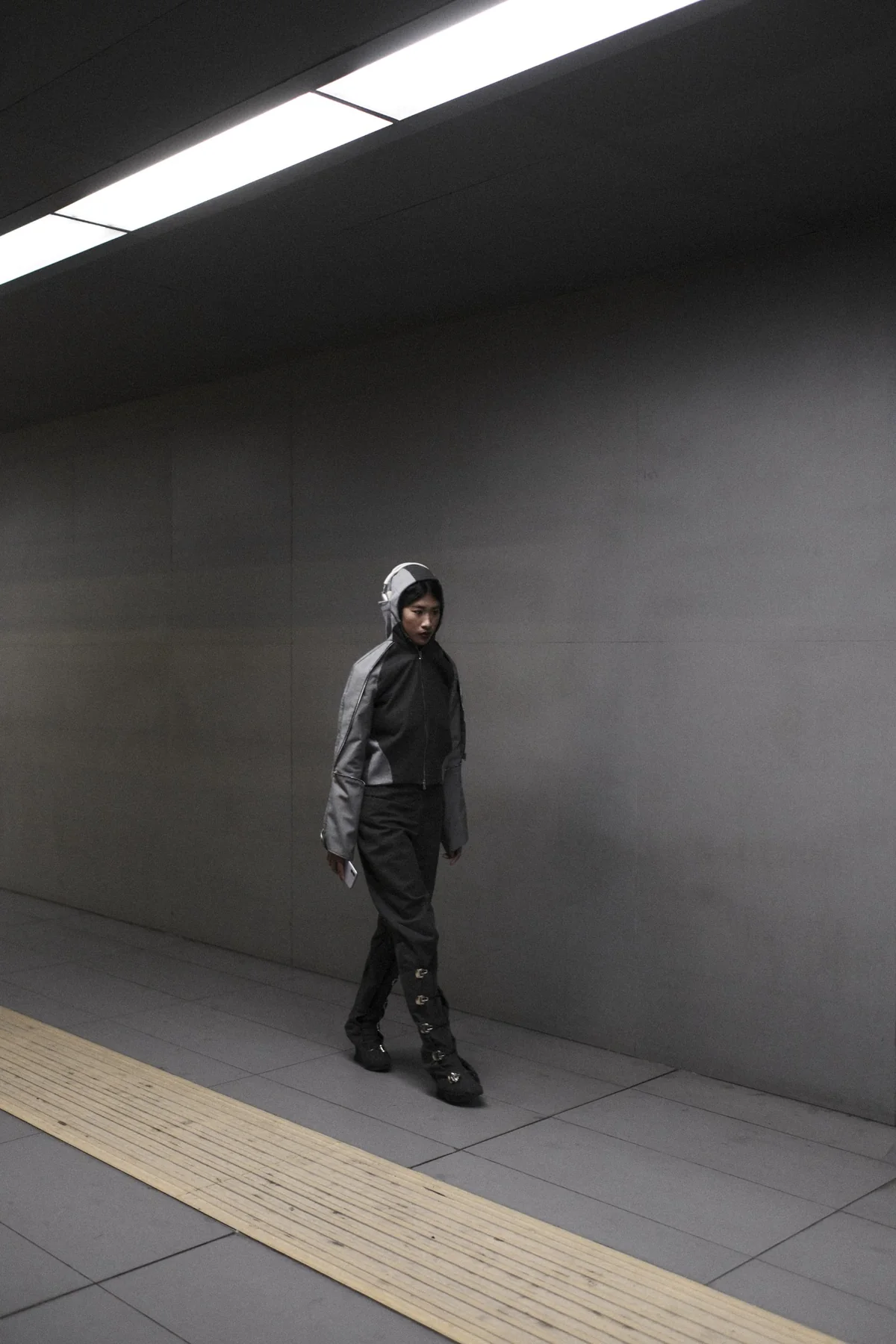 02
02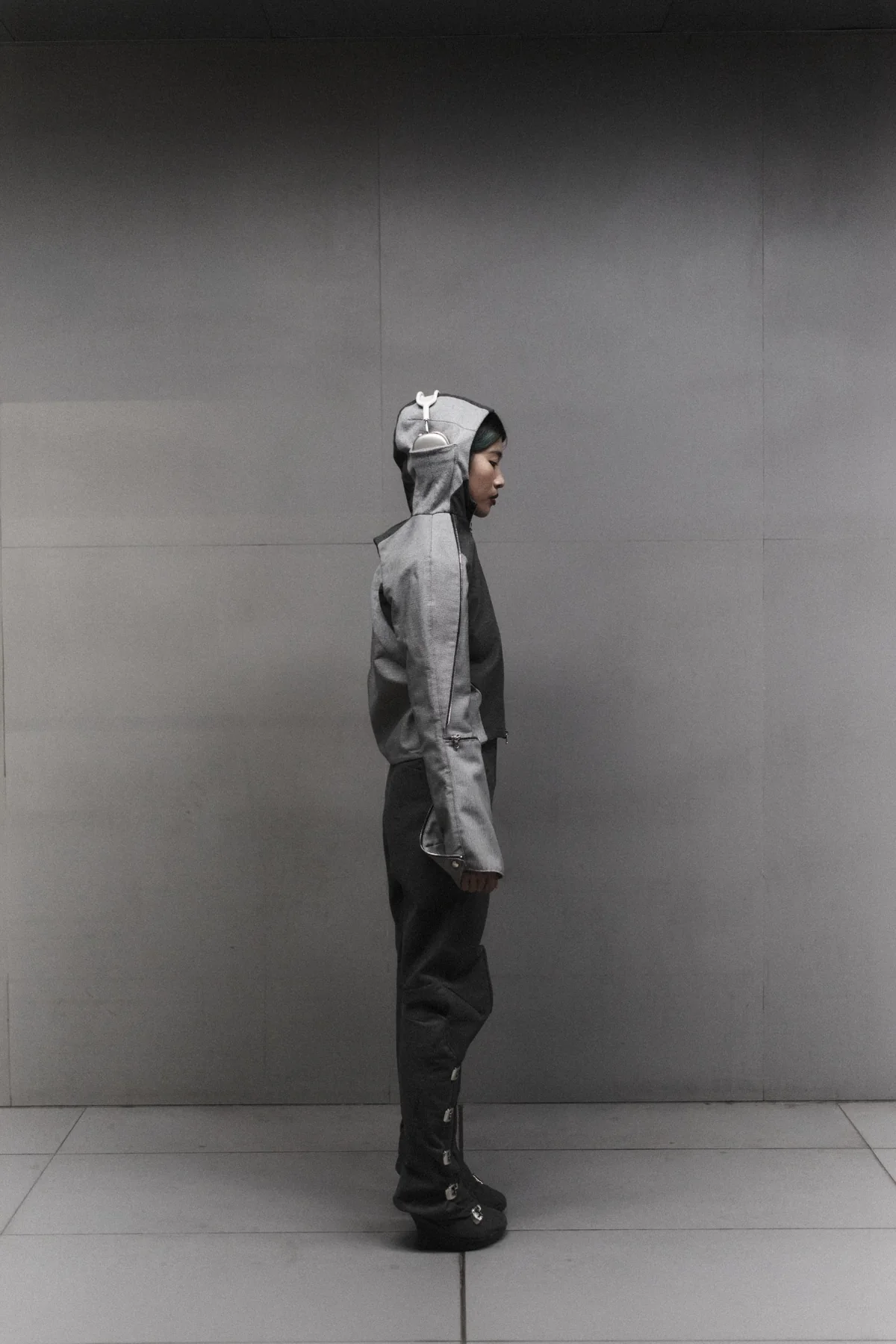 03
03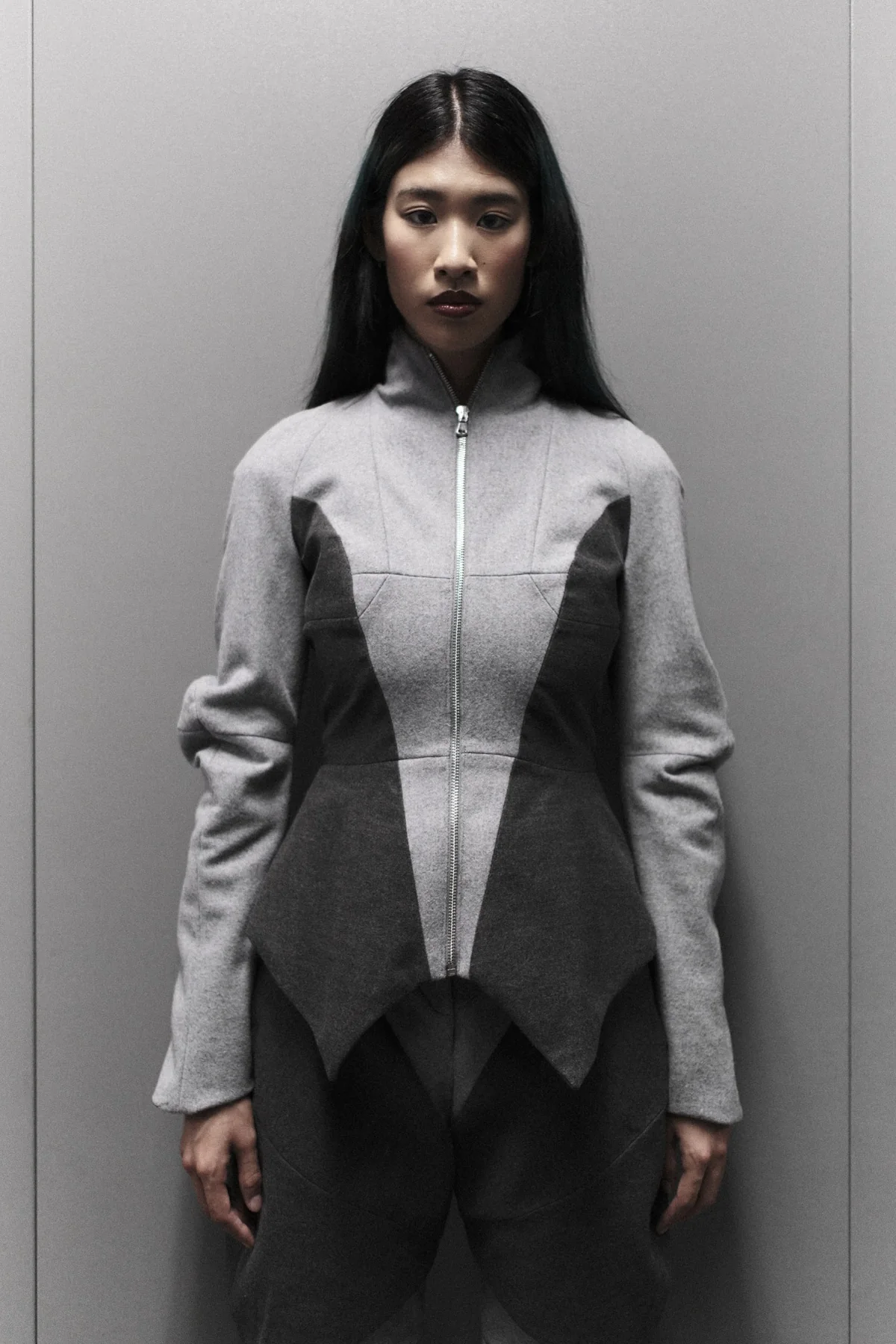 04
04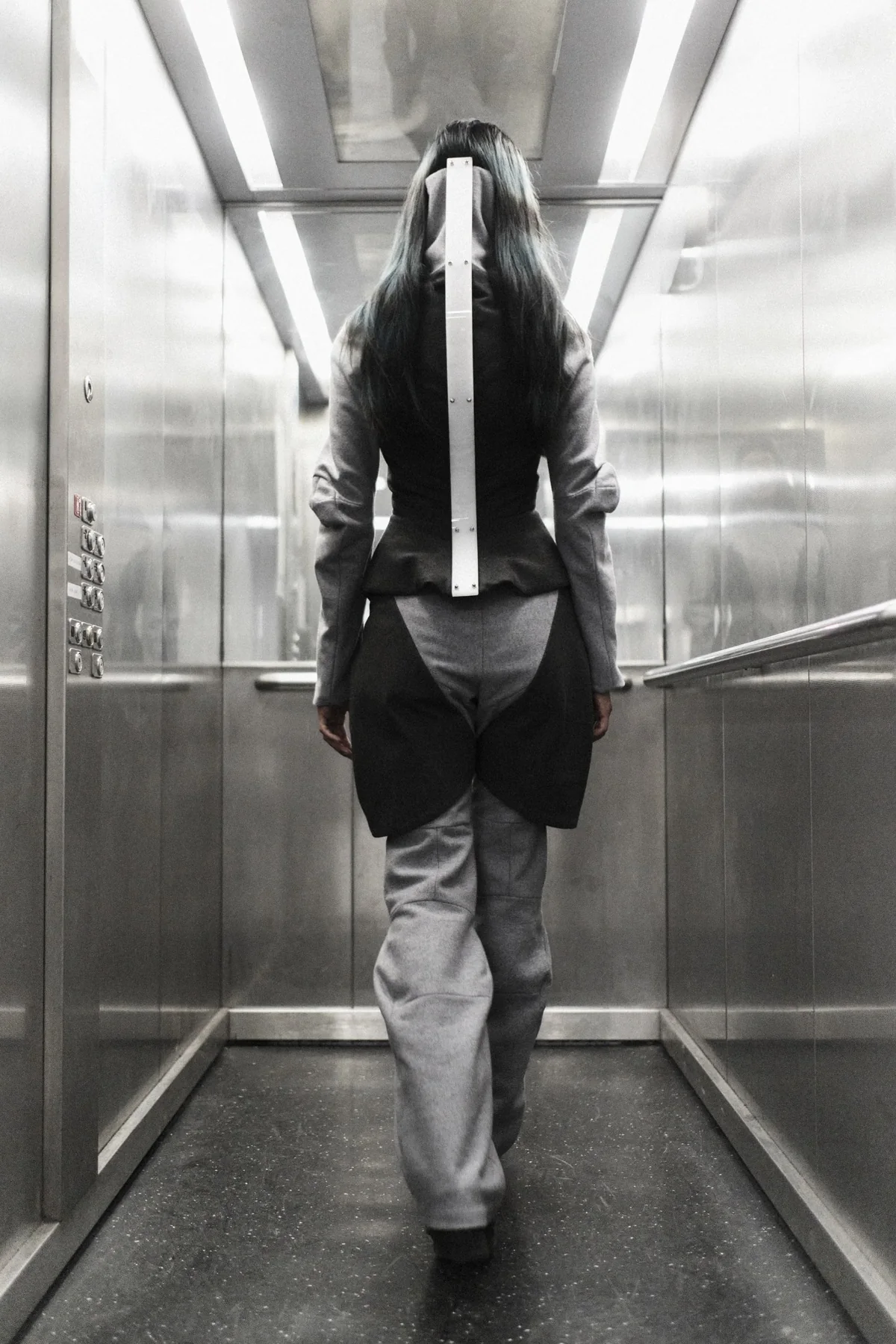 05
05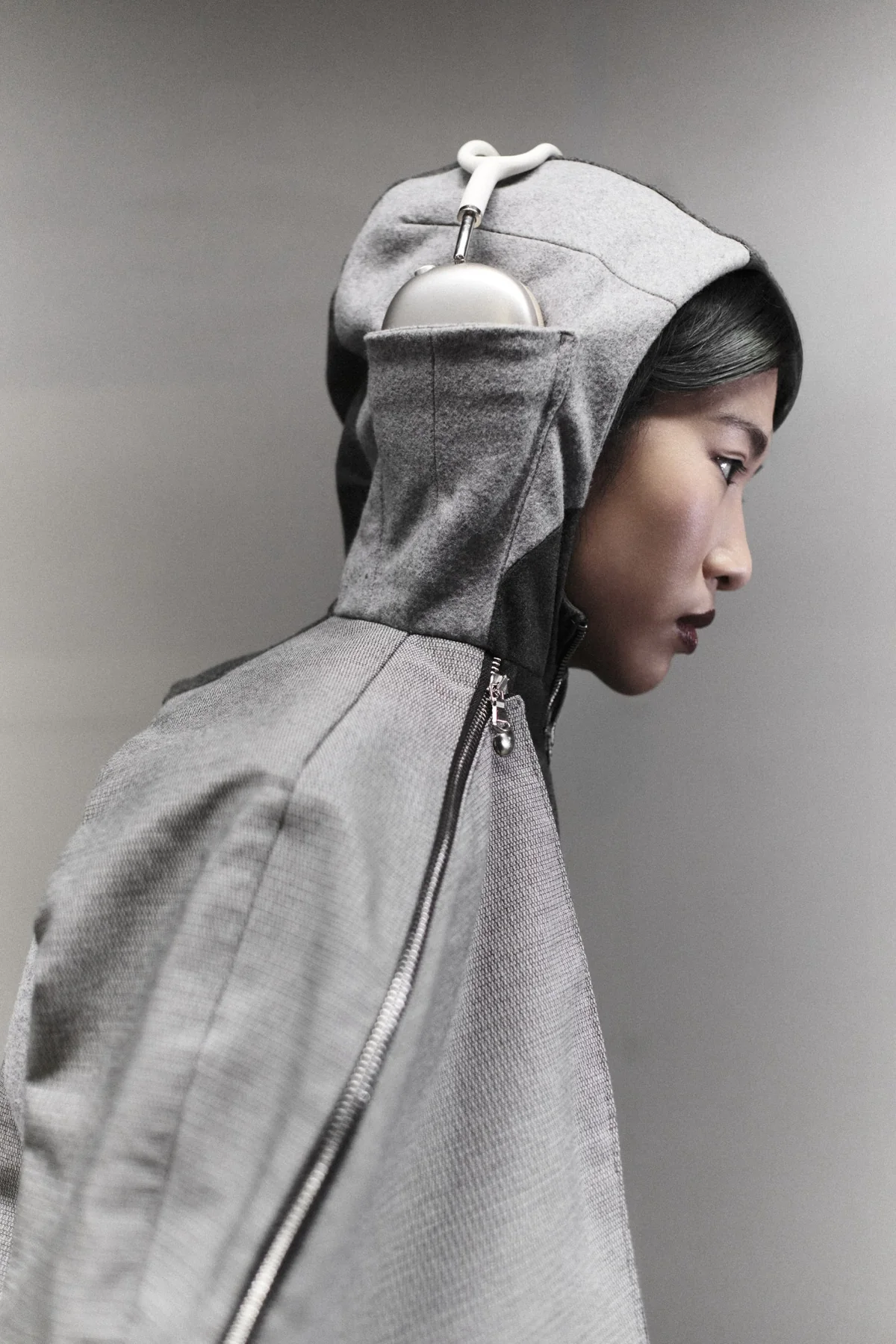 06
06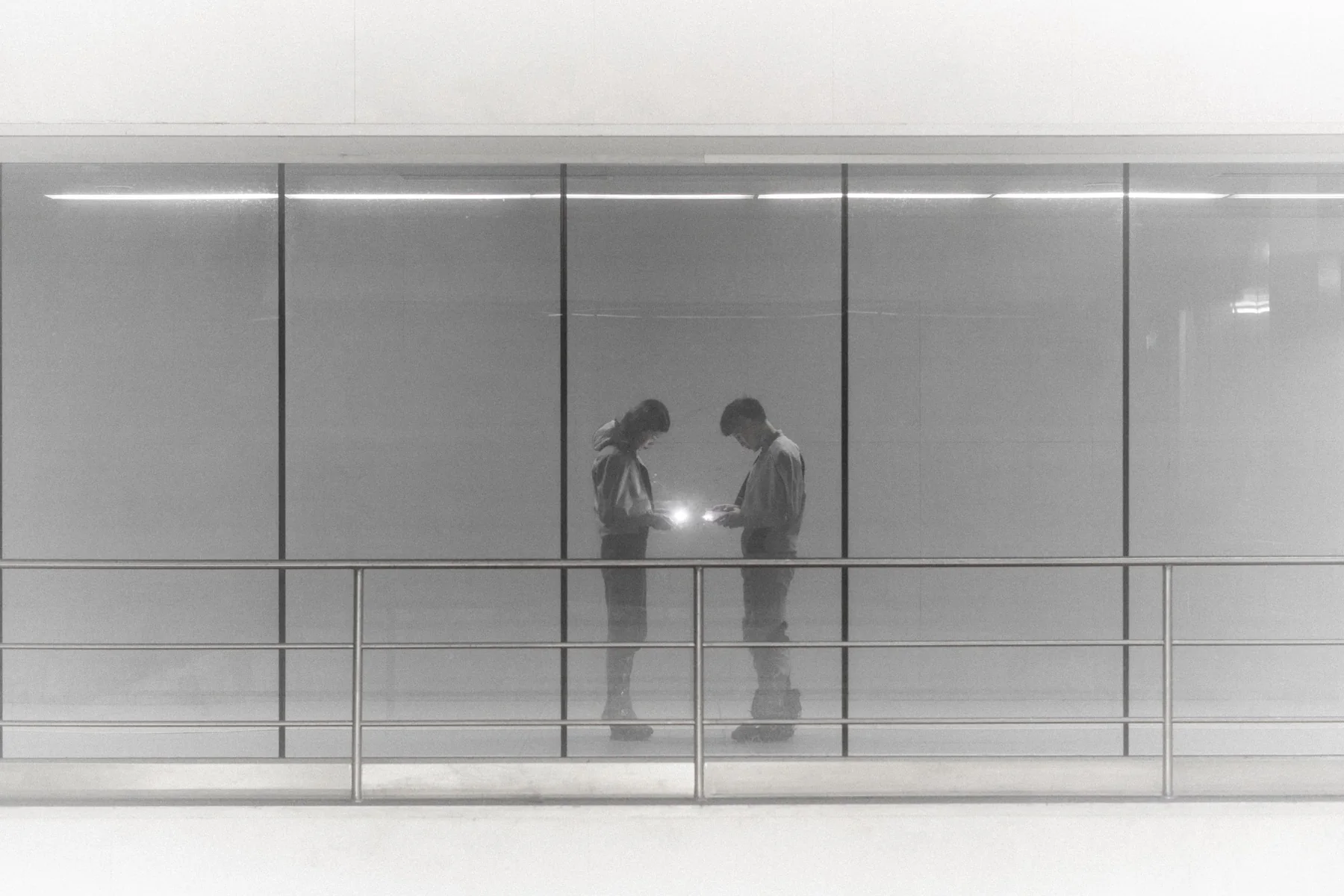 07
07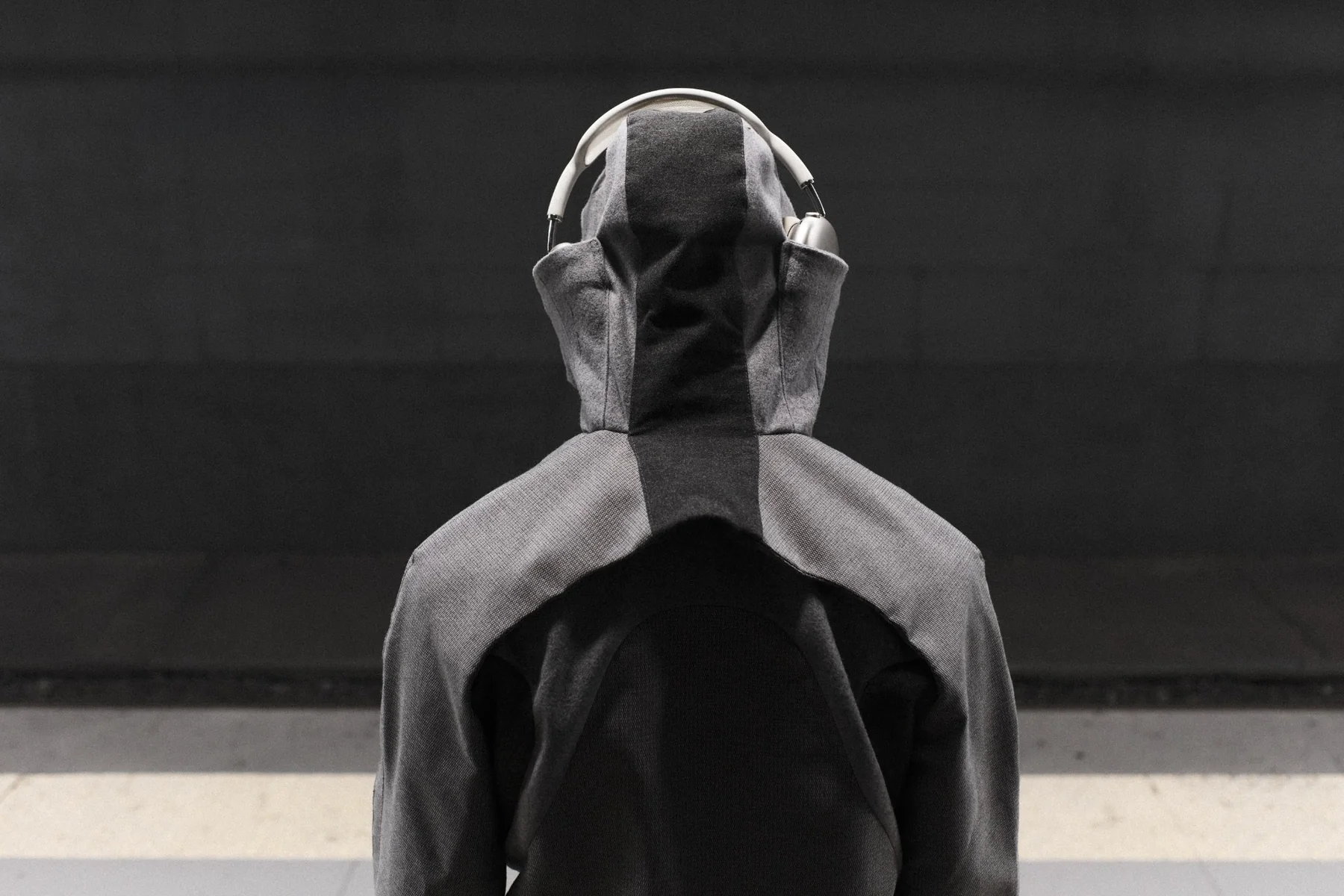 08
08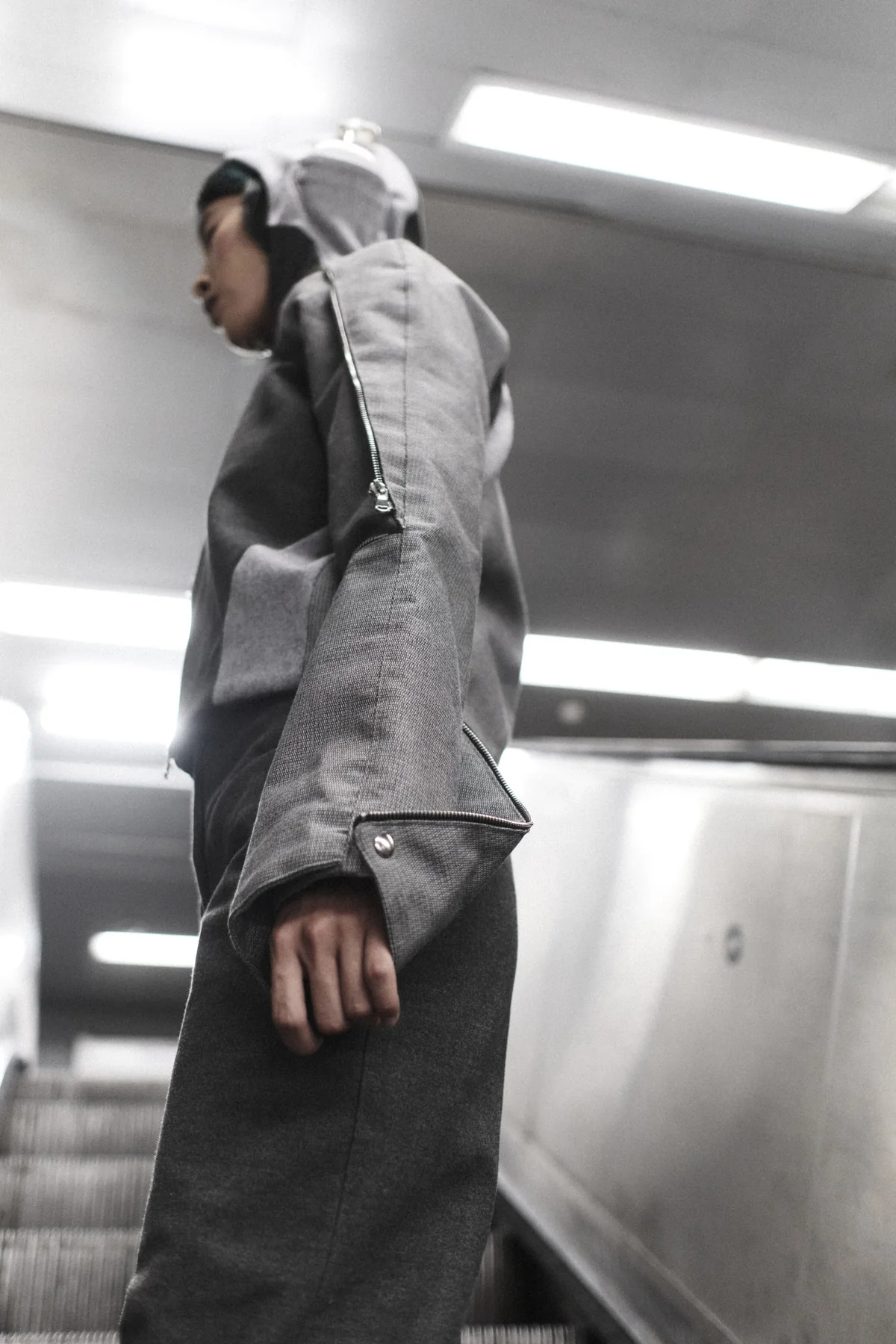 09
09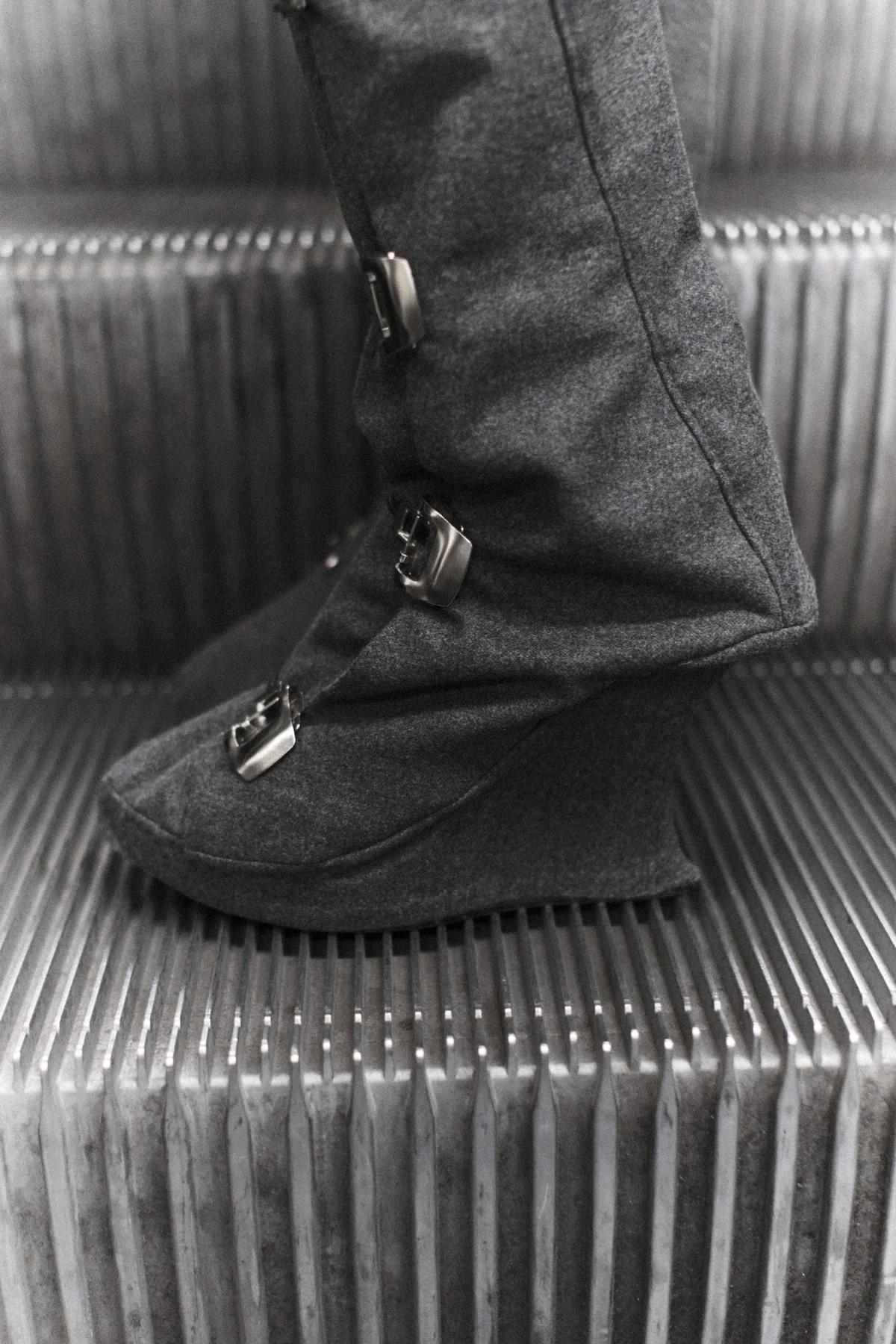 10
10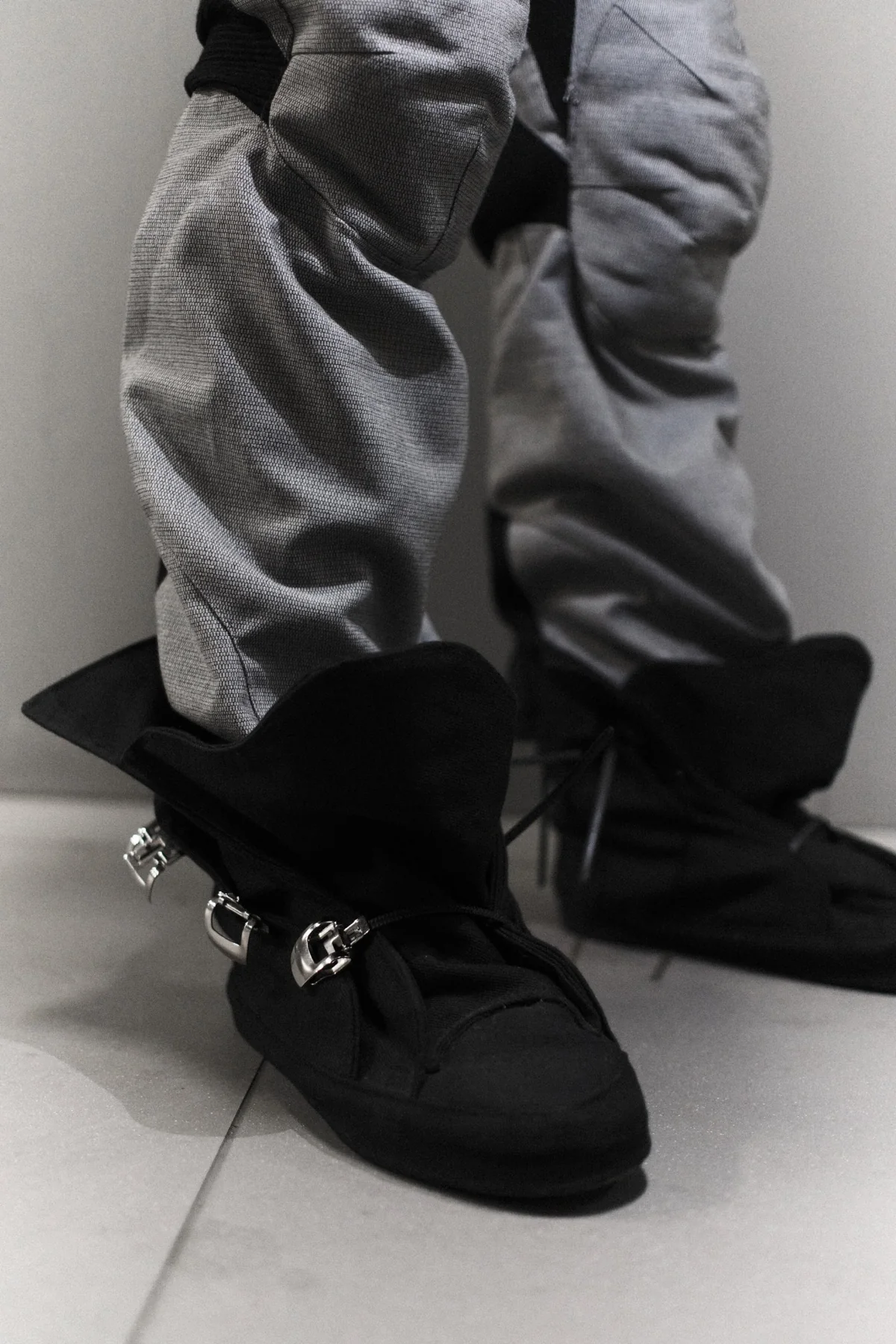 11
11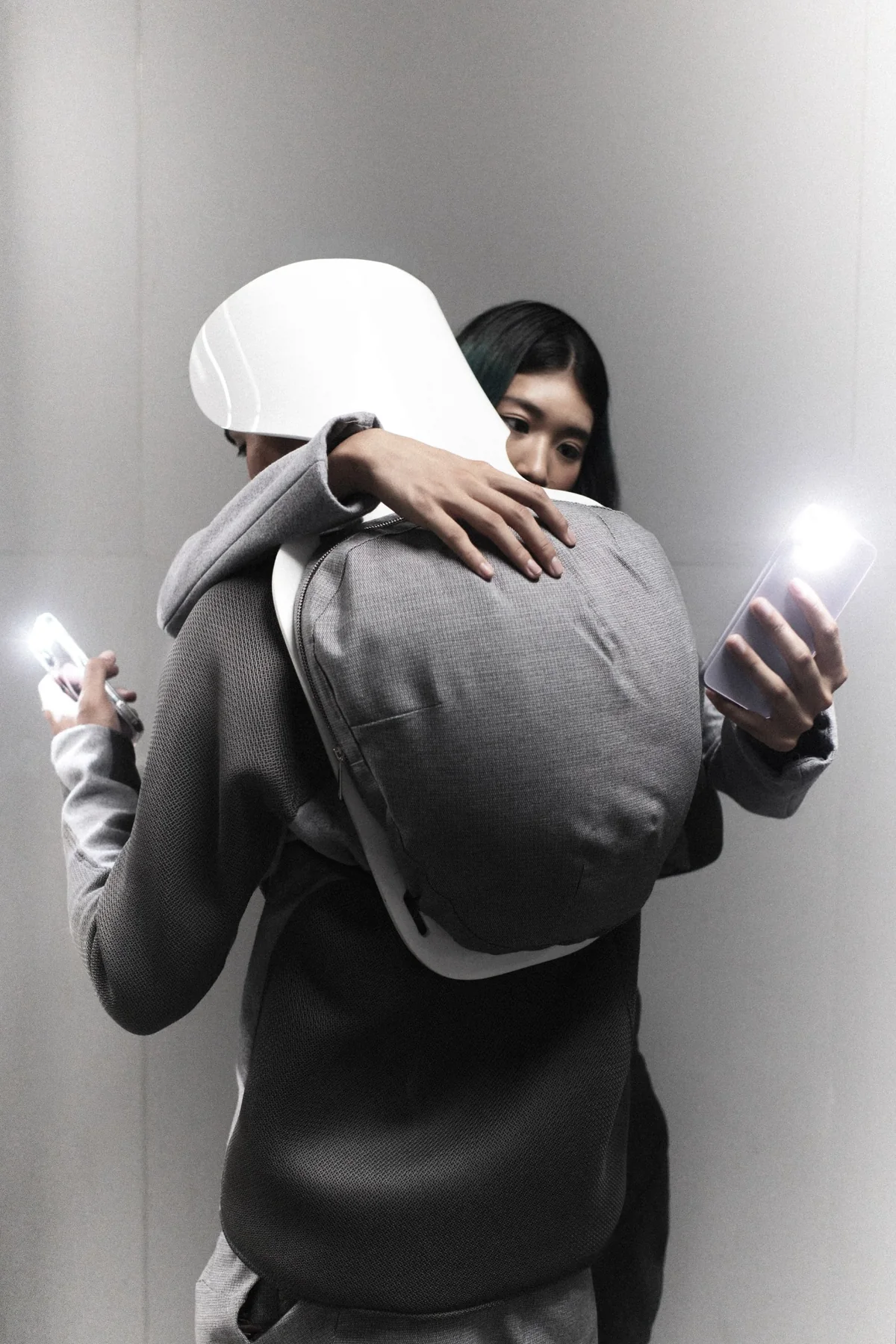 12
12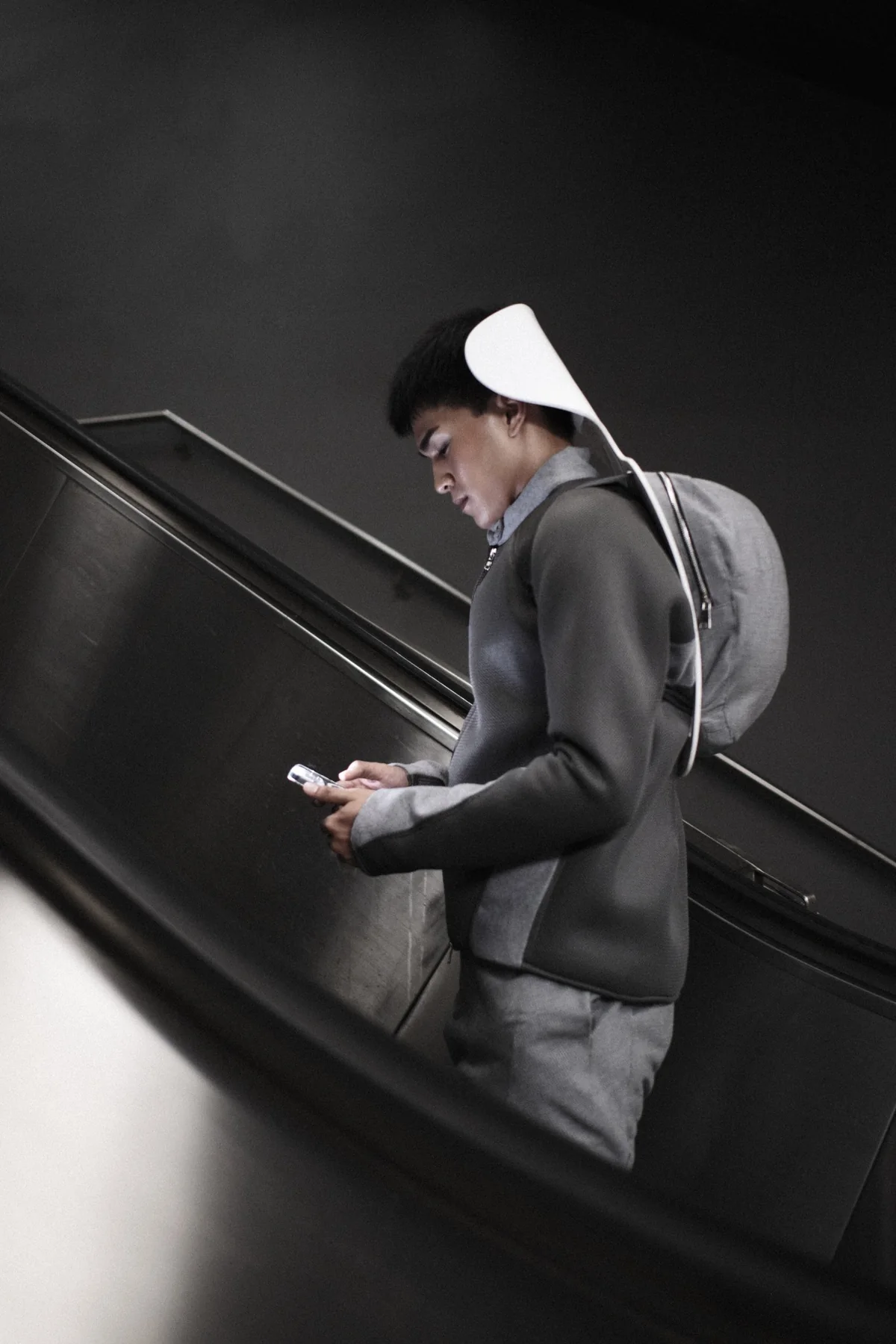 13
13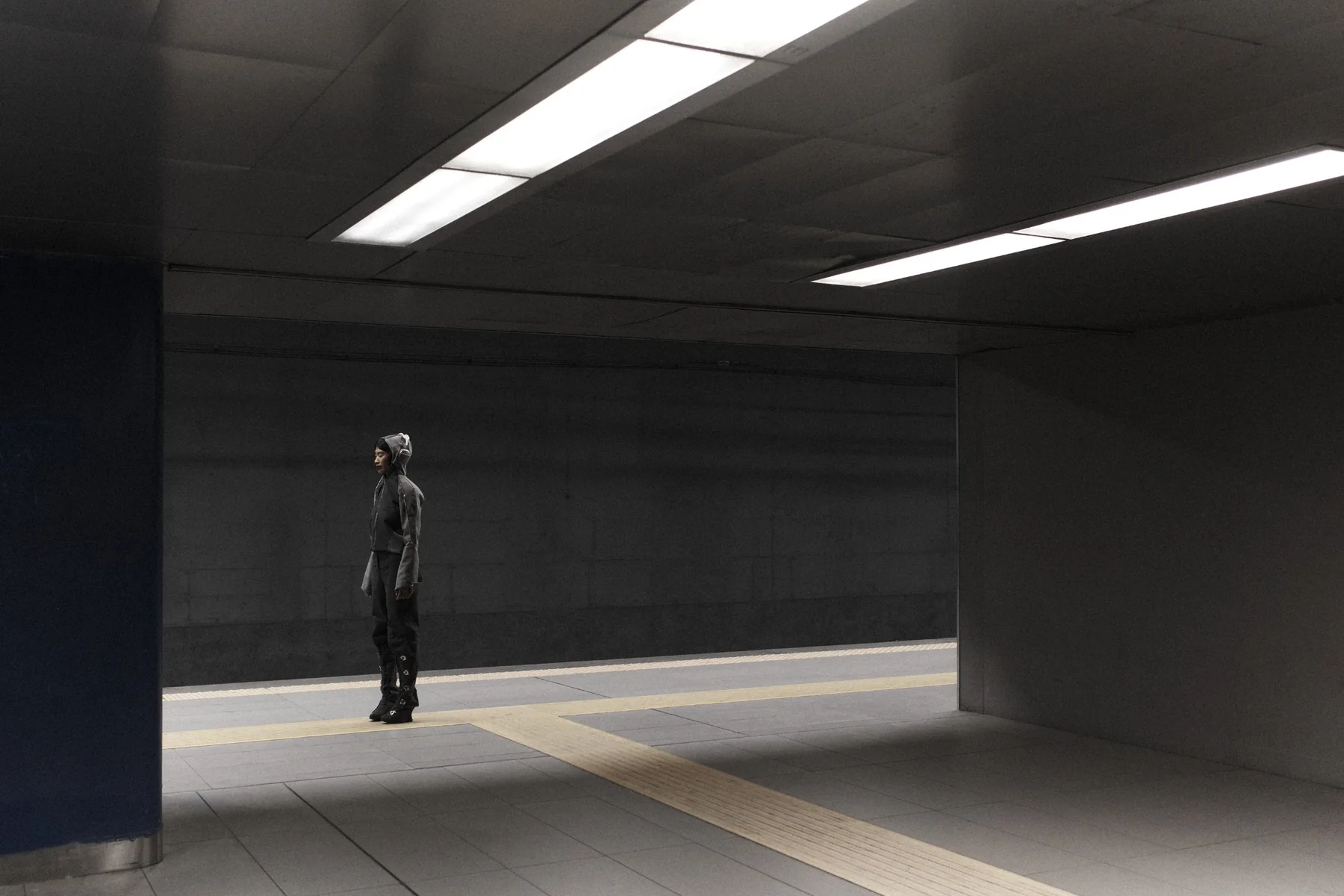 14
14
MODULAIRE
MODULAIRE explores a modular approach to menswear, developing garments as systems of interchangeable components rather than fixed structures.
Built from simple geometric pattern shapes, snap fastenings connect, remove and reposition sections, enabling multiple configurations.
A repeated fastening logic connects independent sections. Sleeves, body panels and trouser sections detach and reassemble into multiple configurations.
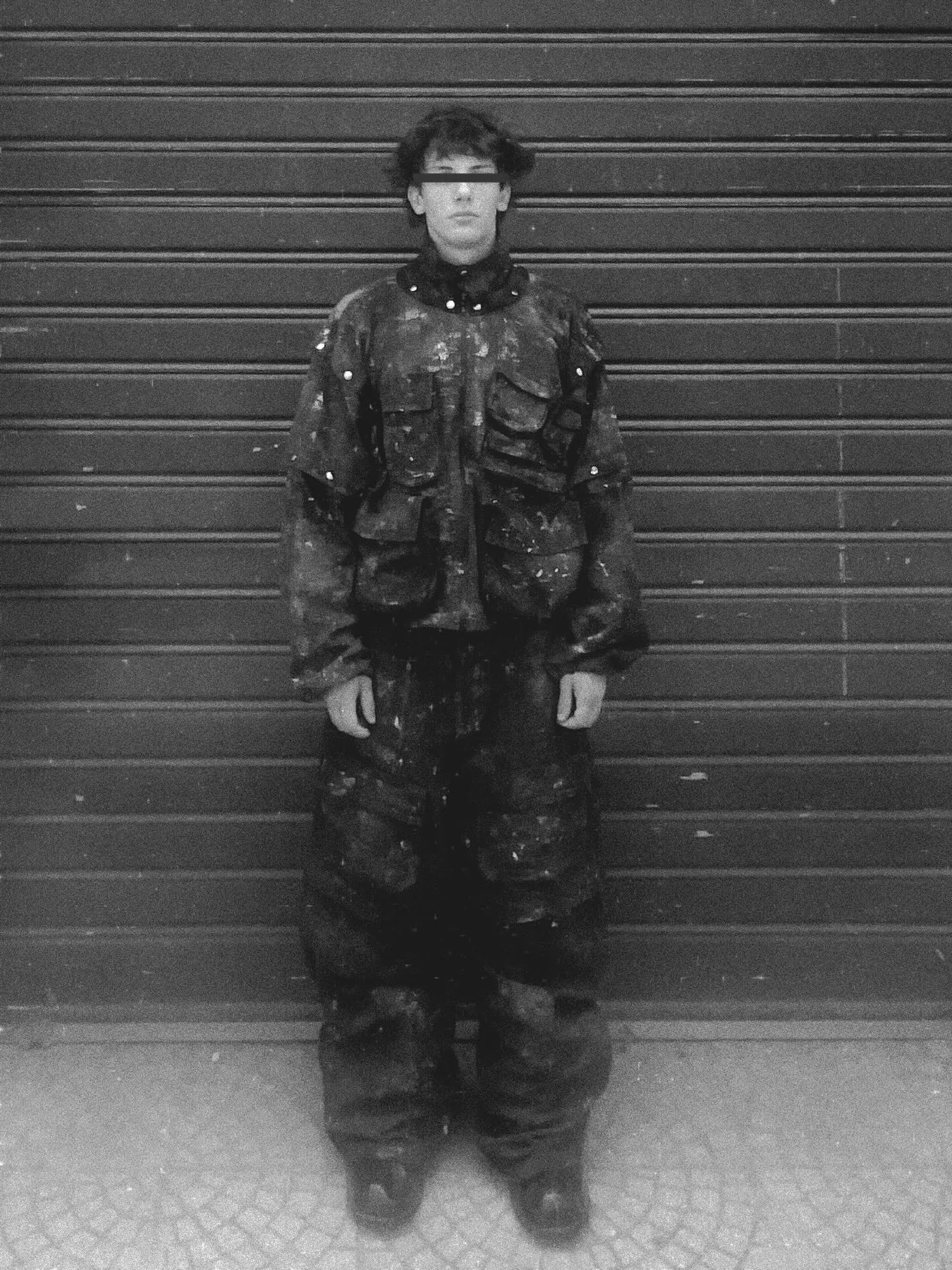
The final look uses 250 gsm 100% cotton canvas, initially white, dyed black, then hand-painted with three grey acrylic shades to create a layered camouflage effect while maintaining the structural quality of the fabric.
01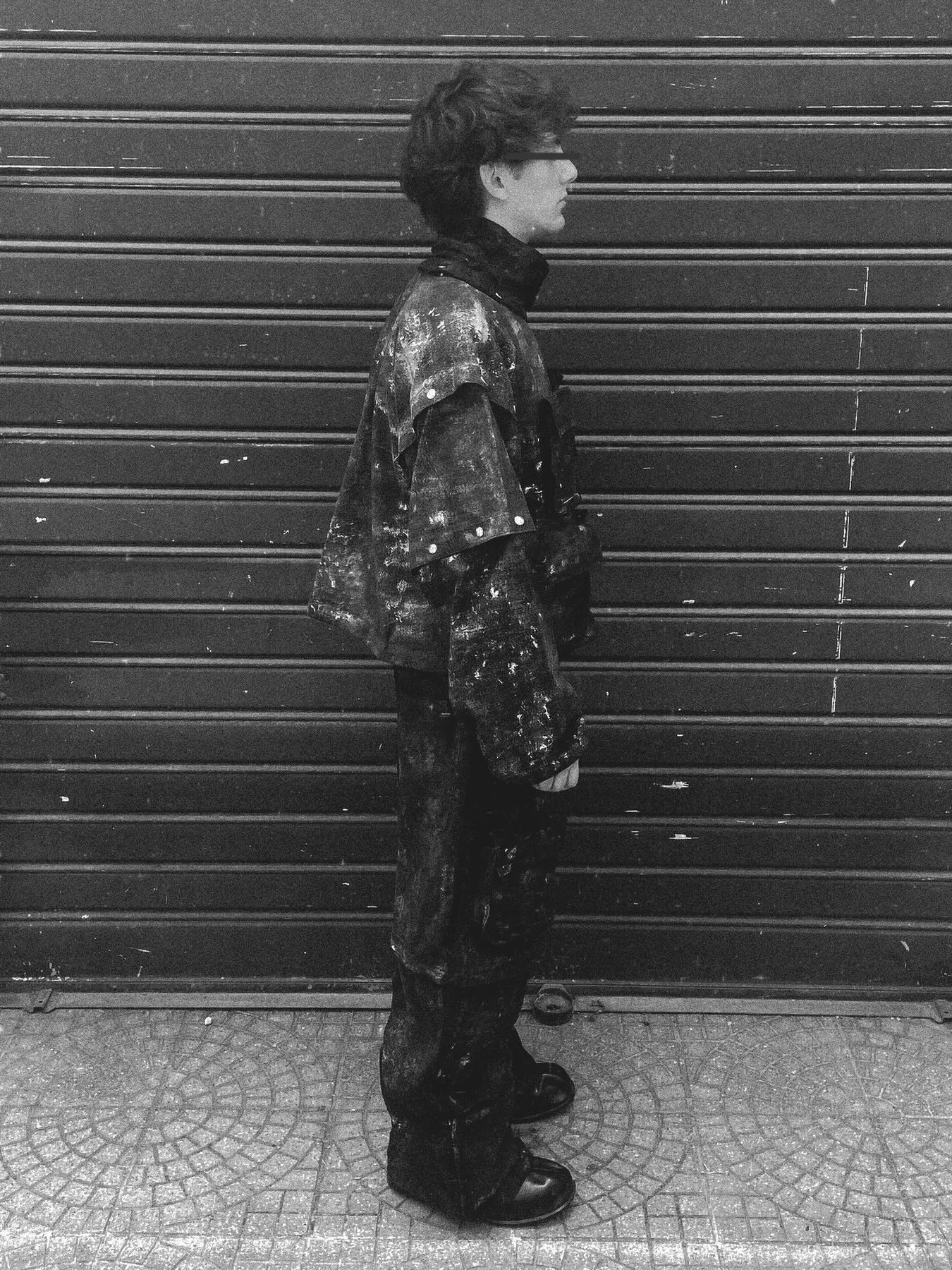 02
02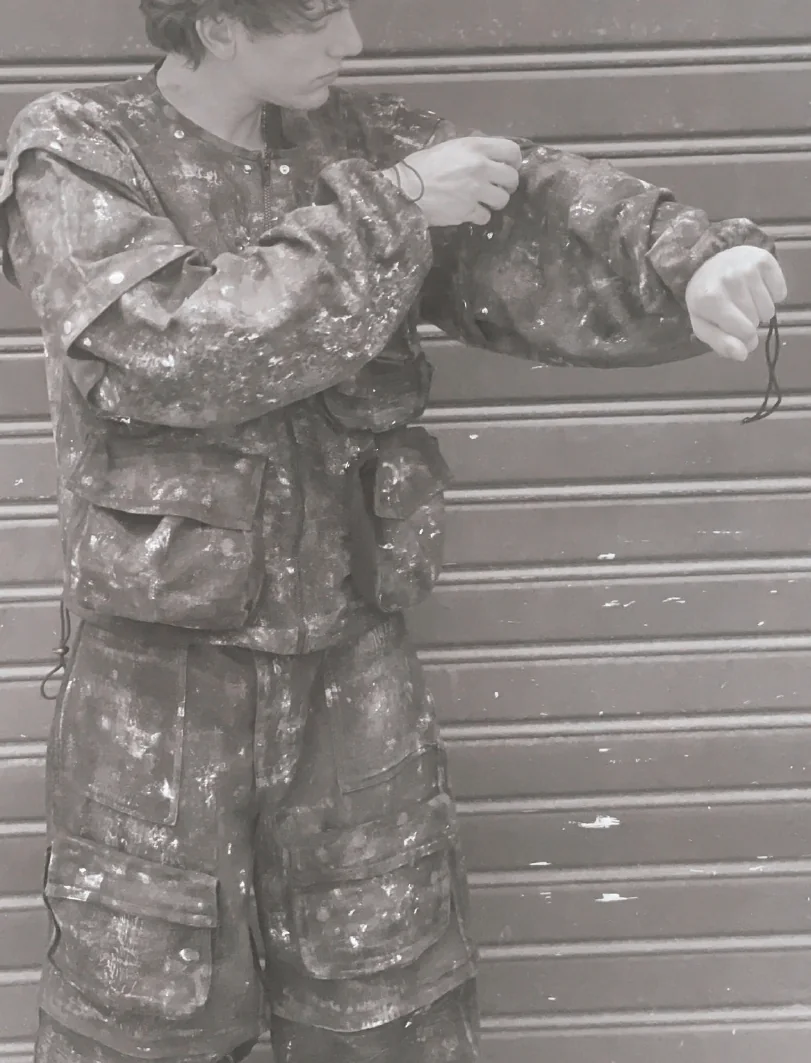 03
03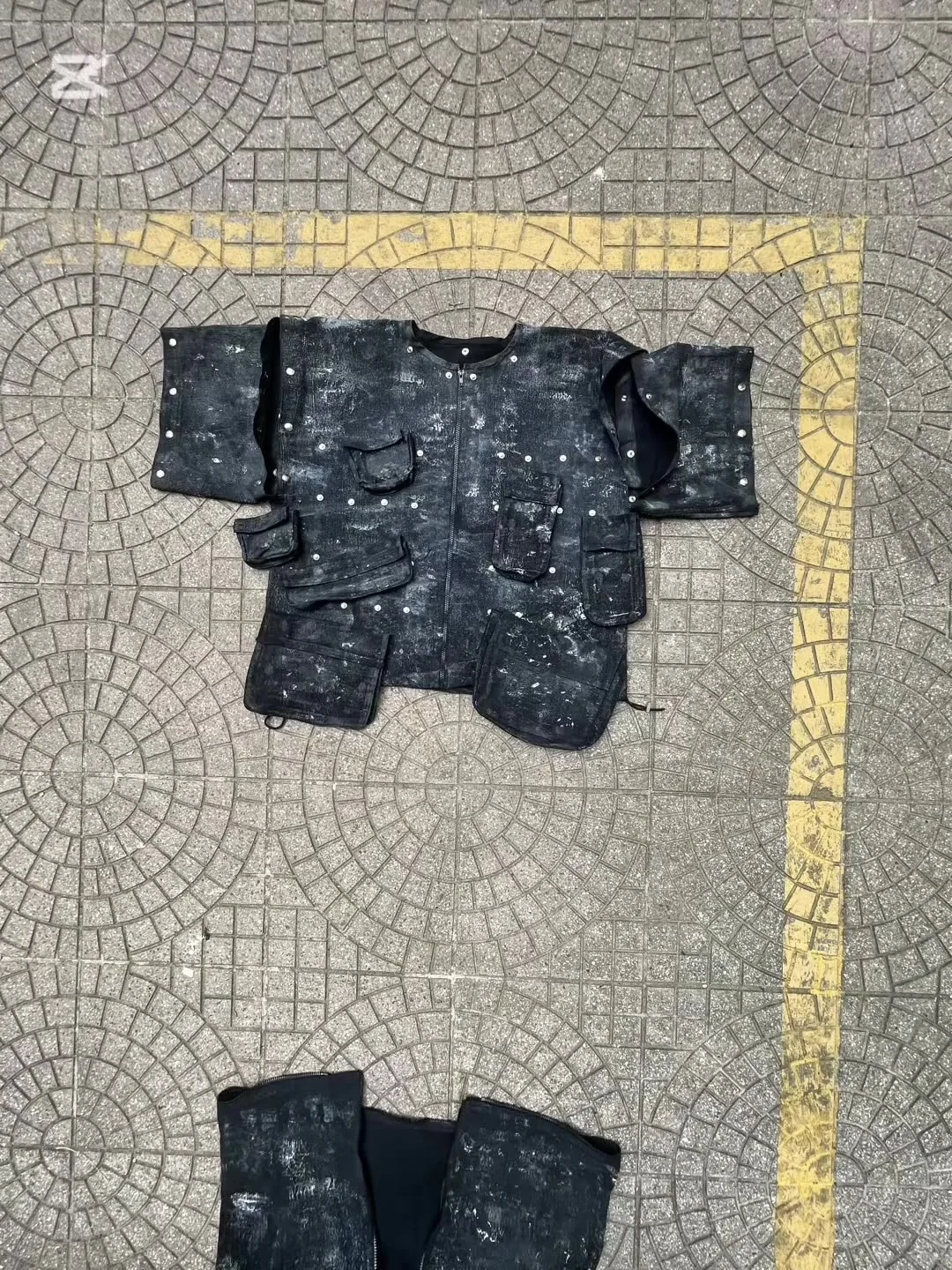 ▶04
▶04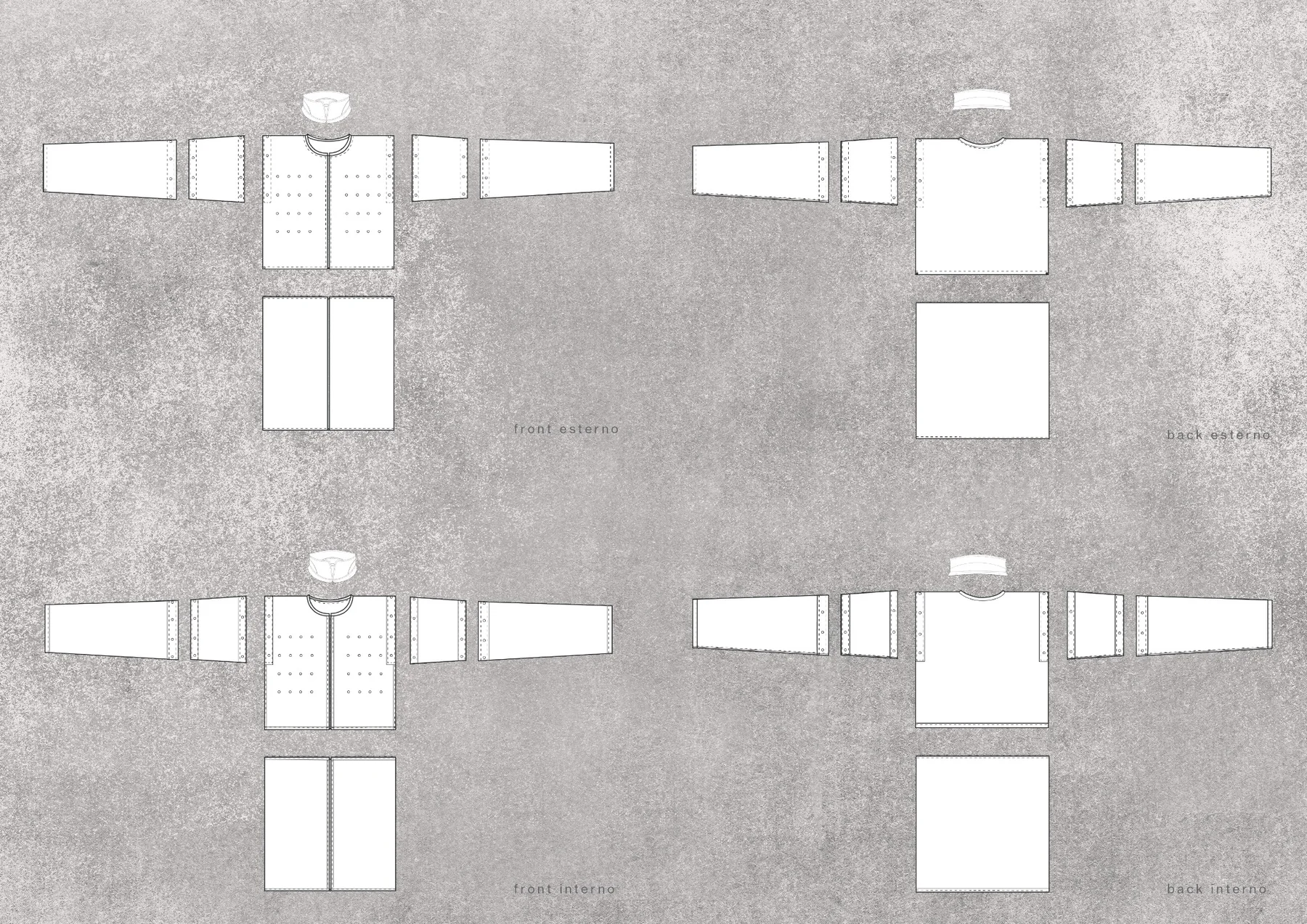 05
05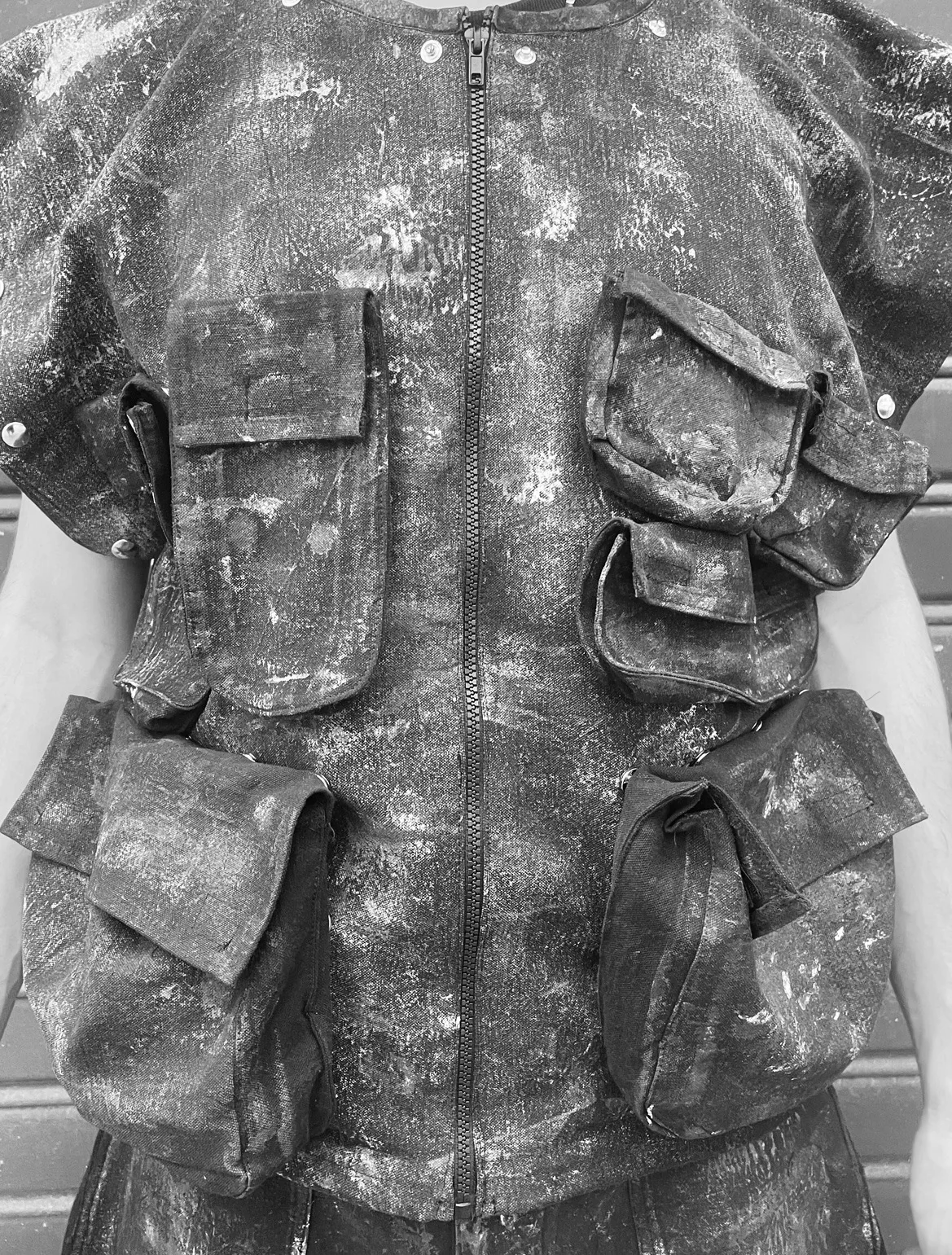 06
06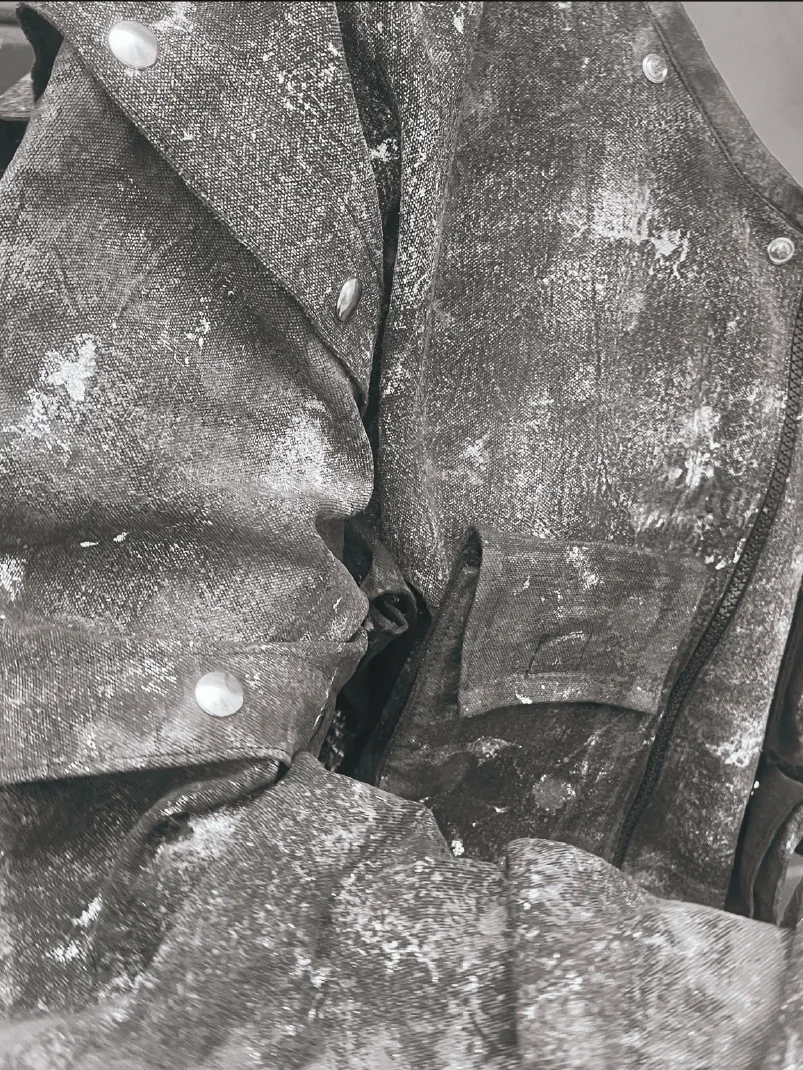 07
07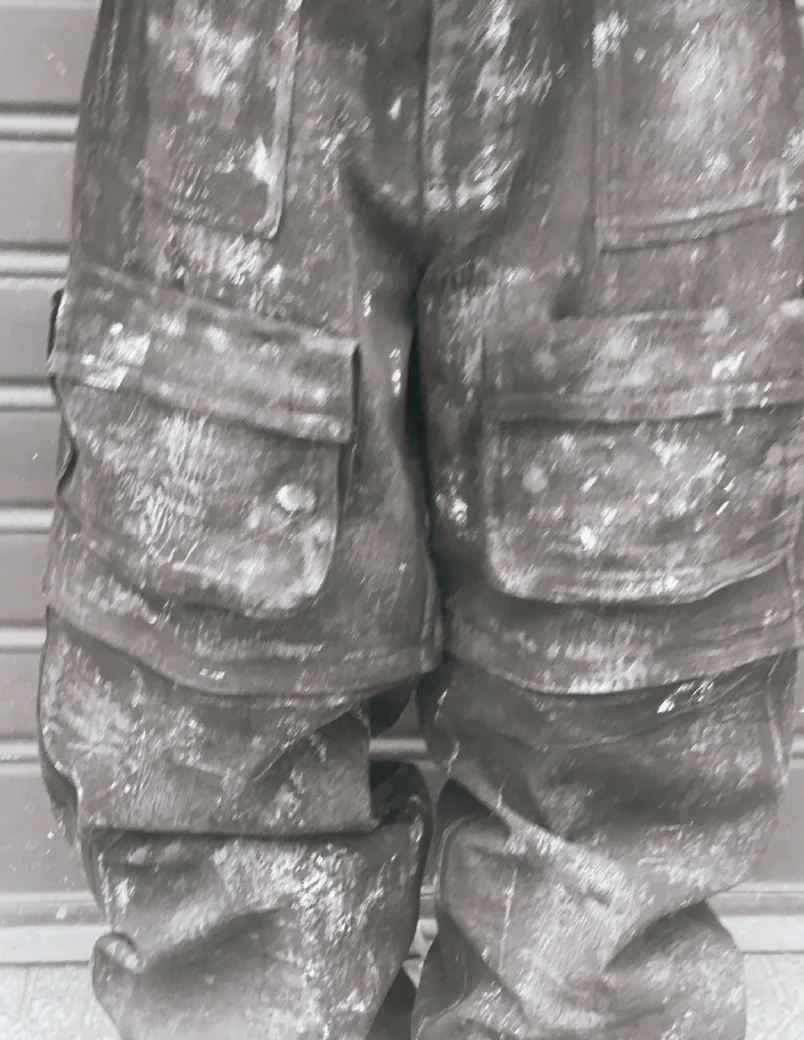 08
08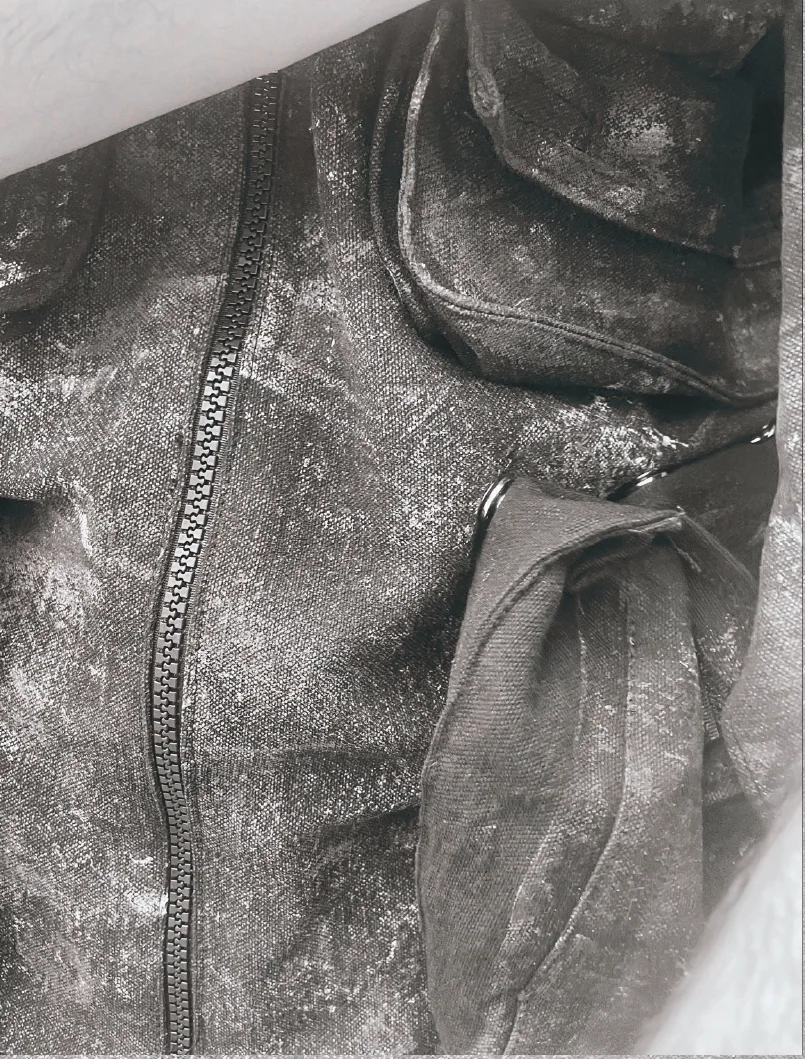 09
09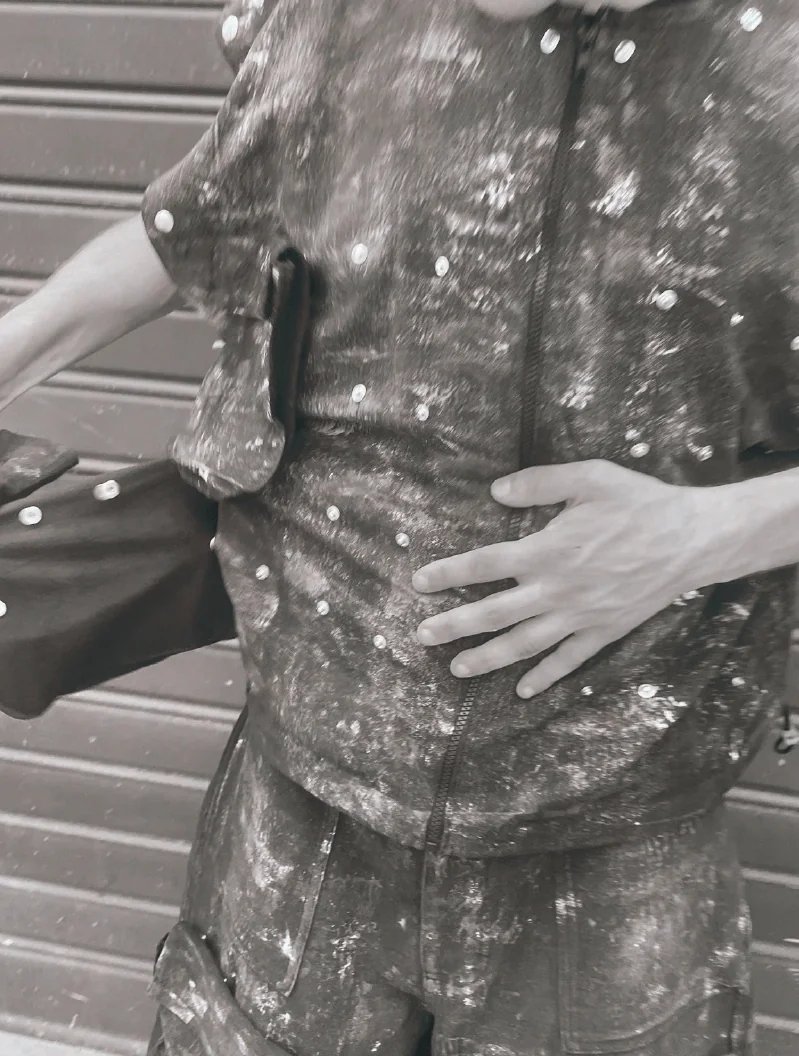 10
10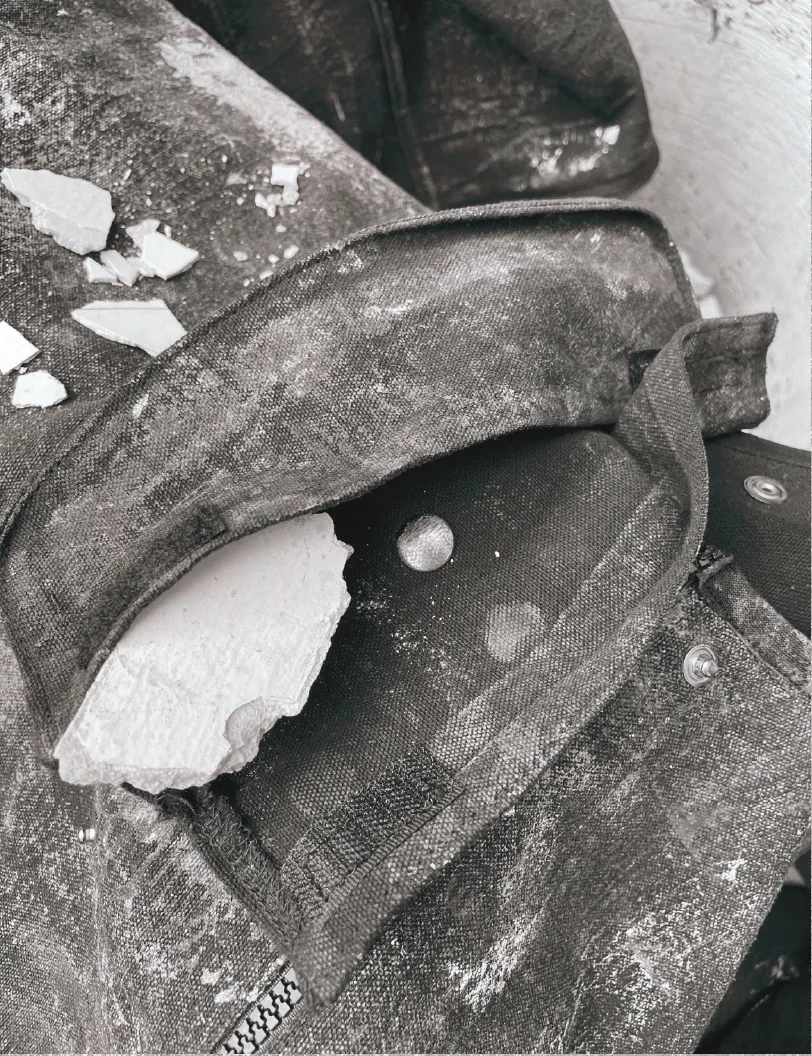 11
11
RECODE
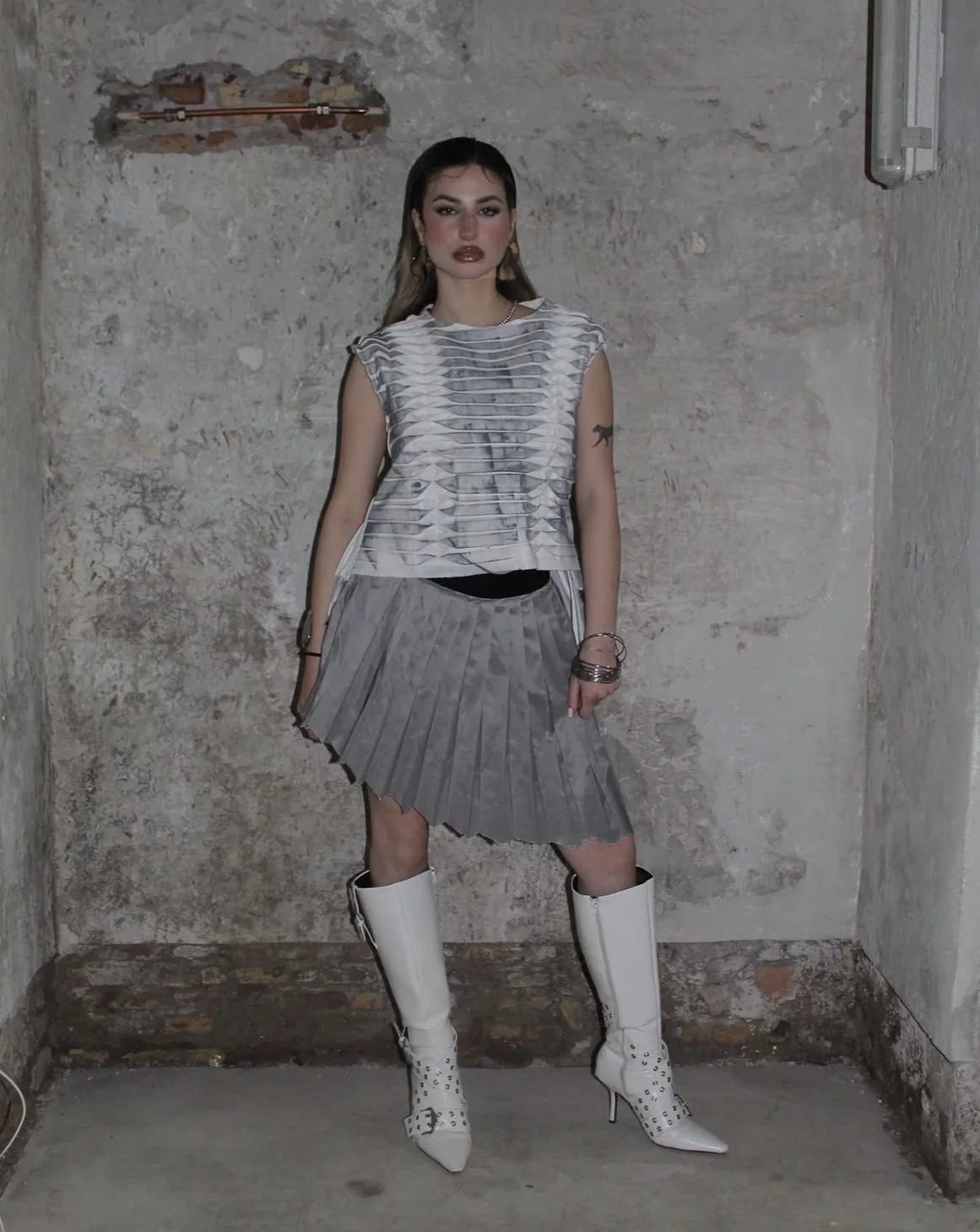
RECODE is a six-look capsule collection presented during the UNINT runway show. The project imagines a post-apocalyptic evolution in which clothing moves from raw, primitive processes toward increasingly refined and technological construction.
The collection develops as a progression, moving from irregular and visibly manipulated surfaces toward more controlled structures and finishes.
RECODE explores different methods of textile manipulation and surface treatment, including pleating, thermoforming on synthetic fabrics, natural dyeing with wild grasses, acrylic pigment treatments and patchwork construction.
These processes are used to alter the behavior, texture and visual density of the fabrics, allowing material experimentation to become part of the construction language of each look.
Volume construction and pattern precision translate the textile experiments into wearable silhouettes. The six looks balance raw material intervention with increasingly controlled garment development, making the evolution of the collection visible from look to look.
01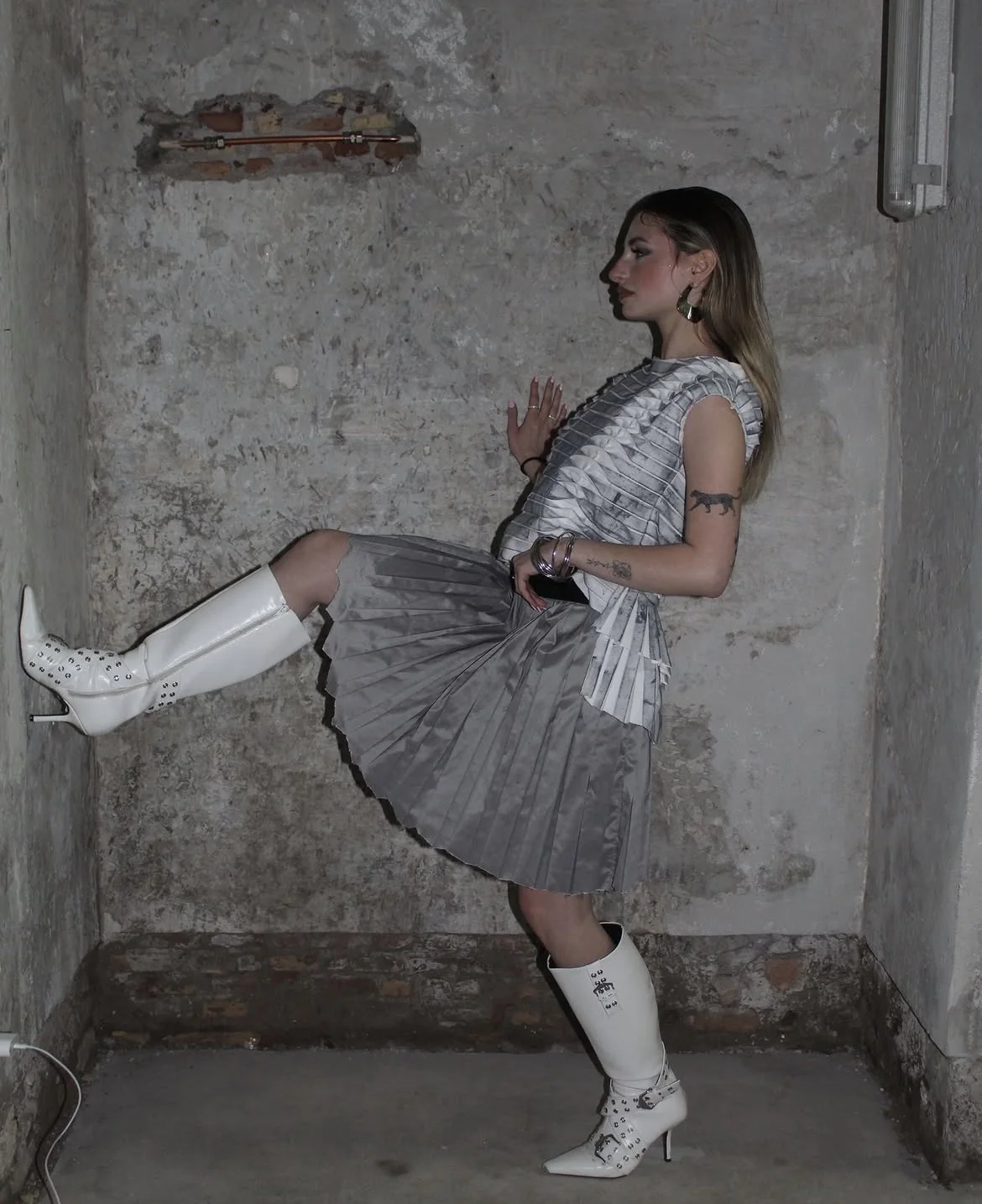 02
02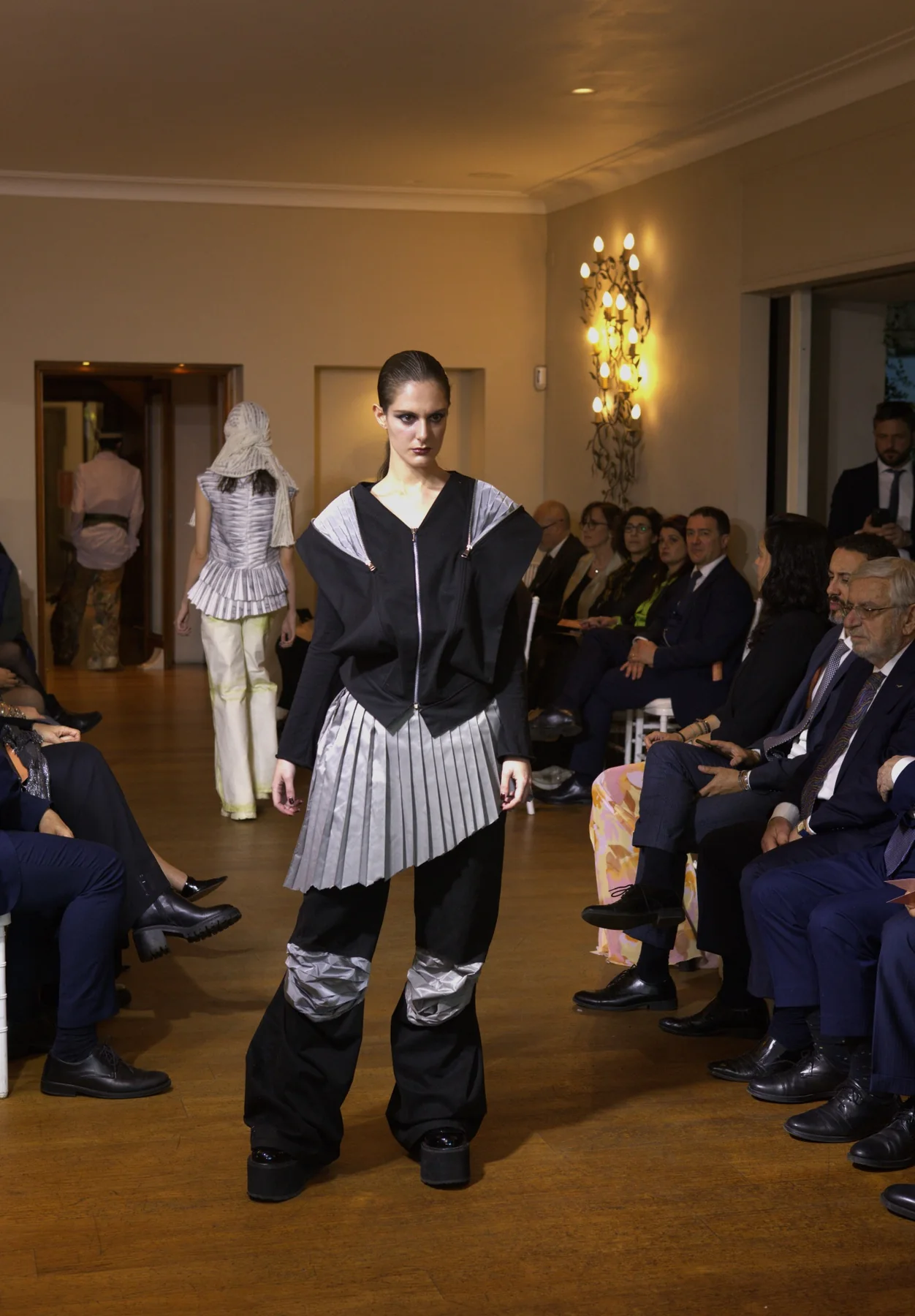 03
03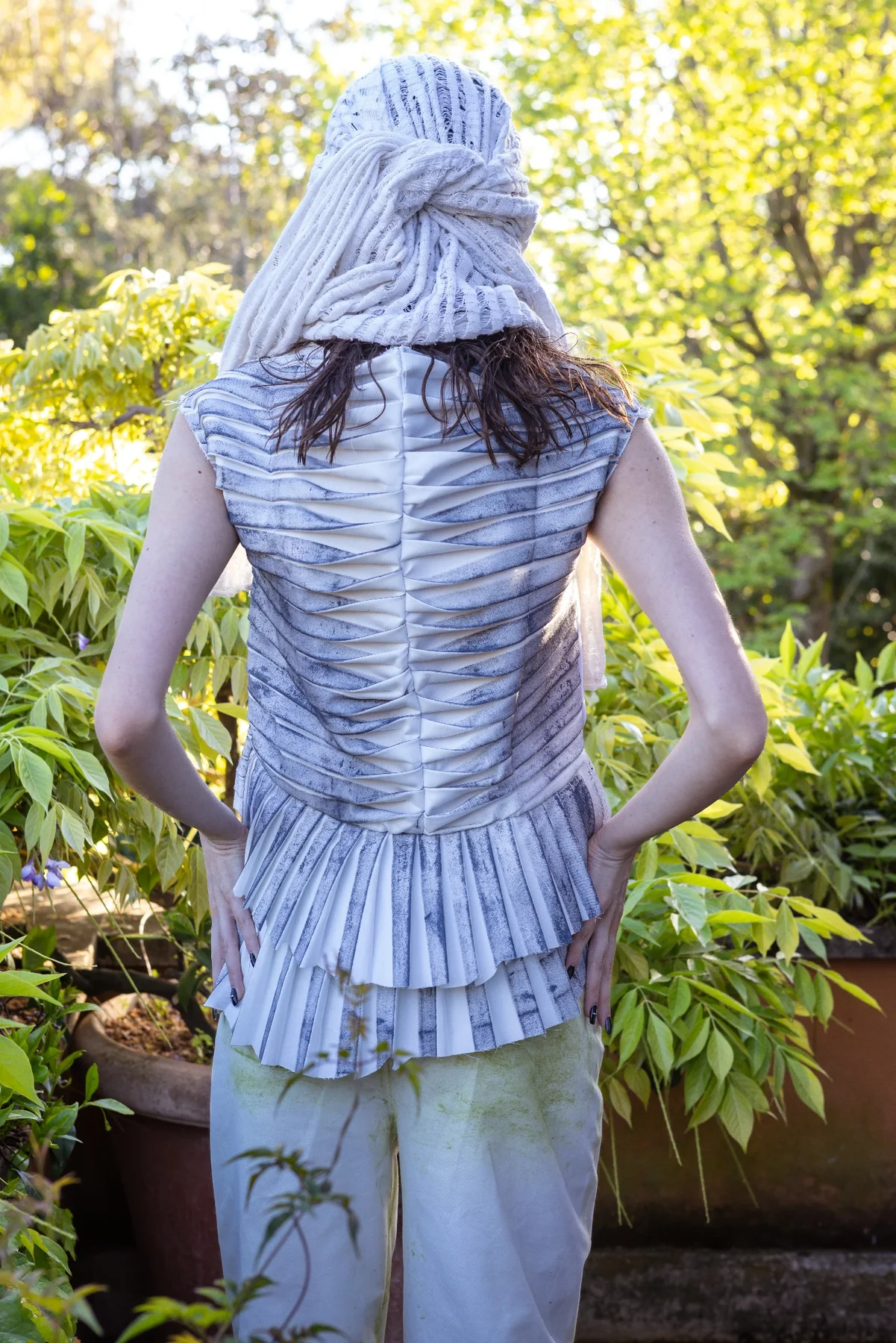 04
04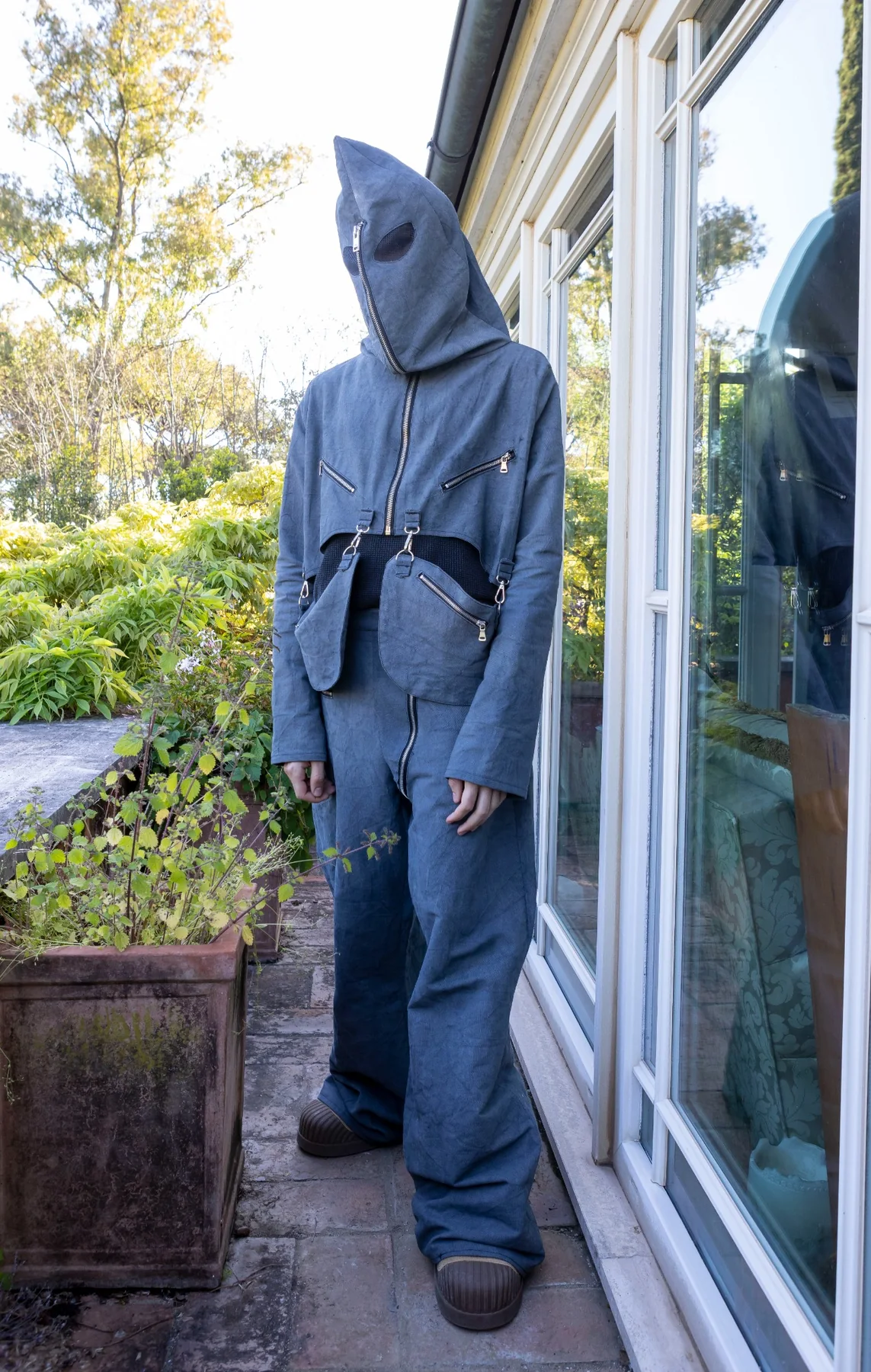 05
05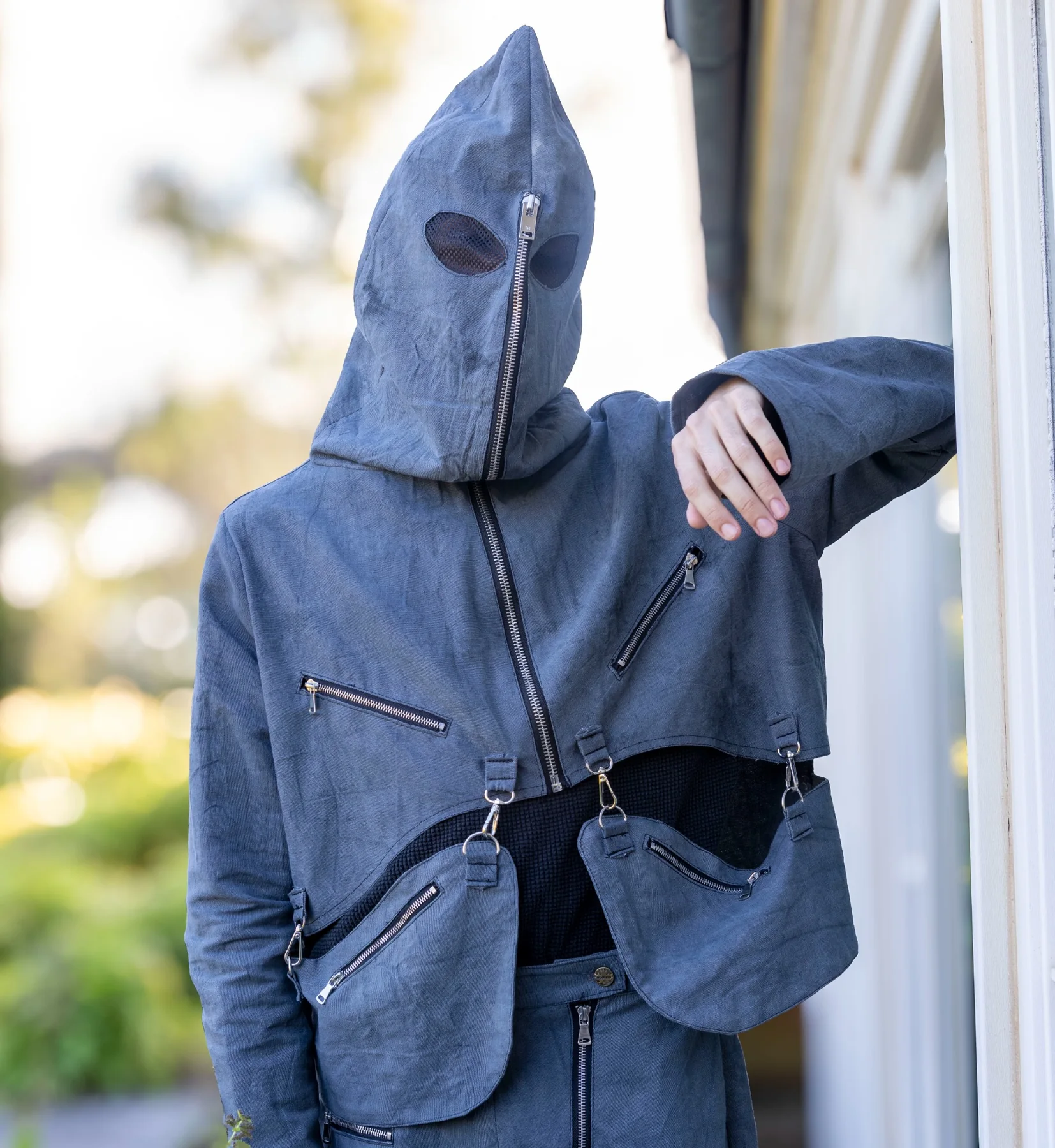 06
06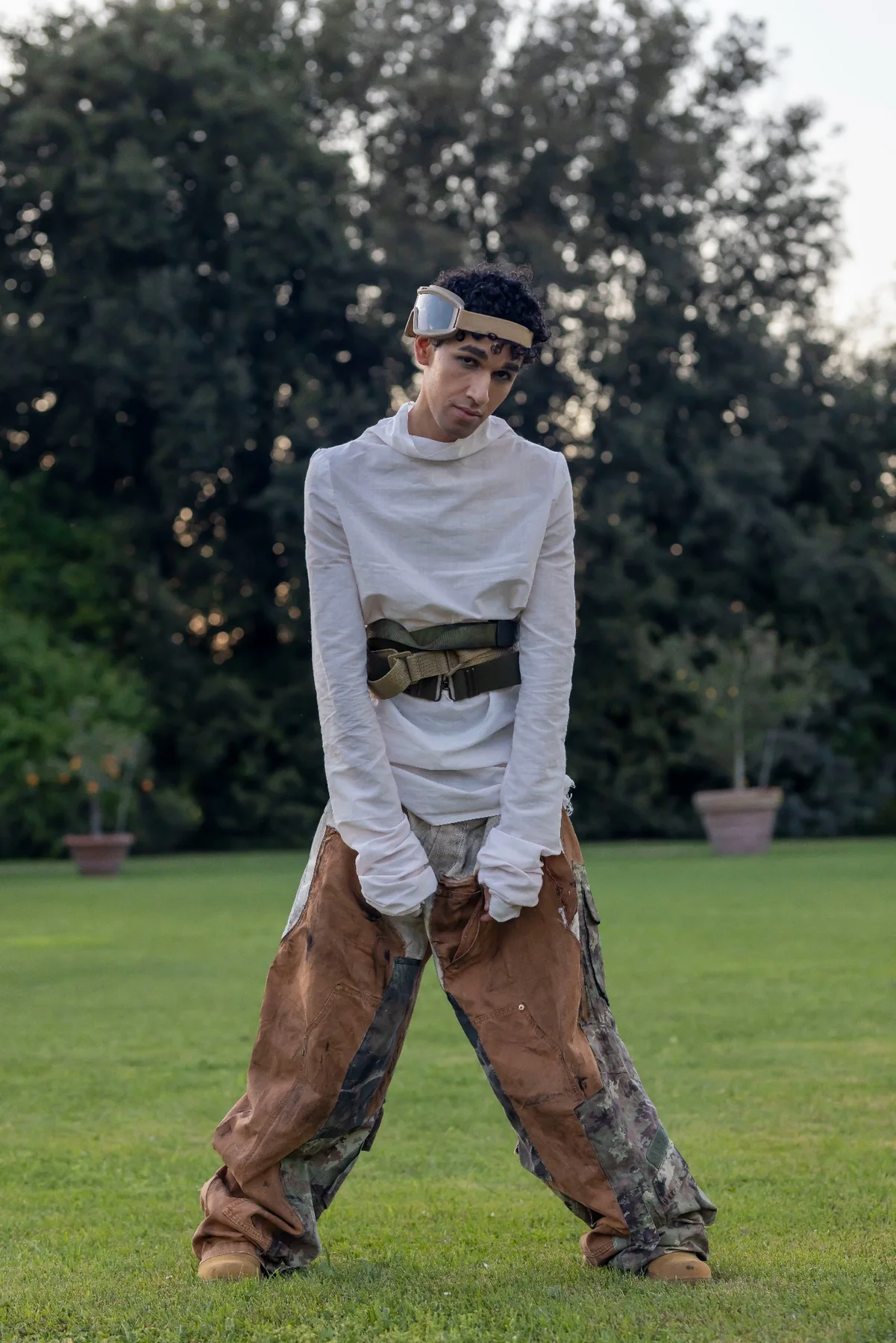 07
07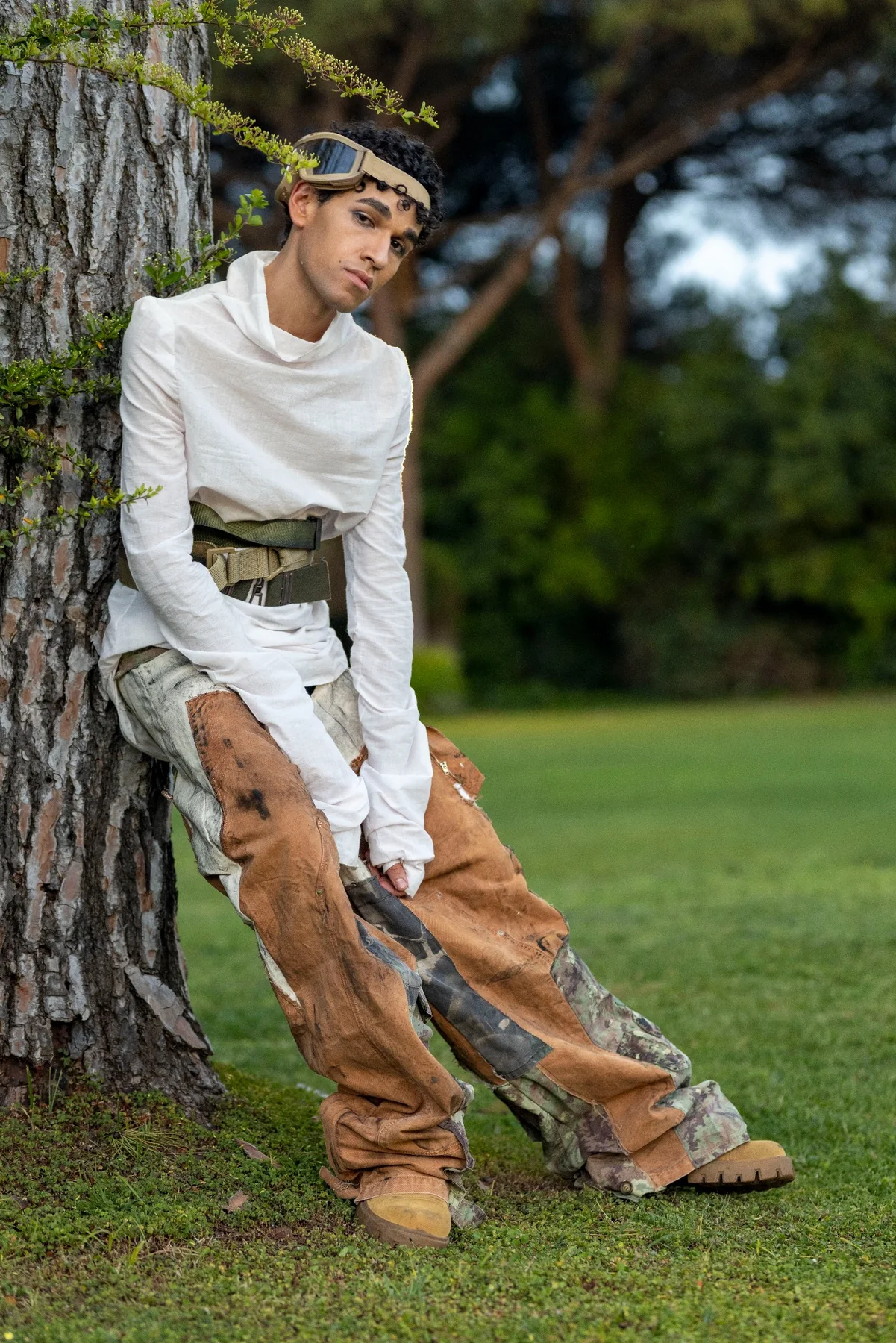 08
08
VZY WORLD
VZY WORLD documents a complete product-development process for a fashion brand, from garment design and material selection to digital pattern development and sample realization.
The project was developed with serial production in mind.
The workflow connects material research with production-oriented pattern development. Fabric options were evaluated alongside garment proportions, while digital pattern pieces were developed with measurements and construction details to guide sample production.
The final stage connects technical development with realized garments, documenting the transition from pattern and material research to physical samples and final styling.
01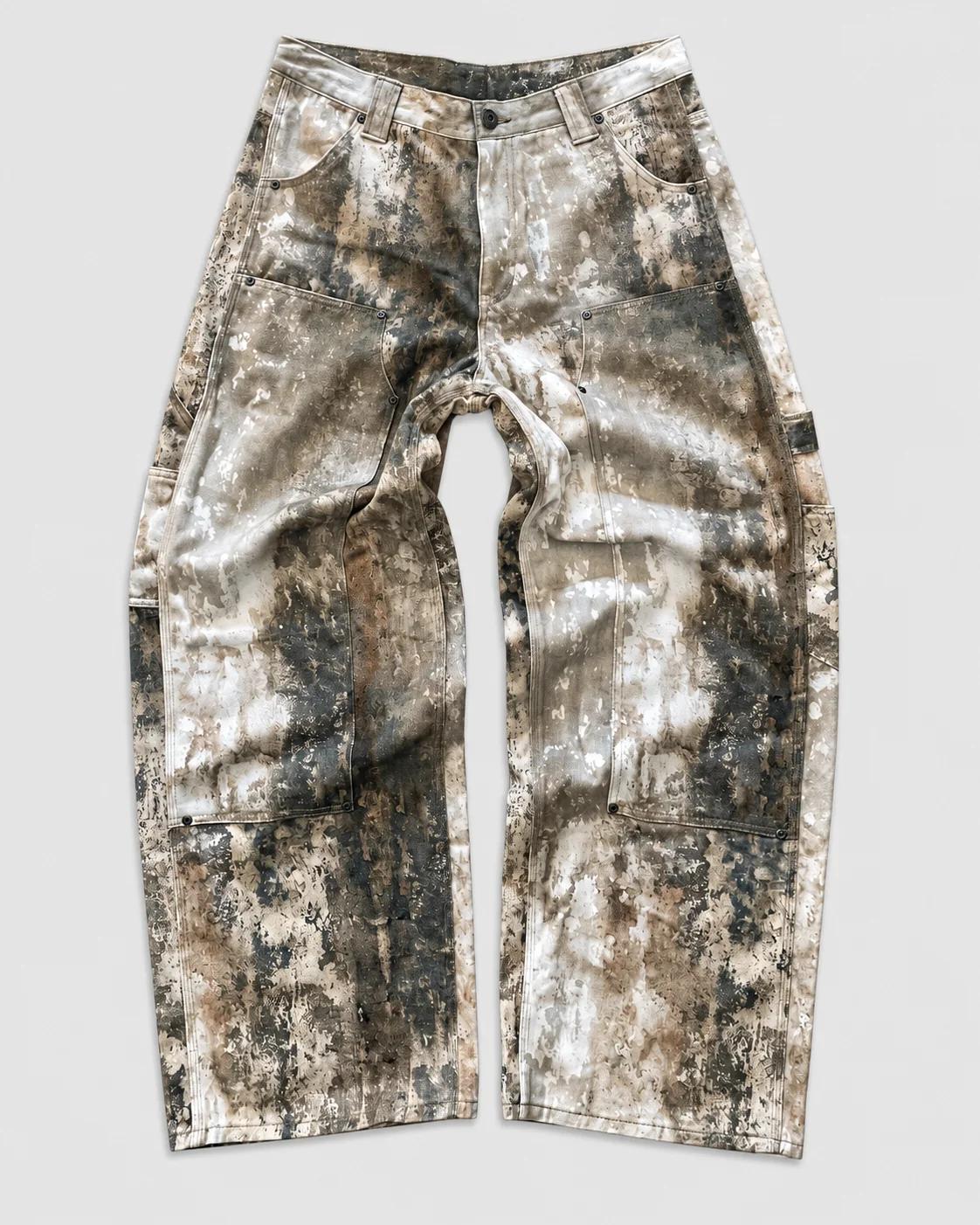 02
02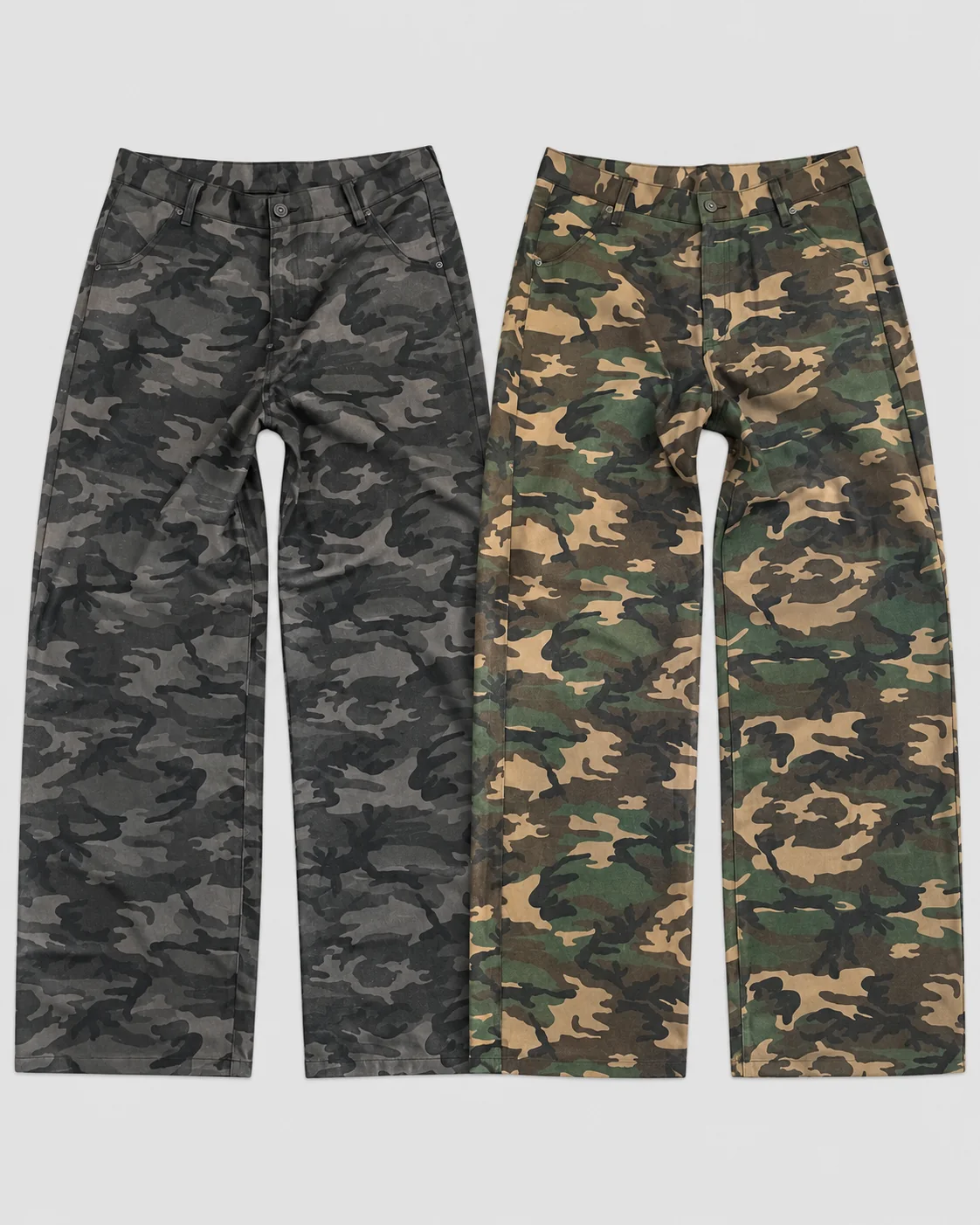 03
03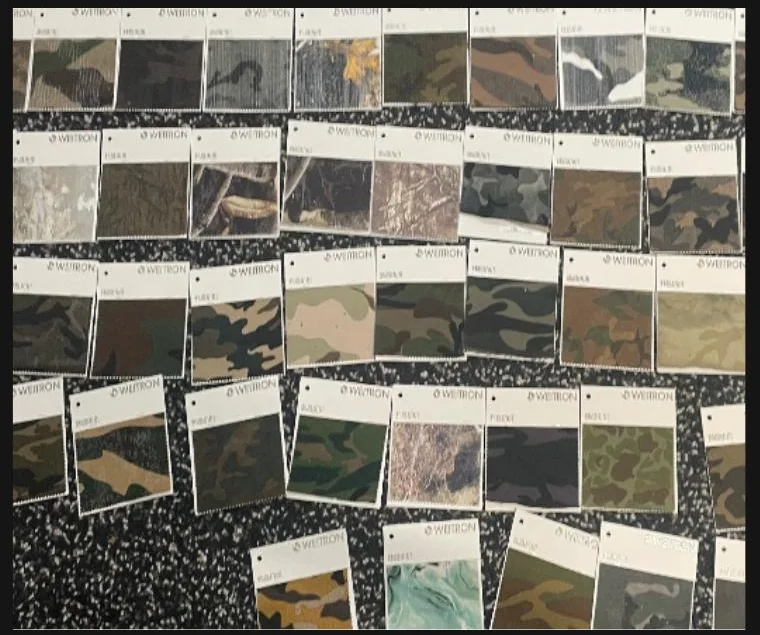 04
04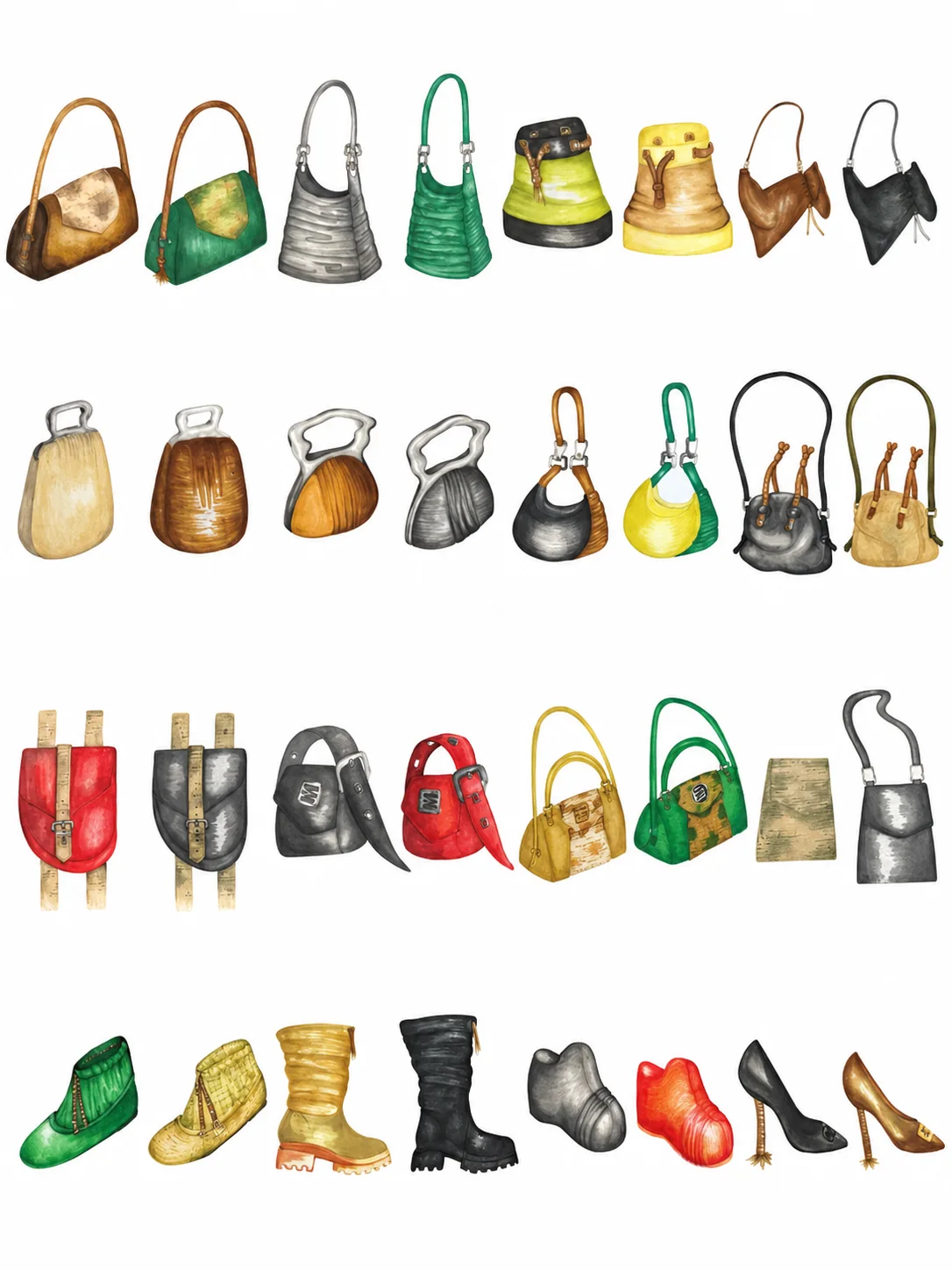
TORY BURCH
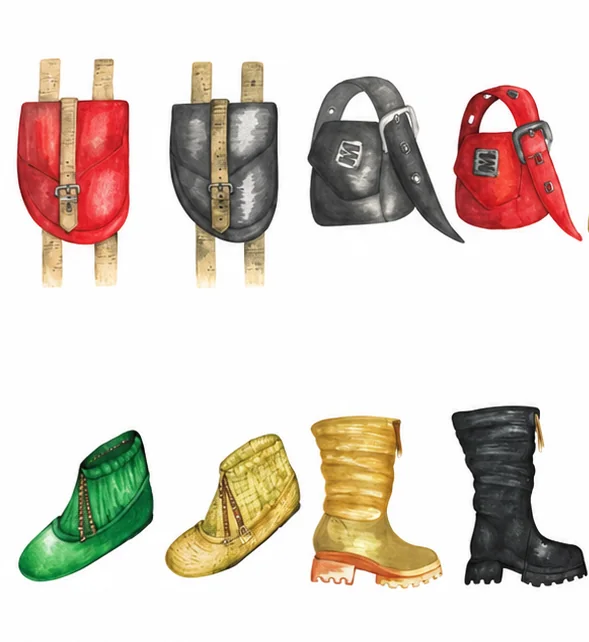
This project develops a coordinated capsule of handbags and footwear, combining creative research with technical product development.
The process includes design exploration, material and colour selection, hardware research, technical sheets and construction studies for each accessory.
Material development played a central role in the project. I experimented with different textile treatments and unconventional natural dyeing processes to explore variations in colour, texture and surface.
For the leather components, I researched different types of hides and identified potential suppliers, comparing material qualities, finishes and applications according to the requirements of each accessory.
This research was then translated into detailed material sheets and product technical sheets, bringing together specifications, material selection, hardware and construction information necessary for product development.
0102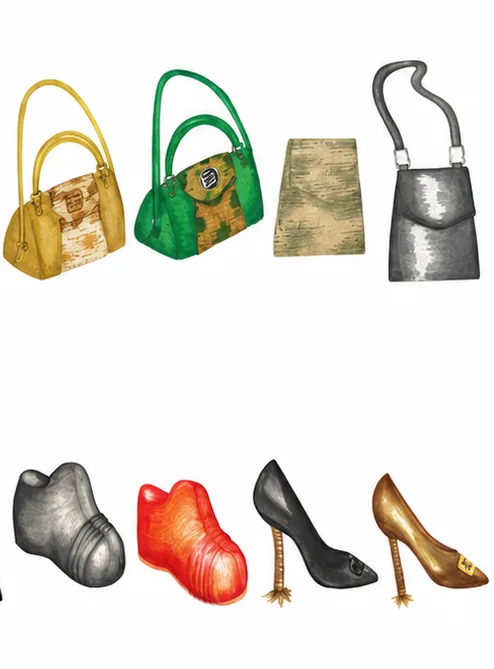 03
03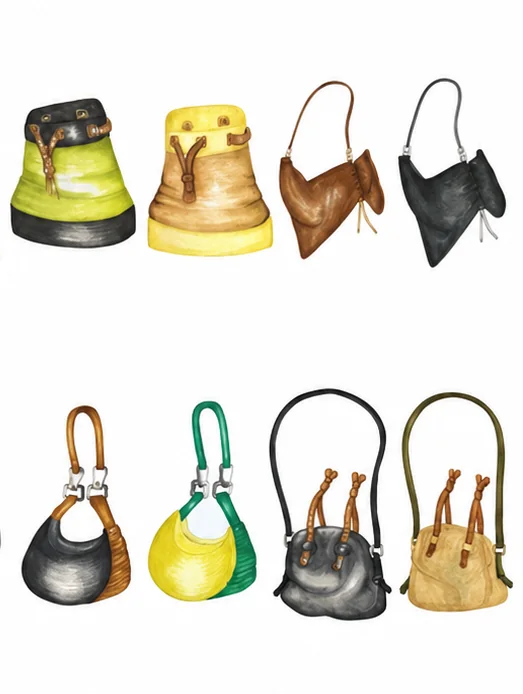 04
04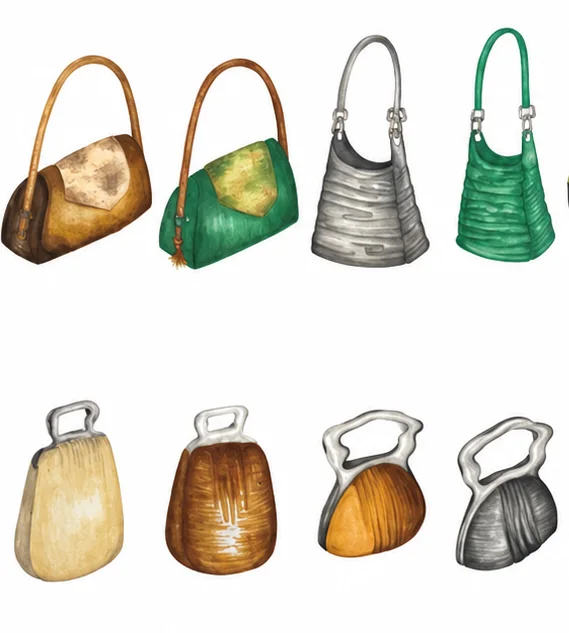 05
05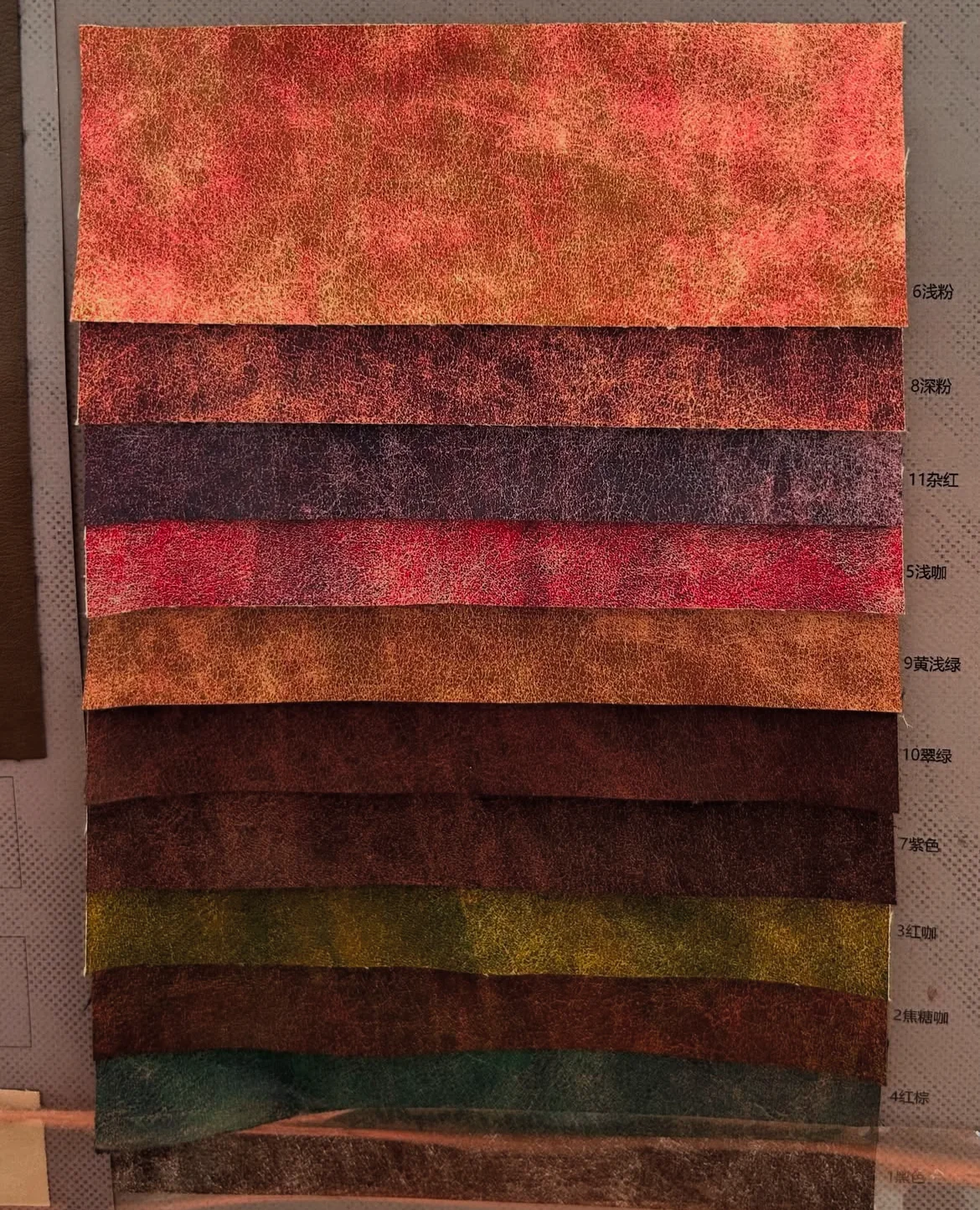 06
06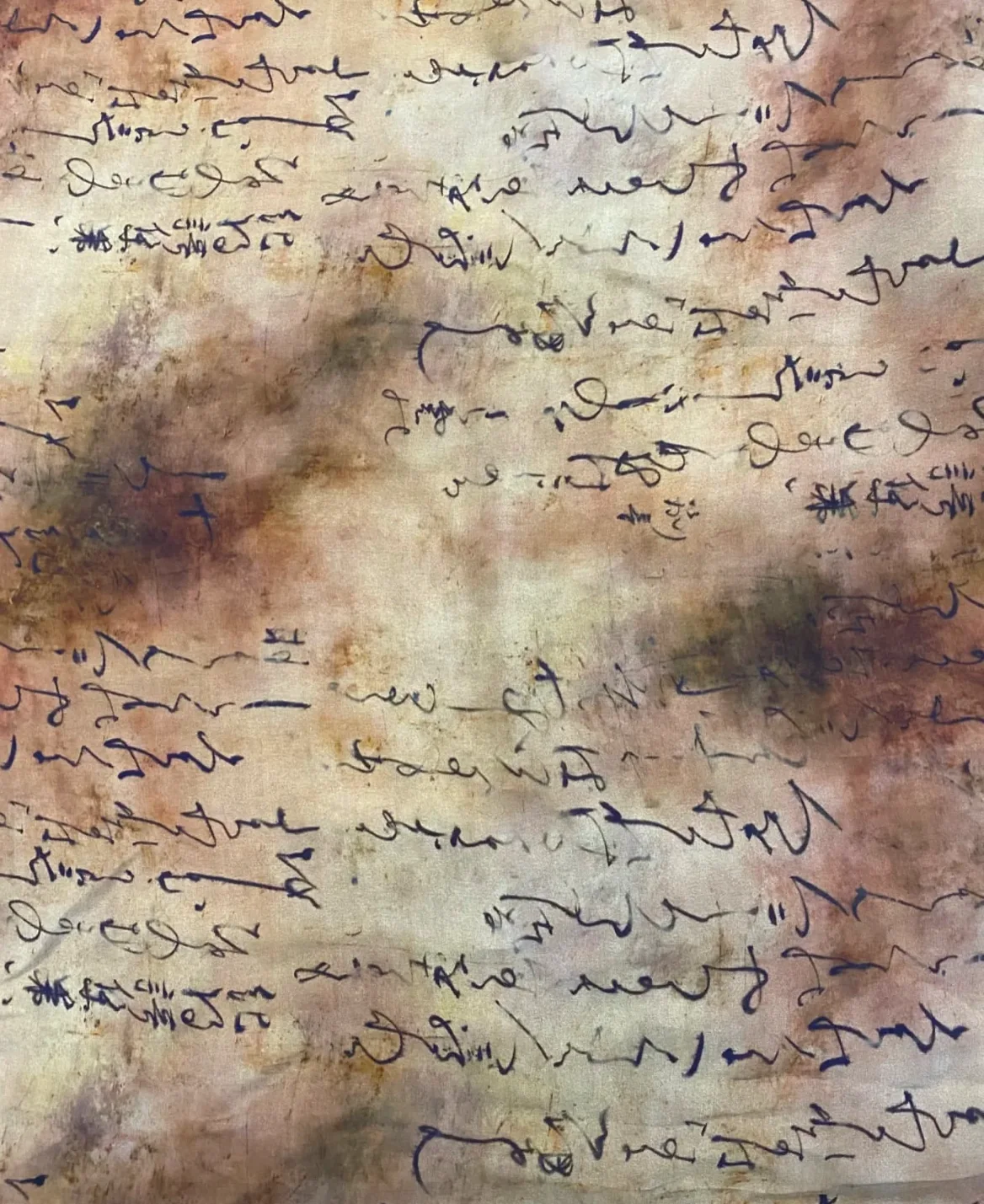 07
07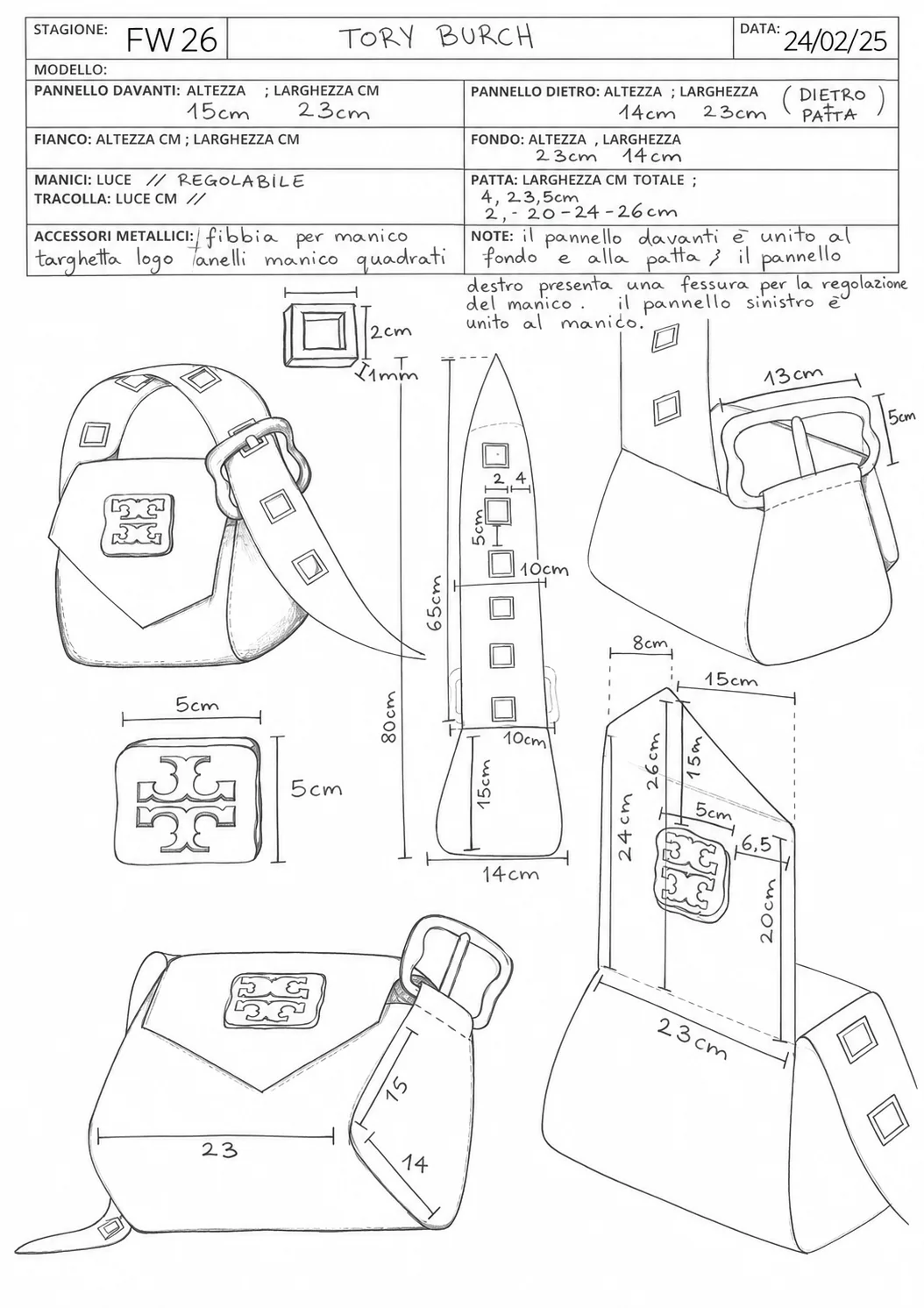 08
08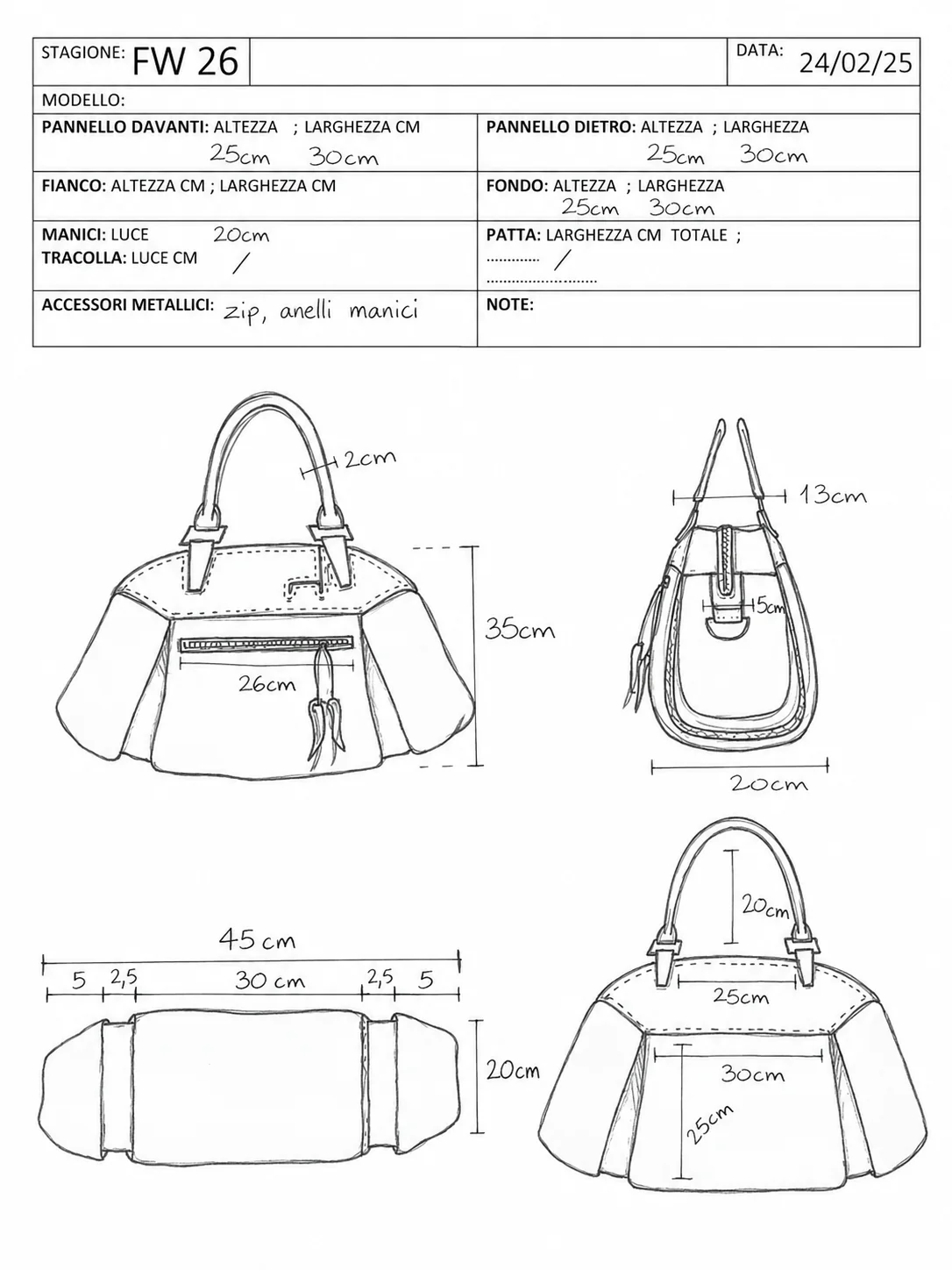 09
09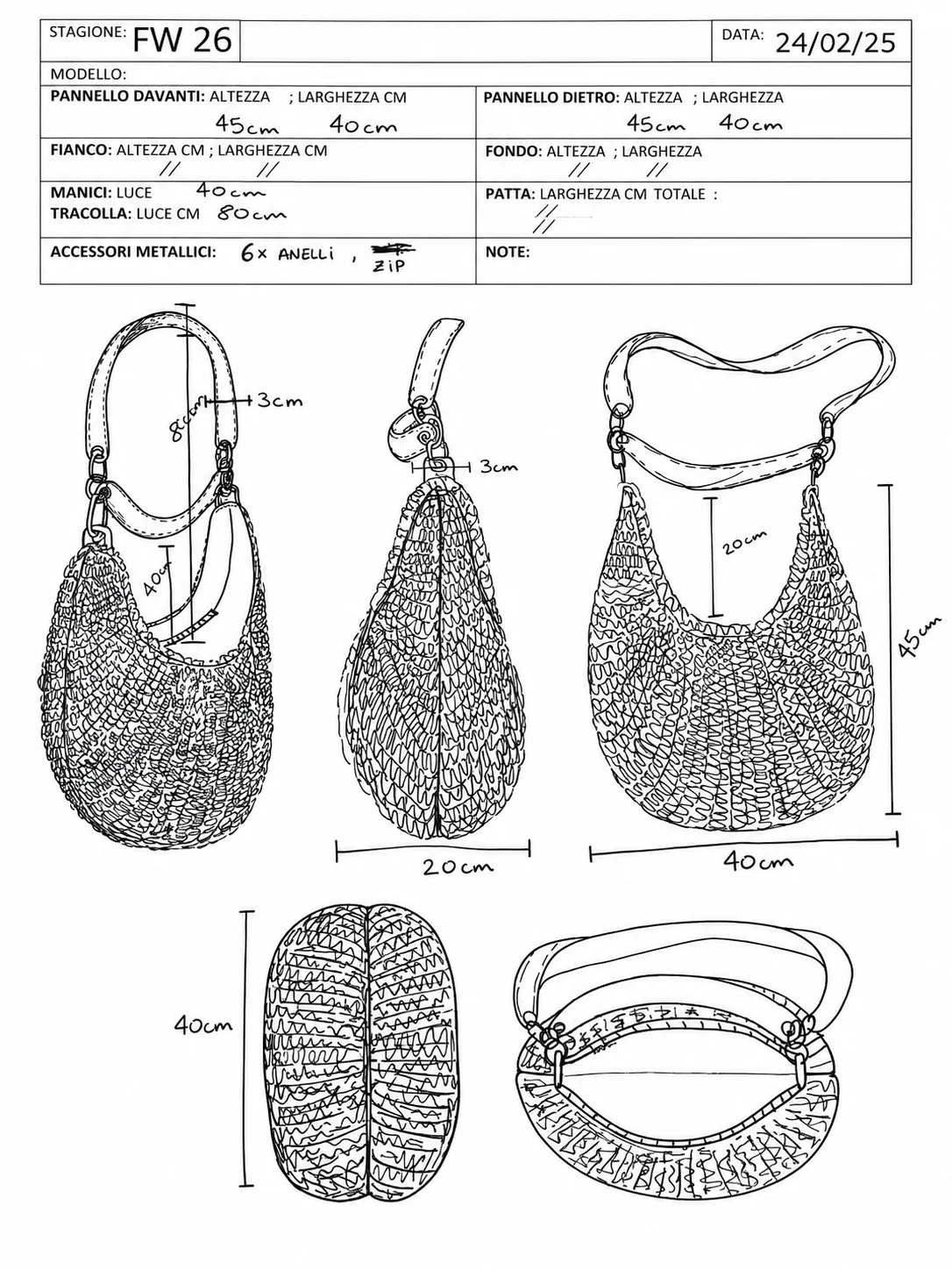 10
10
TECHNICAL DRAWING
This archive brings together technical drawings, construction studies and development documents produced across selected projects.
The work focuses on the translation of design ideas into measurable forms, construction lines and technical information, moving between body observation, pattern logic and product development.
Several projects begin with the analysis of the body before the garment is drawn.
Posture, balance points, joint positions and movement are mapped directly onto the body and then translated into construction lines. These studies are used to understand where volumes, seams and articulated sections need to develop in relation to the wearer.
The initial body studies are progressively simplified into garment diagrams and technical drawings.
This stage defines panel placement, proportions, articulation and the relationship between individual pattern sections before the garment moves into prototyping and construction.
Technical documentation is also used for accessories and rigid components, combining orthographic views, dimensions, material information and hardware specifications.
These drawings function as working documents during development, helping communicate proportion, construction and material requirements more precisely.
Body Observation → Mapping → Construction Lines → Technical Drawing → Pattern / Product Specification → Prototype
01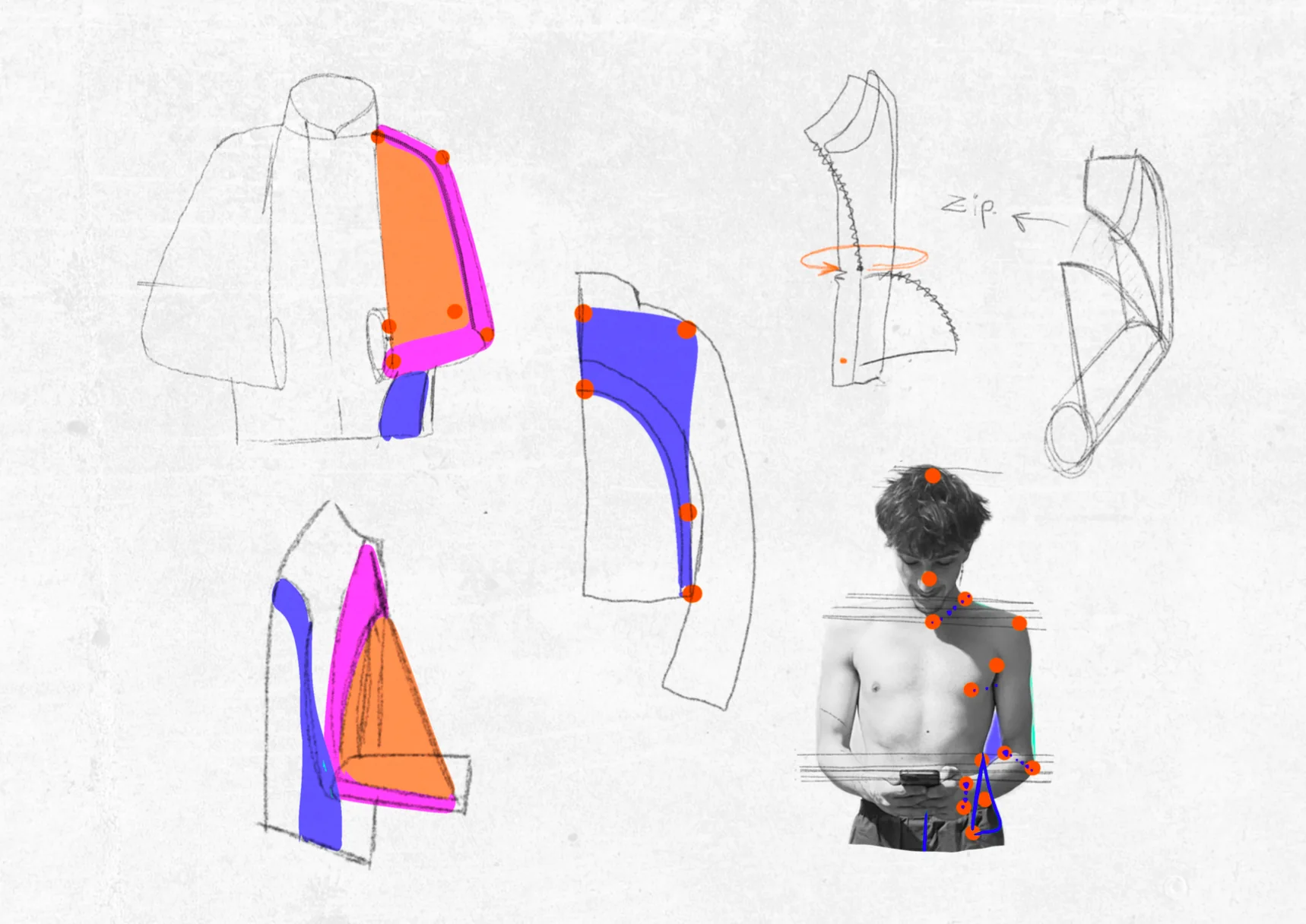 02
02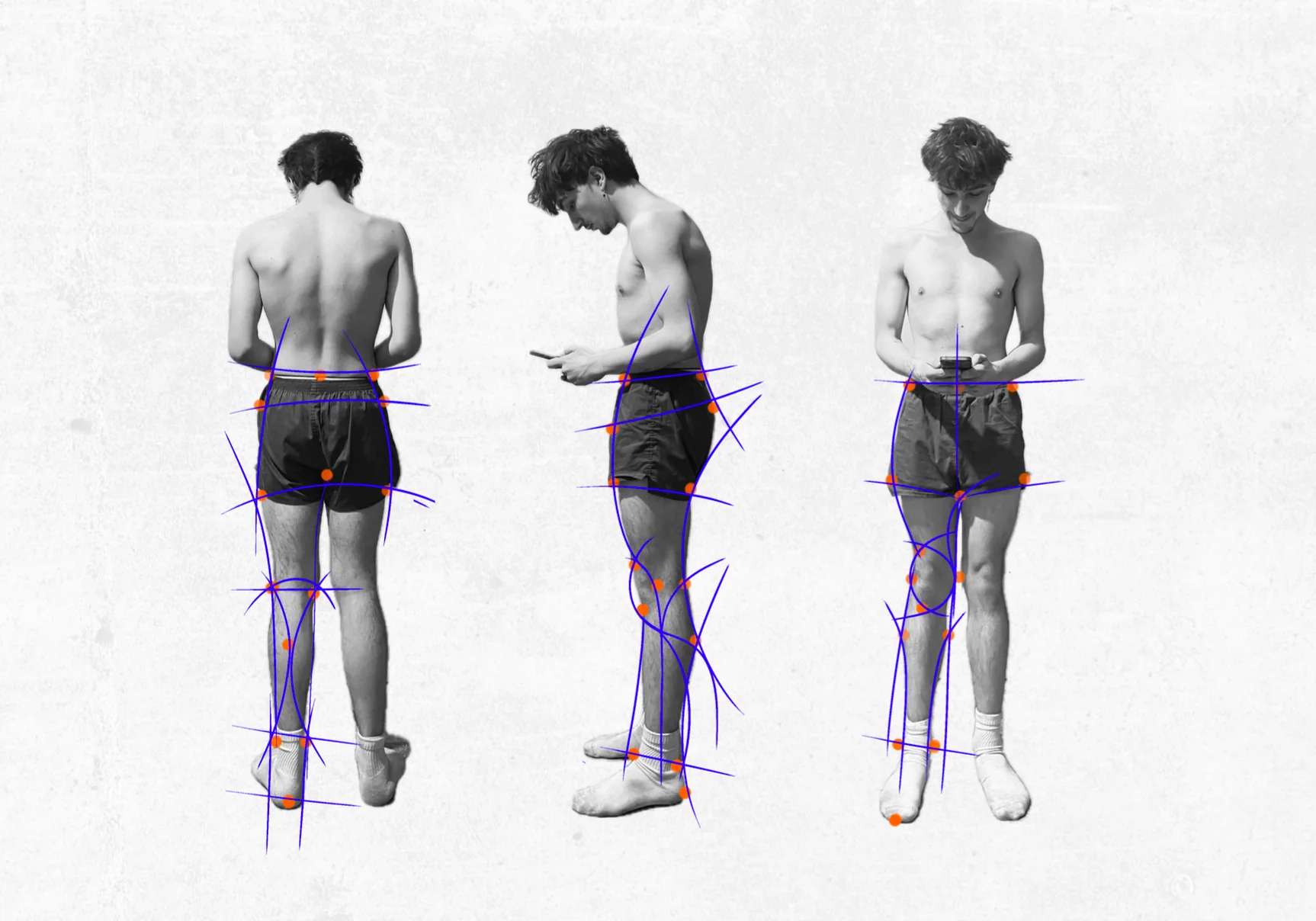 03
03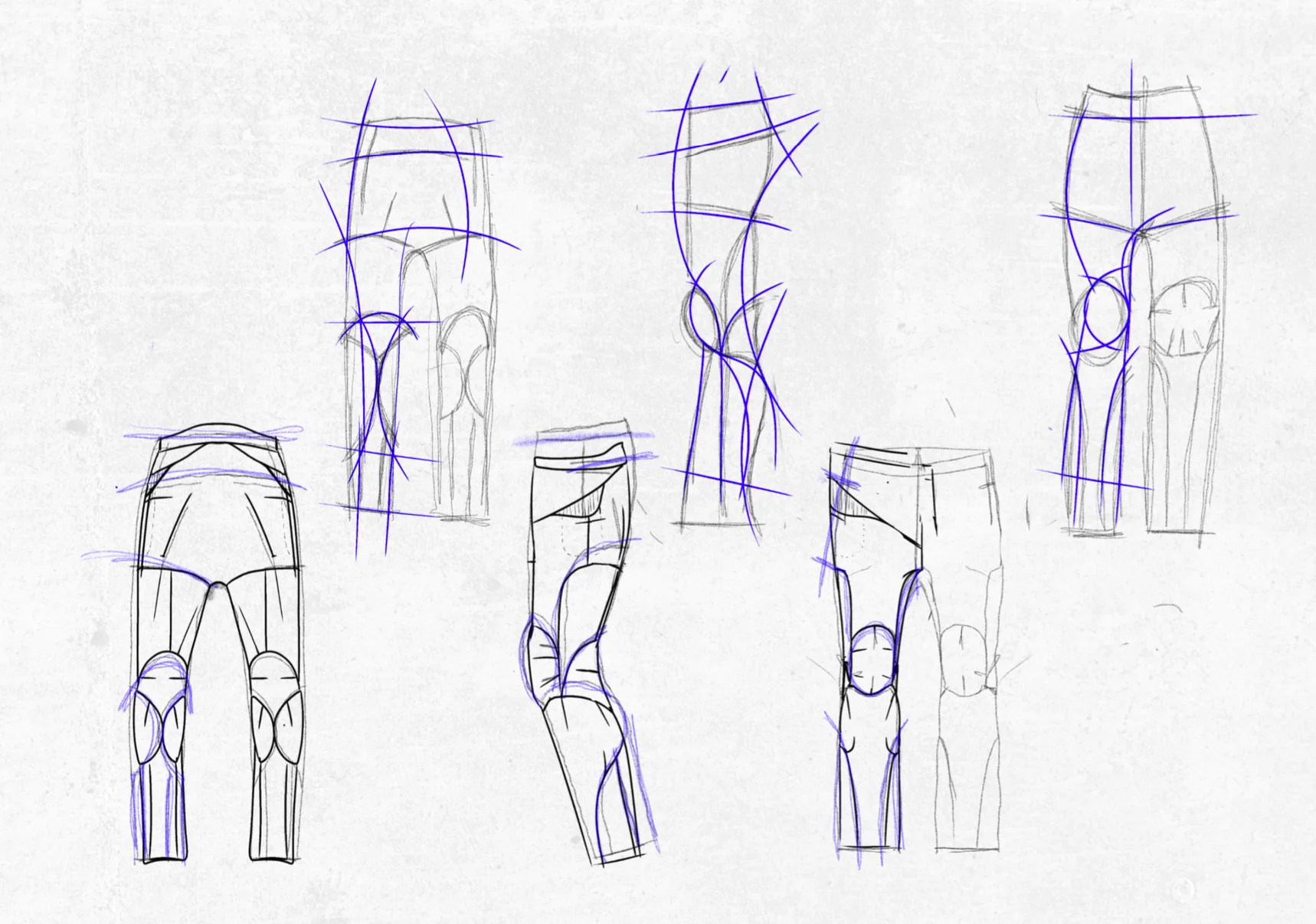 04
04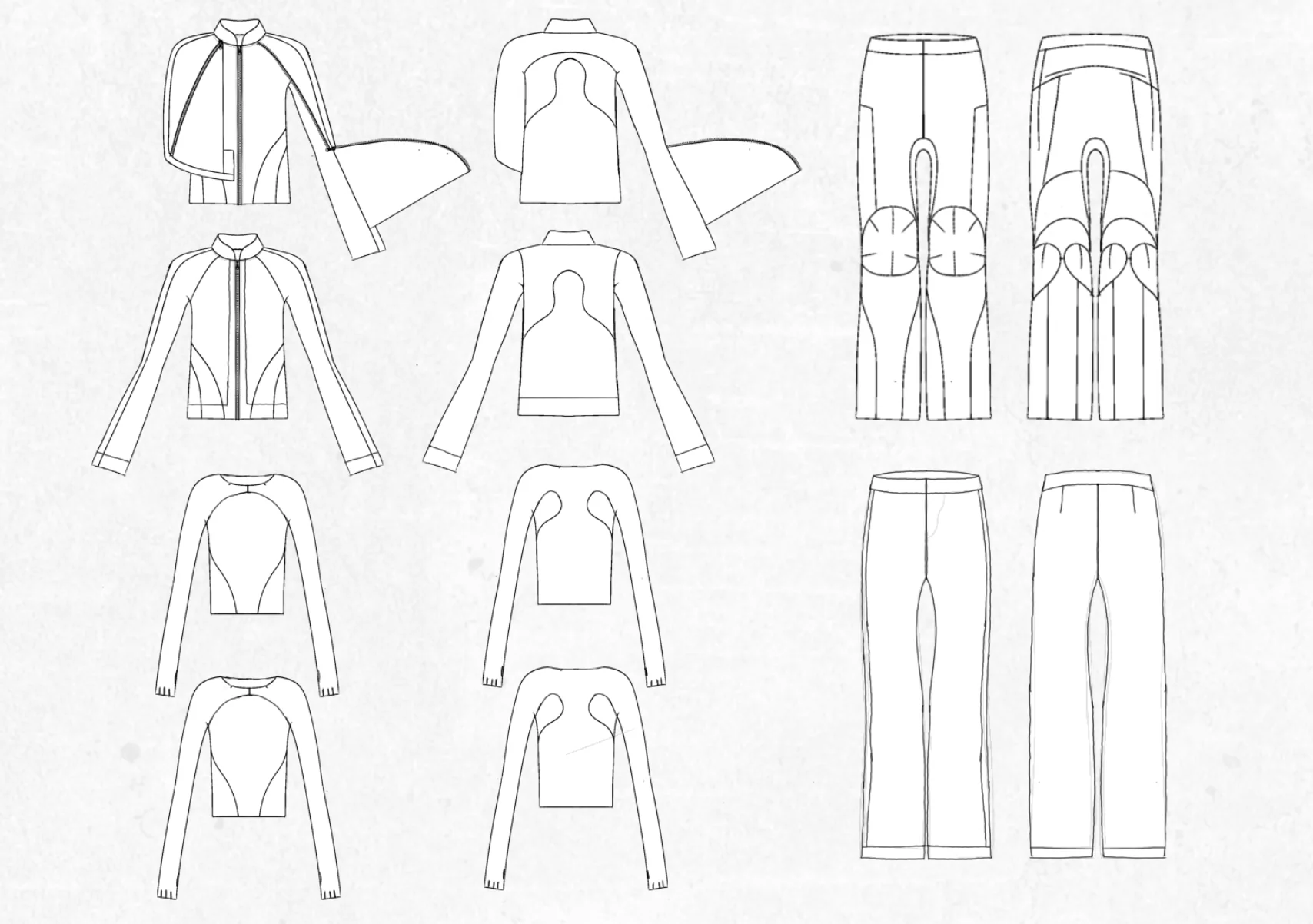 05
05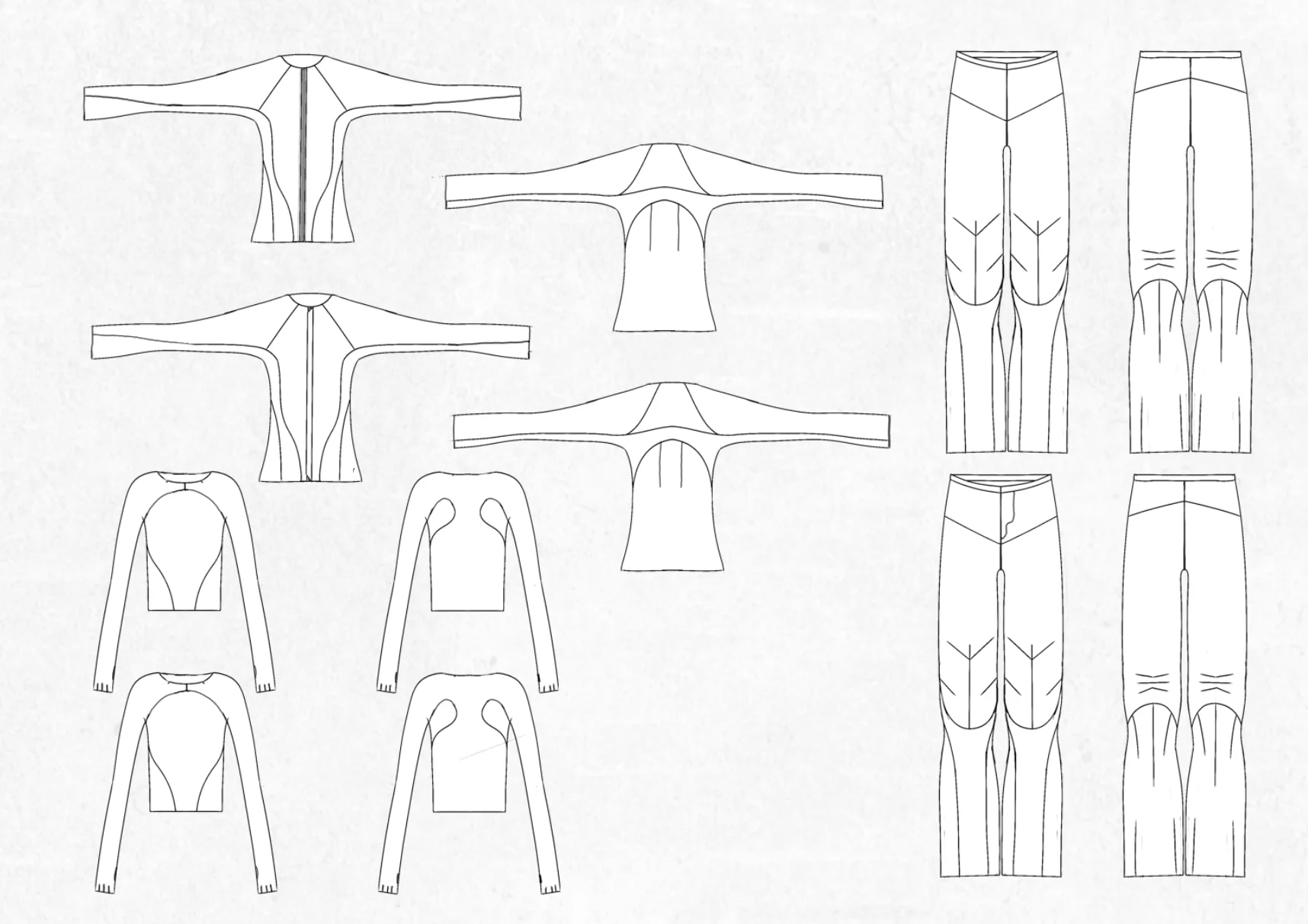 06
06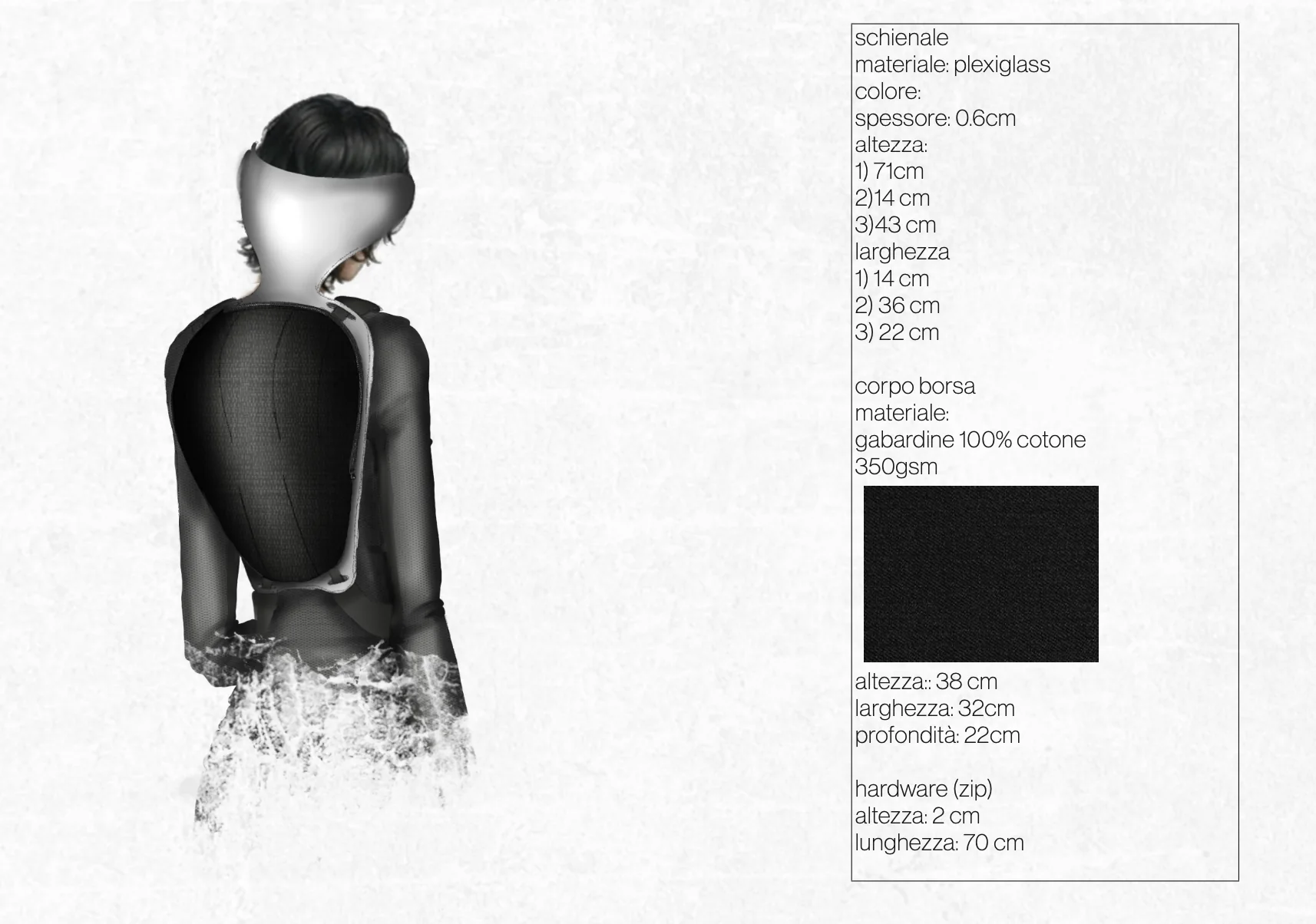 07
07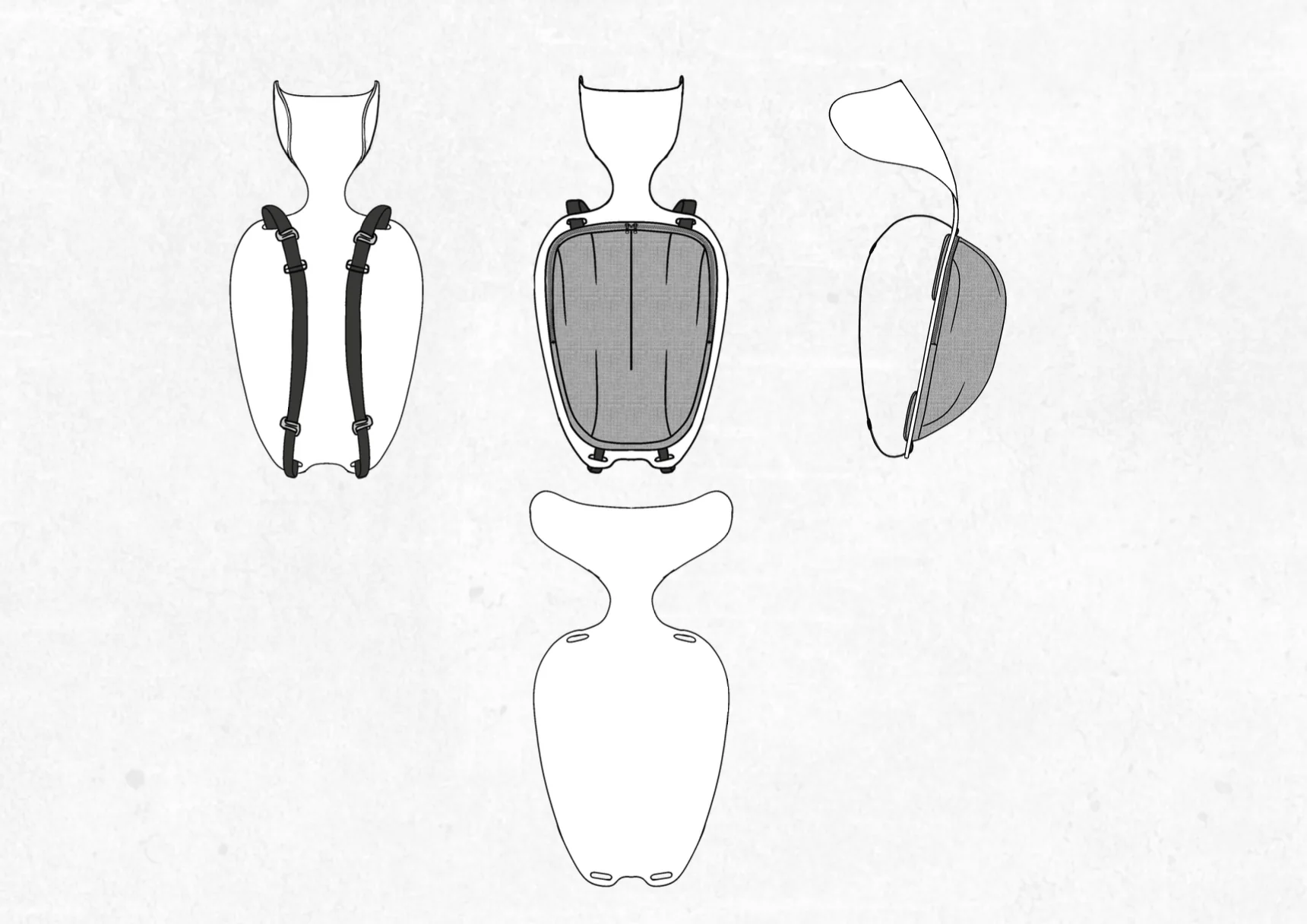 08
08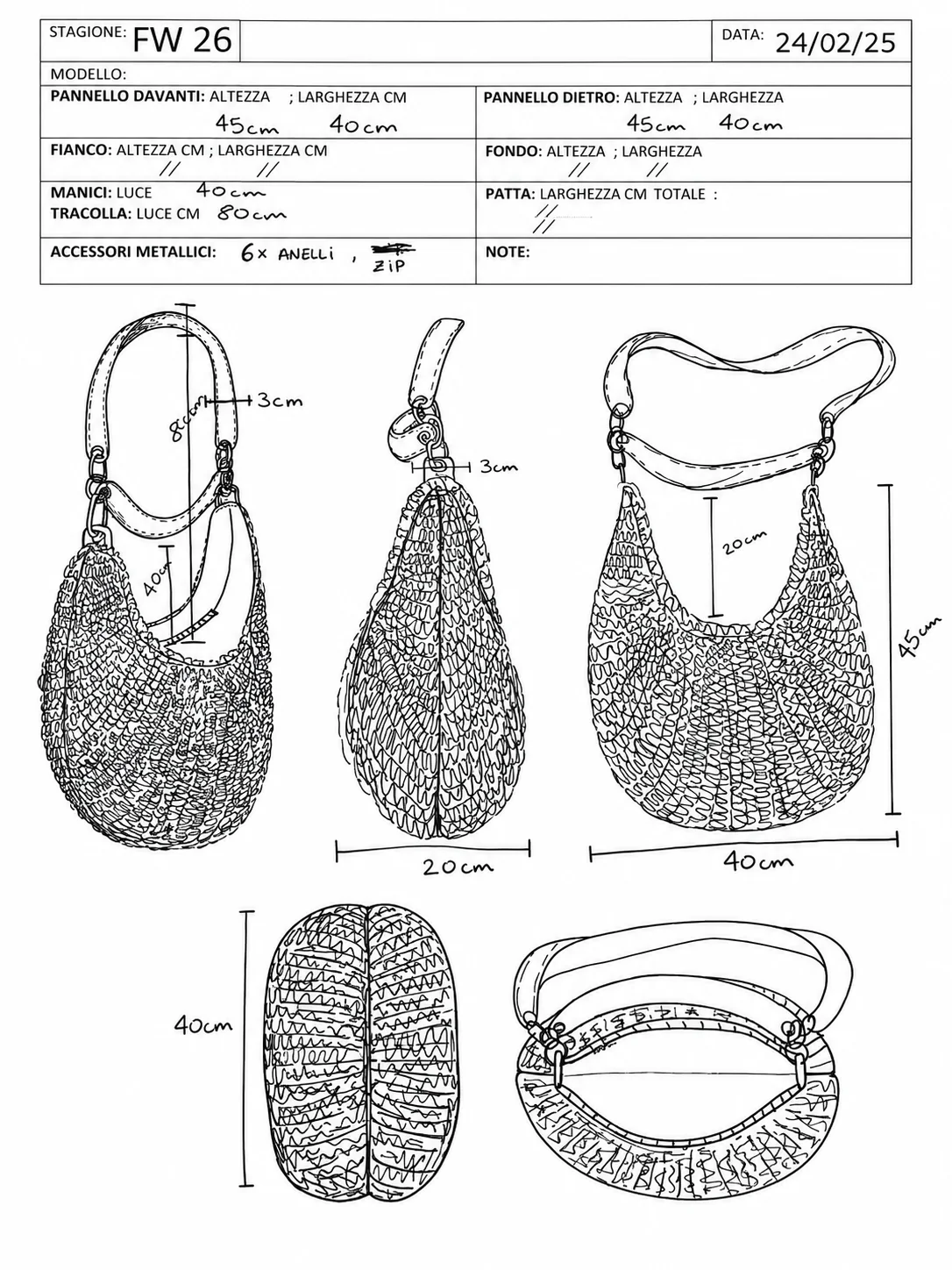 09
09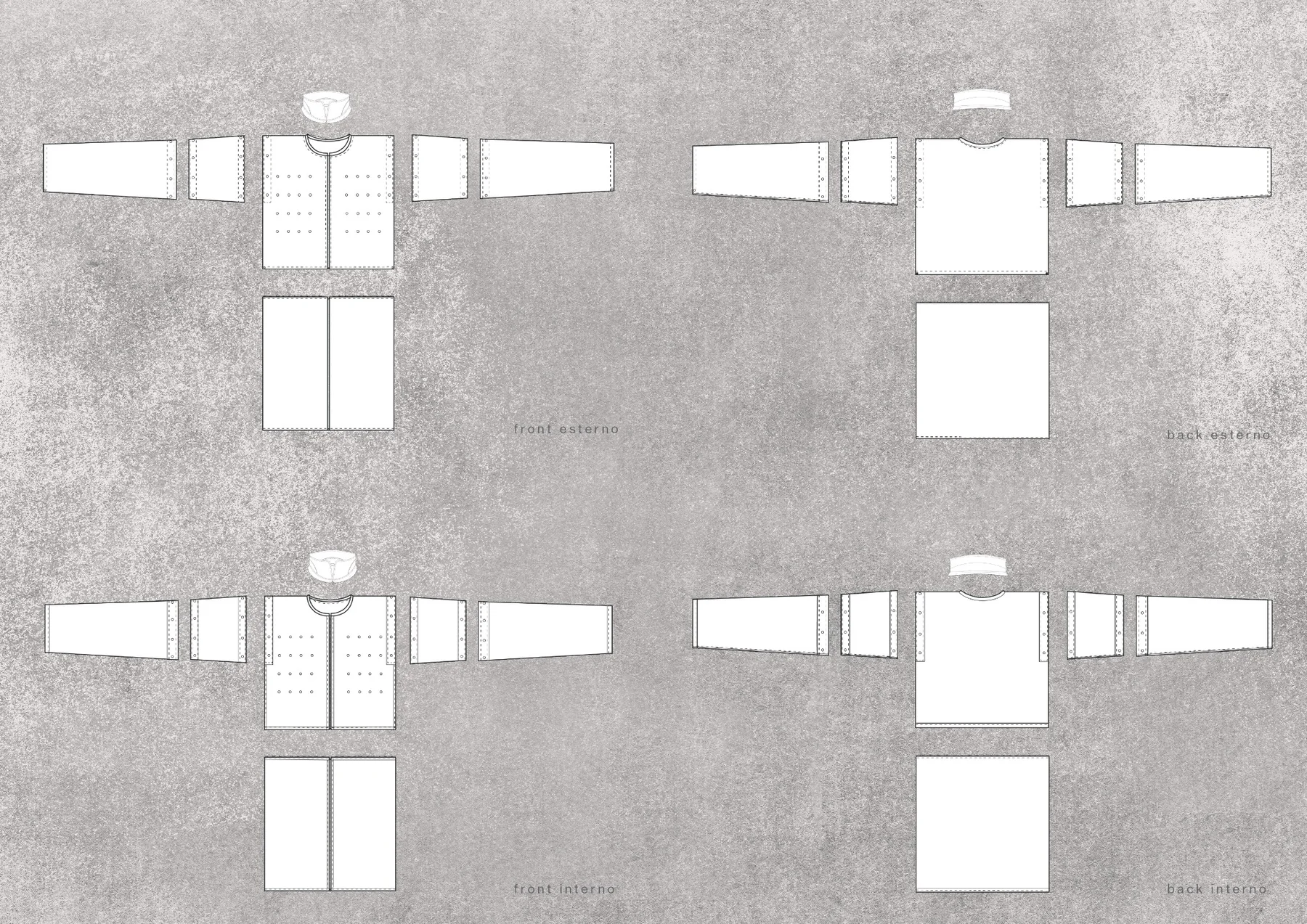 10
10